Urban Form: Christ Carried to the Tomb
Urban Silhouette Research: The Geometry of Absence and the 2026 Executive Form
I. The Architectural Problem of the Unseen
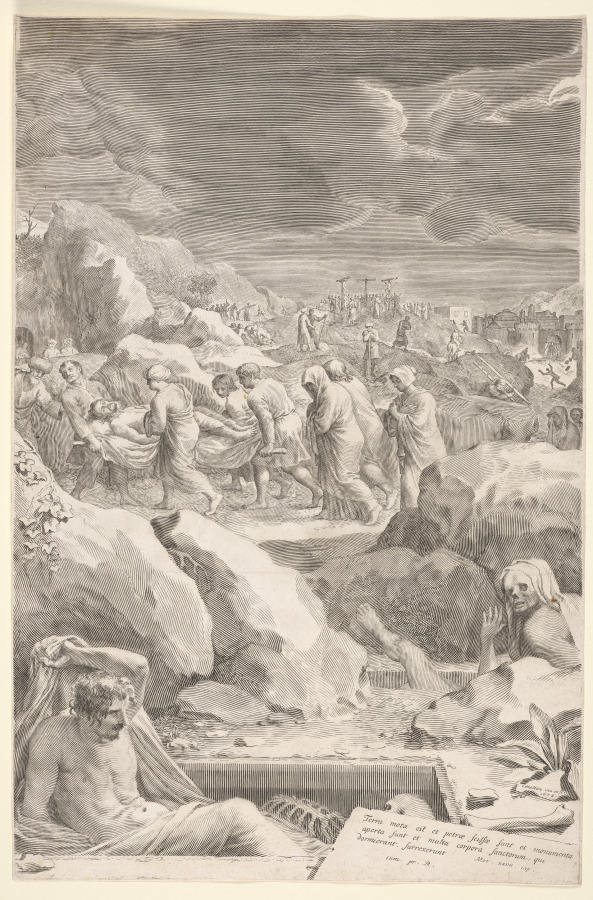
The Addison Fashion 2026 executive silhouette does not begin with the body. It begins with the void that the body is asked to occupy. This is not a rhetorical posture. It is a structural directive derived from a rigorous reading of Christ Carried to the Tomb—a composition whose true subject is not the figure of Christ but the negative space that the procession of mourners carves through the pictorial plane. The painting operates as a machine for generating absence. Every gesture, every fold of drapery, every downward gaze is oriented toward a center that is already gone. The tomb is not depicted. It is implied. And in that implication lies the entire grammar of the 2026 silhouette.
To understand this, one must first understand the painting's geometric integrity. The composition is built on a series of descending diagonals—the slope of shoulders, the angle of the bier, the tilt of heads bowed in grief. These diagonals converge on a point that exists outside the frame. The eye is drawn downward and inward, toward a vanishing point that is simultaneously a narrative vanishing point: the place where the body will be laid, where the story will end, where meaning will be sealed. But the painting refuses to show this place. It withholds. It presents the procession as an act of carrying toward an absence that is structurally constitutive of the image itself.
This is the first principle of the Addison 2026 silhouette: the garment must be built around a vanishing point that is never revealed. The executive who wears it is not the subject of the garment. The executive is the procession. The garment is the tomb—a structured void that gives form to what cannot be seen.
II. The Diagonal as Structural Poetics
The painting's diagonals are not decorative. They are load-bearing. They distribute weight across the composition in a way that mirrors the distribution of weight across the human body when it is carried. The mourners do not walk upright. They lean. They tilt. They are pulled downward by the gravity of their burden. And yet the painting does not collapse. It holds. It holds because the diagonals are balanced against a series of vertical counterweights—the upright figures at the periphery, the architectural elements that frame the scene, the subtle verticality of the drapery folds that resist the downward pull.
Translated into tailoring, this becomes a study in asymmetric structural tension. The 2026 executive jacket is not symmetrical. It cannot be. Symmetry implies stasis, and stasis is the enemy of the urban silhouette. Instead, the jacket is built on a diagonal axis: a single-breasted closure that shifts the center line, a shoulder line that drops on one side and rises on the other, a hem that is cut on a bias so subtle it reads as an error until one understands it as a decision. The wearer is not standing still. The wearer is in procession. The wearer is carrying something—a decision, a negotiation, a failure, a triumph—toward a destination that remains, for now, unseen.
The fabric must support this. Onyx wool crepe with a dry, almost chalky hand. No sheen. No reflection. The surface absorbs light the way the painting absorbs grief—completely, without residue. The weight must be substantial enough to hold the diagonal, but not so heavy that it resists movement. The executive must be able to walk. The procession must continue.
III. Urban Materiality and the Ethics of Withholding
The painting's materiality is a materiality of withholding. The colors are muted—earth tones, faded ochres, the gray of stone, the brown of worn wood. There is no gold. There is no jewel. There is no spectacle. The painting refuses the consolations of beauty even as it achieves them. This is the second principle of the Addison 2026 silhouette: luxury must be legible only to those who understand what is being withheld.
The urban executive operates in a landscape of excess. Excess information, excess speed, excess visibility. The 2026 silhouette responds not by adding but by subtracting. The garment is not a statement. It is a silence. It is the quiet of the tomb before the stone is rolled away. It is the pause between the carrying and the laying down. It is the moment when the procession stops and the body is placed—and the viewer realizes that the painting has been about this moment all along, even though it never showed it.
This is what we mean by structural poetics. The garment is not a container for the body. The garment is a proposition about the body's relationship to time, to space, to the unseen. The executive who wears it is not wearing a suit. The executive is wearing a vanishing point. The executive is wearing the space where meaning will eventually arrive—or not arrive. The executive is wearing the wait.
IV. The 2026 Silhouette: A Technical Specification
The jacket: single-breasted, diagonal closure, asymmetric shoulder, bias-cut hem. The fabric: onyx wool crepe, 340 grams per square meter, dry finish, no lining in the body, bound seams in silk organza. The trouser: high-waisted, single pleat, tapered leg, cropped at the ankle to reveal the architecture of the shoe. The shoe: a low-profile derby in black calf, unpolished, with a stacked leather heel that adds two centimeters of elevation without announcing itself as a heel.
The overall effect is one of contained momentum. The silhouette is not static. It is not dynamic in the athletic sense. It is dynamic in the way that a held breath is dynamic—full of potential, full of pressure, full of the knowledge that something must eventually give. The executive who wears this silhouette is not running. The executive is carrying. And what the executive carries is the weight of a decision that has not yet been made, a word that has not yet been spoken, a tomb that has not yet been entered.
This is the Addison Fashion 2026 executive silhouette. It is not for everyone. It is for those who understand that the most powerful statement is the one that is never made. It is for those who understand that the tomb is not the end. The tomb is the structure that makes the resurrection legible. The tomb is the void that gives the body its form. The tomb is the garment. And the garment is waiting.