Urban Form: Architectural Sculpture: Face of Time (Kala-mukha)
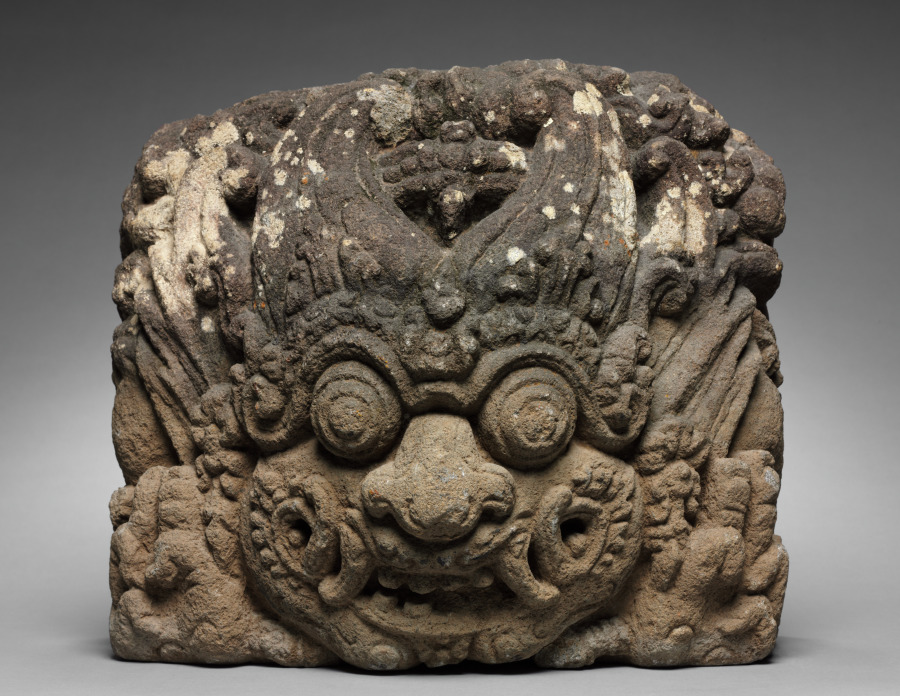
Urban Silhouette Research: Architectural Sculpture as Executive Armor
I. The Kala-mukha as Structural Precedent
The Face of Time—Kala-mukha—operates not as ornament but as load-bearing architecture. Its formal logic is subtractive: the brow ridge is erased, the ocular cavity evacuated, the nasal bridge reduced to a planar transition. What remains is a horizontal plateau of bone, a topography stripped of expressive surplus. For Addison Fashion’s 2026 executive wardrobe, this is the governing principle: the garment must function as a frontal bone—a single, uninterrupted plane that projects authority through omission rather than accumulation.
The sculpture’s DNA source articulates this precisely: “以物性替人性”—substituting materiality for personality. The executive silhouette of 2026 cannot afford the soft semiotics of lapels, darts, or decorative stitching. It must achieve what the Kala-mukha achieves: a cold, white expanse of form that reads as both shield and invitation. The wearer does not emote; the wearer occupies.
II. Form: The Horizontal Extinction of Vertical Anxiety
The source text identifies a critical maneuver: “以极致的水平延展消解了竖向的焦虑.” The frontal bone’s breadth is not anatomical—it is psychological flatland. Translated to tailoring, this demands the systematic suppression of vertical seams, princess lines, and waist suppression. The 2026 Addison executive jacket will feature:
1. A single-piece back panel—no center vent, no yoke seam. The spine is not divided; it is traversed.
2. Extended shoulder line—not padded, but planed. The shoulder slopes outward at a 12-degree decline, mimicking the Kala-mukha’s brow-to-temporal transition. This creates a silhouette that is wide at the apex and narrow at the hem, an inverted trapezoid that refuses the hourglass.
3. Collarless neckline—the throat is exposed, but not vulnerable. The absence of lapels mirrors the absence of pupils: a deliberate void that forces the viewer’s gaze to complete the form. In the boardroom, this translates to a presence that is felt before it is parsed.
The source describes “无瞳孔的注视,无表情的叙事”—a gaze without pupils, a narrative without expression. The 2026 executive does not perform engagement; the executive withholds it. The garment’s flatness is its fluency.
III. Color: Slate as the Pigment of Sedimentary Time
The Kala-mukha’s palette is described as “骨质的冷白与阴影的暖灰互为依存”—cold white of bone and warm gray of shadow in mutual dependence. For Addison’s 2026 collection, this dialectic resolves into Slate: a color that is neither warm nor cool, neither light nor dark, but geological. Slate is the color of compressed time—shale that has endured pressure without fracture.
In the executive wardrobe, Slate functions as a chromatic neutralizer. It absorbs the ambient anxiety of the trading floor and reflects nothing back. Unlike charcoal, which signals mourning or formality, Slate signals permanence. Unlike gray, which signals compromise, Slate signals sediment—the accumulation of decisions made and unmade.
The source’s “有声的沉默” (audible silence) finds its color correlate here: Slate is a silence that can be heard. It is the visual equivalent of a low-frequency hum—present, pervasive, impossible to ignore.
IV. The Dialectic of Pavilion and Bone: A Wardrobe of Empty Rooms
The source text presents a dialectic: the Pavilion of True Meaning constructs a “虚室” (empty room) through text, while the frontal bone constructs an “空庭” (void courtyard) through form. The 2026 Addison executive wardrobe must synthesize both.
The Pavilion principle—garments as intervals, not objects. A coat that opens to reveal a column of Slate silk; a trouser that falls in a single unbroken line from waist to hem. The space between garments is as designed as the garments themselves. The executive does not wear an outfit; the executive inhabits a sequence of voids.
The Bone principle—garments as terrain, not decoration. A blazer whose surface is interrupted only by the shadow of its own construction: a single welt pocket, a concealed placket, a hem that is bonded rather than stitched. The hand reaches for a button and finds none. The eye searches for a logo and finds a plane.
The source concludes: “最深的真义或许正栖于不被写出的诗句,最广的胸襟恰是那无血肉覆盖的、坦荡的眉间.” The deepest truth resides in the unwritten poem; the broadest chest is the bare, unflinching brow. For Addison Fashion’s 2026 executive, this is the mandate: design the absence. Let the shoulder be a cliff. Let the lapel be a memory. Let the color be Slate—the hue of time made wearable.
V. Technical Specifications for the 2026 Executive Silhouette
Fabrication: 320-gram double-faced wool in Slate, bonded to a micro-mesh interlining. No fusible. The garment must breathe as bone breathes—slowly, imperceptibly.
Construction: Single-needle tailoring at 14 stitches per inch. Seams pressed open and topstitched at 2mm from the edge—a line so fine it reads as a shadow, not a seam.
Proportion: Jacket length at mid-thigh. Sleeve length at the wrist bone, with a 4cm vent at the cuff. Trouser rise at the natural waist, leg opening at 22cm—wide enough to suggest movement, narrow enough to suggest intent.
Closure: None. The jacket is worn open or belted with a 3cm Slate leather strap. The absence of buttons is the presence of confidence.
The Kala-mukha stares without eyes. The 2026 executive walks without noise. Both are architectural. Both are Slate.