Urban Form: Transenna Post
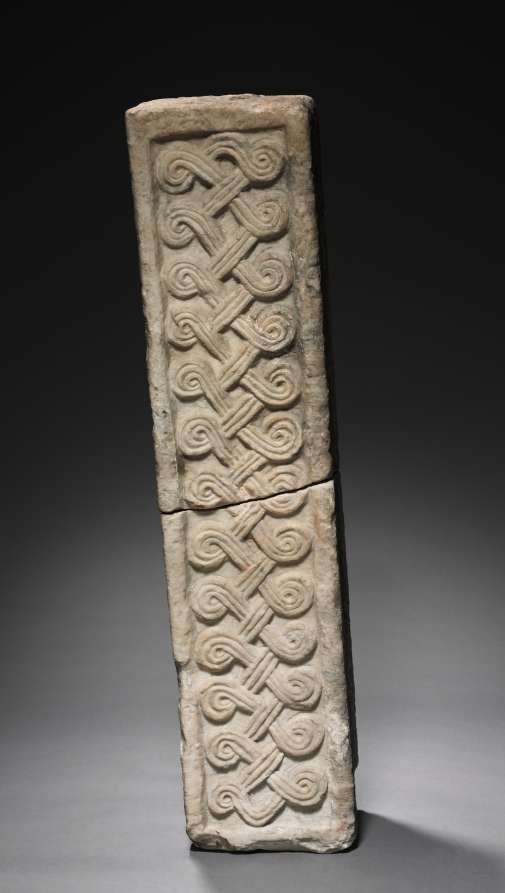
Urban Silhouette Research: Transenna Post — Geometric Integrity and the 2026 Executive Silhouette
I. The Architectural Premise
The Addison Fashion silhouette for 2026 does not emerge from trend forecasting. It emerges from the structural logic embedded in the Transenna Post — a garment whose internal DNA is drawn from two apparently irreconcilable sources: Jacques-Louis David's The Death of Socrates and the anonymous craftsman's Wave-Pattern Meiping. Our task is not to reconcile them, but to extract from their tension a wearable architecture. The geometric integrity of this artwork — its capacity to hold contradiction within a single frame — is precisely what defines the executive silhouette for the coming cycle.
The Transenna Post is not a garment that decorates the body. It is a garment that edits the body. Its geometry operates on the principle of the transenna — the lattice screen that permits vision while enforcing separation. The silhouette is therefore both permeable and absolute: a structure through which the urban environment is perceived, but never permitted to dissolve the wearer's perimeter.
II. The Diagonal Axis: David's Rational Lightning
Consider the primary geometric event in David's composition: the diagonal axis that runs from Socrates' raised right hand — index finger pointing toward the invisible realm of Forms — through the torso, to the left hand resting limp upon the cup. This is not a gesture of surrender. It is a vector of intentionality, a line drawn between the will and its consequence. The body's inclination and the spirit's ascension form what the internal DNA correctly identifies as a "paradoxical arc."
In the Transenna Post, this arc is translated into the shoulder-to-hem relationship. The shoulder line is elevated — not padded, but structured — creating a plane of rational clarity. From this plane, the garment descends along a controlled diagonal, neither clinging nor billowing, but holding the body in a state of suspended tension. The hem does not fall; it arrives. The wearer's movement through urban space becomes a reenactment of that philosophical descent: the mind ascends, the body negotiates gravity, and the garment records the negotiation.
The light in David's painting — cold, directional, originating from the upper left — is translated into the fabric's surface treatment. A matte slate finish absorbs rather than reflects, creating the same sculptural solidity that David achieved through thick impasto and shadow. The executive who wears the Transenna Post does not shimmer. She occludes. Her presence is registered not by surface brilliance but by the density of her silhouette against the city's ambient noise.
III. The Radial Curve: The Meiping's Kinetic Stillness
Against David's diagonal, the Wave-Pattern Meiping offers a counter-geometry: the radial curve. The meiping's body is a continuous revolution — a form that contains volume without asserting mass. The wave pattern that coils around its surface is not decoration but kinetic notation: the brush's acceleration and deceleration rendered permanent in cobalt under glaze. The waves break eternally, and the vessel remains whole.
This is the second structural principle of the Transenna Post: the contained revolution. Where the Davidian diagonal provides the garment's vertical architecture, the meiping's radial logic governs its horizontal relationships. The waist is not cinched; it is implied — a subtle inflection in the garment's circumference that suggests volume without constricting it. The sleeve, cut on a gentle curve, follows the arm's rotation rather than opposing it. The collar, whether high or open, describes an arc that echoes the meiping's lip: a boundary that is also an invitation.
The materiality here is critical. The meiping's glaze — that "thin ice" formed by the kiln's transformative fire — finds its urban equivalent in technical fabrics that have undergone similar trials: bonded seams, laser-cut edges, surfaces that have been finished by force rather than by ornament. The Transenna Post employs no visible hardware. Its closures are integrated, its seams are structural, its interior is as resolved as its exterior. The garment's "empty belly," like the meiping's, is a silent container — the space between fabric and skin where the wearer's own presence accumulates.
IV. The Dialectic of Materials: Time as Construction
The internal DNA observes that oil paint is "time's flammable substance" while porcelain is "time's insulator." This distinction governs the Transenna Post's material philosophy. The garment does not attempt to arrest time through synthetic permanence. Instead, it architects time's passage into its own structure.
The slate palette — neither black nor gray, but the precise chromatic register of urban stone at dusk — is selected for its capacity to record wear without displaying it. Creases form along the Davidian diagonal, mapping the wearer's habitual movements. The radial curves of the meiping logic soften imperceptibly with each wearing, the fabric learning the body's revolutions. The garment ages, but it does not decay. It accumulates.
This is the resolution of the dialectic: the Transenna Post is neither the flammable nor the insular. It is the transenna itself — the screen through which both conditions are observed. The executive silhouette for 2026 is not a statement of permanence or of ephemerality. It is a structure that holds both, and in holding them, defines the only viable position for the urban subject: present, perceptive, and architecturally intact.
V. The 2026 Executive Silhouette: A Provisional Definition
The Transenna Post establishes the following parameters for the Addison Fashion executive silhouette:
Vertical integrity: A shoulder-to-hem diagonal that is neither suppressed nor exaggerated, but held in rational tension. The garment's length is determined by the golden section applied to the wearer's height — not by trend cycles.
Radial containment: Circumference is implied rather than imposed. The waist, the sleeve, the collar — each describes an arc that contains without constricting, echoing the meiping's continuous revolution.
Material silence: Surfaces that absorb rather than reflect. Finishes achieved through process, not applied decoration. A palette restricted to the mineral register: slate, onyx, ivory, silver, sand.
Temporal architecture: Construction that anticipates wear as a form of collaboration. The garment is completed not at the atelier but in the city, through the accumulated geometry of the wearer's movement.
The Transenna Post is not a garment for all seasons. It is a garment for the season of consequence — the season in which the executive understands that her silhouette is not a surface but a structure, and that structure is the only honest response to a world in flux. The waves break. The vessel remains. The diagonal holds.