Urban Form: Procession or Pardon at Perros-Guirec
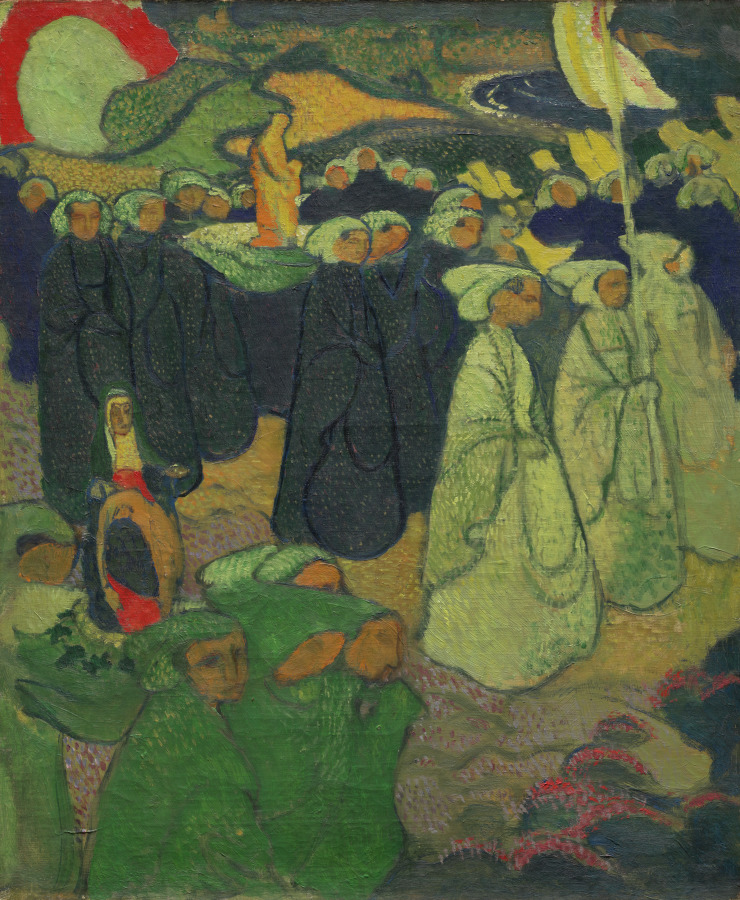
Urban Silhouette Research: Procession or Pardon at Perros-Guirec
I. Preliminary Geometry: The Two Poles of Sacred Form
The Addison atelier approaches the paired sculptures — the Bodhisattva and the Amulet in the Form of a Seated Figure with Bovine Head — not as devotional objects but as primary structural documents. They are, in our reading, two competing blueprints for the 2026 executive silhouette: one resolved through continuous curvature, the other through composite interruption. The Breton coastline at Perros-Guirec, with its granite processions and wind-carved pardons, provides the atmospheric register — a cold, mineral light that strips ornament from form and leaves only the load-bearing line.
The Bodhisattva presents what we term closed harmonic geometry. Its silhouette is a single, unbroken argument: shoulders slope into arms, arms into drapery, drapery into base, with no seam permitted to declare itself. The figure is a column that has learned to breathe. Every curve is calculated against doctrine and against gravity; the result is a form that appears inevitable rather than designed. For Addison, this is the Fluid pole — not softness, but the elimination of friction between adjacent planes.
The bovine-headed amulet operates by opposite logic. It is composite geometry: a human torso seated in ritual stillness, surmounted by an animal skull that refuses to reconcile with the body beneath it. The junction is not smoothed but declared. This is the Tailored pole — structure as visible decision, the seam as signature. Where the Bodhisattva dissolves hierarchy, the amulet enforces it.
II. Structural Poetics: Load, Drape, and the Granite Line
For the 2026 executive wardrobe, the critical question is not which pole to choose but how to sequence them across a single day. The Perros-Guirec procession — a slow, ordered movement of bodies through wind — offers the operative metaphor. The executive silhouette must function as a procession: a series of resolved forms that advance without collision.
We begin with the Bodhisattva shoulder. In the sculpture, the shoulder line is not horizontal but descending, a gentle cant that redirects the eye downward and inward. Translated to tailoring, this becomes a shoulder that drops 1.5 centimeters below the anatomical apex, padded not for volume but for directional flow. The sleeve head is set without puckering; the armhole is cut high and narrow. The result is a jacket that reads as a single gesture from collar to cuff.
The drapery of the Bodhisattva — those rhythmic, parallel folds — informs our approach to pleating and panel construction. We do not imitate the folds; we extract their cadence. A wool crepe trouser, cut with a single deep pleat at the front, reproduces the sculpture's vertical rhythm without literal quotation. The fabric must have enough weight to fall in clean planes, enough memory to recover its line after movement. Slate grey, in a matte finish, absorbs the Breton light rather than reflecting it — the garment becomes a surface for atmosphere, not a display of its own sheen.
The bovine amulet contributes the counter-rhythm. Its composite head — animal above, human below — suggests a garment that interrupts its own continuity. We achieve this through a single, decisive seam: a horizontal yoke across the upper back, placed at the seventh cervical vertebra, where the shoulder blades begin their outward sweep. Above the yoke, the fabric is dense and structured — a double-faced cashmere, perhaps, with a faintly visible warp. Below, it releases into a softer, more fluid hand. The wearer experiences the garment as two states of being: guardian above, procession below.
III. Urban Materiality: Slate, Onyx, and the Mineral Register
The palette for this research is anchored in Slate — not the blue-grey of digital interfaces, but the deep, iron-bearing slate of the Breton roofscape. It is a color that holds shadow without becoming black, that reads as neutral in daylight and as near-onyx under artificial light. For the executive environment — glass towers, underground transit, late-evening meetings — this chameleon quality is not decorative but operational. The garment must perform across radically different lighting temperatures without demanding attention.
We pair Slate with Ivory in a ratio of four to one. The ivory appears only at the interior: the lining of a coat, the facing of a collar, the underside of a cuff. It is the pardon within the procession — a private brightness that the wearer knows but the observer rarely sees. This is the Addison doctrine of interior luxury: the most significant gestures are those that do not announce themselves.
Materially, we specify a compact wool-silk for the primary tailoring — 340 grams per meter, with a dry, almost papery hand that resists creasing and holds a pressed edge. For the fluid components — trousers, column dresses, the underlayer of a two-piece — we use a heavy sand-washed silk that drapes with the weight of the Bodhisattva's stone robes but moves with the body rather than against it. The contrast between these two materials, worn together, reproduces the dialogue of the sculptures: harmony and interruption, resolution and declaration.
IV. The 2026 Silhouette: A Provisional Definition
The Addison 2026 executive silhouette is neither purely fluid nor purely tailored. It is sequenced. The shoulder is resolved; the waist is released; the hem is weighted. The garment does not cling, does not flare, does not apologize. It advances through space with the deliberate pace of a procession — each element in its proper order, each transition calculated, each surface prepared to receive the cold, clear light of an urban morning.
The Bodhisattva teaches us that harmony is not the absence of structure but its complete internalization. The bovine amulet teaches us that power sometimes requires a visible joint, a place where two orders meet and refuse to blend. The 2026 wardrobe holds both lessons in tension. It is a pardon granted to the body — permission to move without constraint — and a procession of forms that never loses its line.
At Perros-Guirec, the granite saints stand in rows, facing the sea. They do not speak. They do not move. But their silhouettes — weathered, absolute, indifferent to fashion — remain the most precise tailoring ever achieved. Addison does not imitate them. Addison listens.