Urban Form: The Annunciation
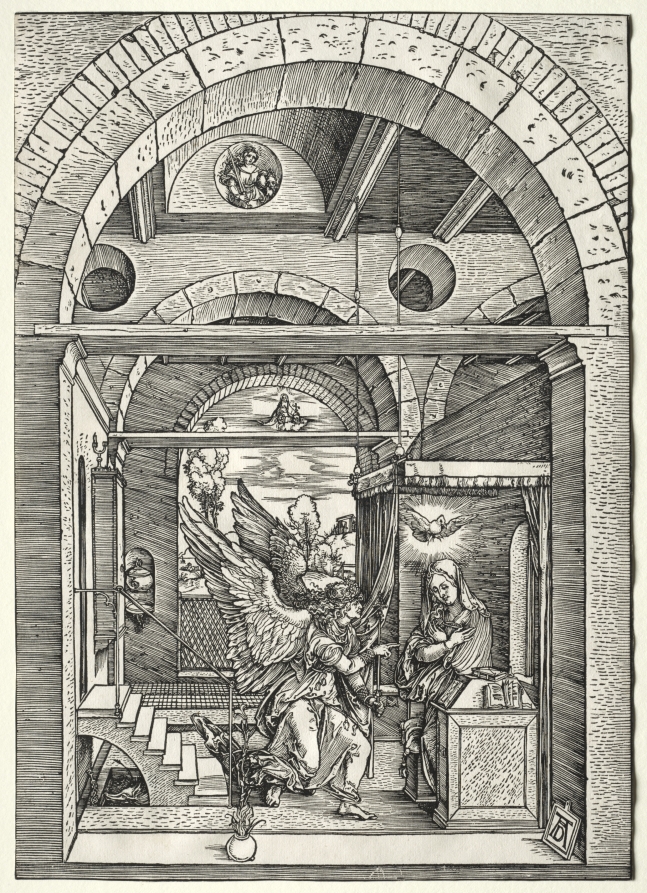
Urban Silhouette Research: The Annunciation — Geometric Integrity and the 2026 Executive Silhouette
I. The Negative Space as Structural Directive
The Mold Fragment with Musicians presents a critical lesson for the Addison design language: the silhouette is not defined by what it contains, but by what it withholds. The ceramic shard, its edges fractured and incomplete, establishes a geometry of absence. The musician's posture—captured in the pressure of fingertips against yielding clay—survives as a ghost of gesture, a tactile memory compressed into mineral permanence. For the 2026 executive wardrobe, this translates into a radical proposition: the garment must be constructed around the void it creates, not the body it covers.
The fragment's geometry is deceptively irregular. Its broken perimeter refuses symmetry, yet the internal composition—the arched spine of the seated musician, the angular jut of the instrument—maintains a rigorous internal logic. This is the principle of asymmetric coherence: disorder at the boundary, order at the core. The Addison 2026 silhouette will adopt this duality. Outer layers will appear deconstructed, their hems and closures deliberately unresolved, while the interior architecture—shoulder alignment, waist suppression, the vertical fall of the spine—remains mathematically precise. The executive who wears this garment does not present completeness. She presents strategic incompleteness, a silhouette that invites projection rather than demanding admiration.
II. The Zodiac Ox: Mass, Stillness, and the Weight of Order
The Mortuary Figure of the Zodiac Sign: Ox (Taurus) offers a countervailing geometric principle. Where the mold fragment disperses energy through absence, the ox sculpture concentrates it through mass. The animal's body is rendered as a closed volume—shoulders broad and planar, haunches grounded, the entire form weighted toward the earth. The head lifts slightly, eyes fixed on a horizon that exists only in the afterlife. This is gravitational geometry: a silhouette that derives its authority from its relationship to the ground plane.
For the 2026 executive silhouette, the ox provides the template for outerwear. The Addison overcoat will be cut with a lowered center of gravity—extended lengths, dropped shoulder seams that echo the animal's muscular slope, a collar that rises like the ox's neck toward an unseen vanishing point. The fabric must possess mineral density: felted wool, double-faced cashmere, bonded leather that holds its shape without rigidity. The silhouette does not drape. It occupies. The executive who wears this garment does not move through space; she displaces it.
III. The Intertextual Silhouette: Transience Cast in Permanent Form
The dialectic between these two objects—the mold fragment's ephemeral music and the ox's eternal watchfulness—generates the central tension of the Addison 2026 collection. The silhouette must simultaneously suggest movement arrested and stillness animated. This is achieved through what we term temporal layering: garments constructed with multiple planes of fabric that shift in relation to one another. A jacket may feature an internal panel that catches light differently from the outer shell, creating the illusion of depth and duration. A trouser may be cut with a slight forward pitch at the knee, suggesting the initiation of a step that never completes.
The color palette—anchored in Slate—reinforces this intertextual reading. Slate is neither the fired permanence of terracotta nor the cold finality of onyx. It is the color of transition: the moment between stone and dust, between sound and silence. In the Addison 2026 collection, slate manifests across a spectrum: the blue-grey of weathered basalt, the green-grey of oxidized bronze, the warm grey of ash after combustion. These variations allow the silhouette to register differently under urban light—fluorescent, incandescent, the diffuse glow of an overcast sky—without ever losing its architectural integrity.
IV. Urban Materiality: The City as Firing Kiln
The mold fragment was transformed by fire. The ox figure was buried in earth. Both processes are metaphors for the urban condition. The executive silhouette of 2026 must withstand the thermal pressures of the contemporary city: the friction of transit, the compression of crowded spaces, the scrutiny of glass-walled rooms. Addison's material research therefore prioritizes fabrics that record time rather than resist it. A slate wool that develops a patina at the elbows. A leather trim that darkens where the hand rests. A silk lining that creases in patterns unique to the wearer's posture.
This is not distress. This is archaeological luxury—the understanding that the most sophisticated garment is one that carries the evidence of its own use. The 2026 executive does not seek the pristine. She seeks the proven. Her silhouette is a mold fragment: incomplete, suggestive, resonant with the pressure of her own existence. Her silhouette is a zodiac ox: grounded, watchful, carrying the weight of an order she did not create but must uphold.
The Annunciation of Addison Fashion is not an arrival. It is a casting—the moment when the ephemeral is pressed into permanent form, and the permanent is revealed to be nothing more than the ephemeral, slowed to the pace of stone.