Urban Form: Portrait of Pope Paul II Barbo (obverse) and (reverse)
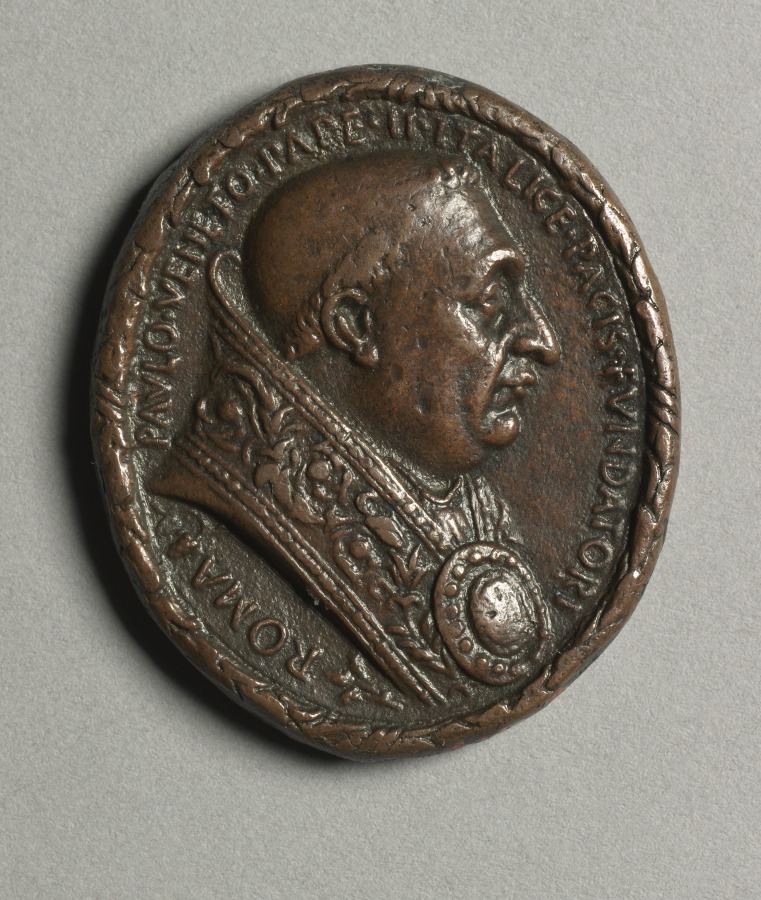
The Addison Urban Silhouette Research: Volume I — The Barbo Medal and the Architecture of Absolute Authority
I. Geometric Integrity: The Medal as Structural Prototype
The Portrait of Pope Paul II Barbo functions not as a commemorative object but as a geometric manifesto—a compressed architectural treatise rendered in bronze and silver. The obverse presents the pontiff in strict profile, a decision that eliminates psychological ambiguity in favor of planar certainty. The face is not a face; it is a façade. The nose forms a vertical ridge, the brow a horizontal cornice, the chin a foundational plinth. This is the logic of the executive silhouette for 2026: the body as building, the profile as elevation drawing.
The reverse—likely bearing heraldic or architectural motifs—completes the dialectic. Where the obverse imposes a single reading, the reverse distributes meaning across a field. This obverse/reverse tension is precisely the structural principle Addison Fashion adopts for the coming season: a garment must present a definitive front and a complex, layered back. The wearer is both monument and palimpsest.
The medal's circularity is not softness—it is containment. The circle is the most aggressive of geometric forms because it admits no escape. In tailoring, this translates to the collarless, seamless shoulder—a continuous line that refuses the interruption of traditional set-in sleeves. The 2026 Addison executive jacket will feature a monolithic shoulder, cut on a single curved plane, echoing the medal's unbroken rim.
II. Structural Poetics: From Socrates to the Meiping
The internal DNA of this research invokes two poles of aesthetic gravity: David's The Death of Socrates and the Meiping vase with waves. The first is vertical tragedy—the philosopher's finger pointing upward, the body rigid with purpose, the cup of hemlock as a fulcrum between worlds. The second is horizontal continuity—the meiping's silhouette, with its high shoulder and tapering base, contains the wave motif not as narrative but as rhythmic abstraction.
Addison Fashion's 2026 silhouette synthesizes these poles. The vertical is expressed in the columnar trouser—a single, unbroken line from waist to floor, pleatless, pocketless, reduced to its essential geometry. The horizontal is expressed in the wrapped bodice—a single length of fabric that crosses the torso without darts or seams, its edges raw and unfinished, suggesting the wave's infinite regress.
The Socrates painting teaches us that death is a compositional event—a moment of maximum tension that resolves into meaning. The meiping teaches us that continuity is a material state—the wave does not break, it persists. The executive of 2026 must embody both: the decisiveness of the event and the resilience of the state. The Addison silhouette is therefore eventful in its cut (sharp, decisive, irreversible) and stateful in its drape (fluid, adaptive, unending).
III. Urban Materiality: Bronze, Silver, and the Weight of Authority
The Barbo medal is struck in bronze and silver—materials that age without decaying. They acquire patina; they do not disintegrate. This is the material philosophy of the 2026 Addison executive wardrobe. Onyx—the color designation for this research—is not black. It is black with depth, black that absorbs and reflects, black that functions as a structural void rather than a chromatic absence.
The fabrics must mirror the medal's surface: cold to the touch, warm to the eye. We propose a bonded wool-silk with a matte face and a faintly luminous reverse—the obverse/reverse logic made tactile. The urban materiality of this collection rejects the softness of casual luxury. It embraces the hard edge of the city: concrete, steel, glass, and the vertical shadows they cast at noon.
The meiping's glaze—qingbai, a blue-green that hovers between water and sky—offers a counterpoint. Addison will introduce a single accent in Silver: a liquid-metal collar or cuff that catches light like the medal's rim. This is not decoration; it is punctuation. The silver marks the transition points of the body—neck, wrist, ankle—where the silhouette meets the air.
IV. The 2026 Executive Silhouette: A Technical Specification
The definitive Addison silhouette for 2026 is defined by three geometric constraints:
1. The Vertical Axis: A single seam runs from the nape of the neck to the hem of the garment, visible only as a shadow line. This is the Socrates axis—the line of purpose, the trajectory of the will. It divides the body into two asymmetrical halves, refusing the symmetry of traditional tailoring.
2. The Horizontal Wrap: A single panel of fabric crosses the torso at the diaphragm, its edge unfinished and unfurled. This is the meiping wave—the line that does not close, the rhythm that does not resolve. The wrap creates a diagonal tension that destabilizes the vertical, producing a silhouette that is both monumental and in motion.
3. The Circular Void: The neckline is a perfect circle, cut low and wide, exposing the clavicle as a structural beam. This is the medal's rim—the containment that frames the face as the obverse frames the pope. The void is not emptiness; it is negative architecture.
V. Conclusion: The Medal and the Wave
The Portrait of Pope Paul II Barbo and the Meiping with Waves are not opposites. They are two solutions to the same problem: how to make permanence visible in a transient world. The medal does it through compression—all authority in a single disc. The vase does it through containment—all time in a single curve.
Addison Fashion's 2026 silhouette does it through the body as both medal and vase: a hard, geometric core wrapped in a fluid, unfinished surface. The executive who wears this does not choose between power and grace. They inhabit both, simultaneously, without reconciliation.
This is the urban silhouette. This is the Addison standard. Onyx. Minimalist. Absolute.