Urban Form: Altarpiece with Relics
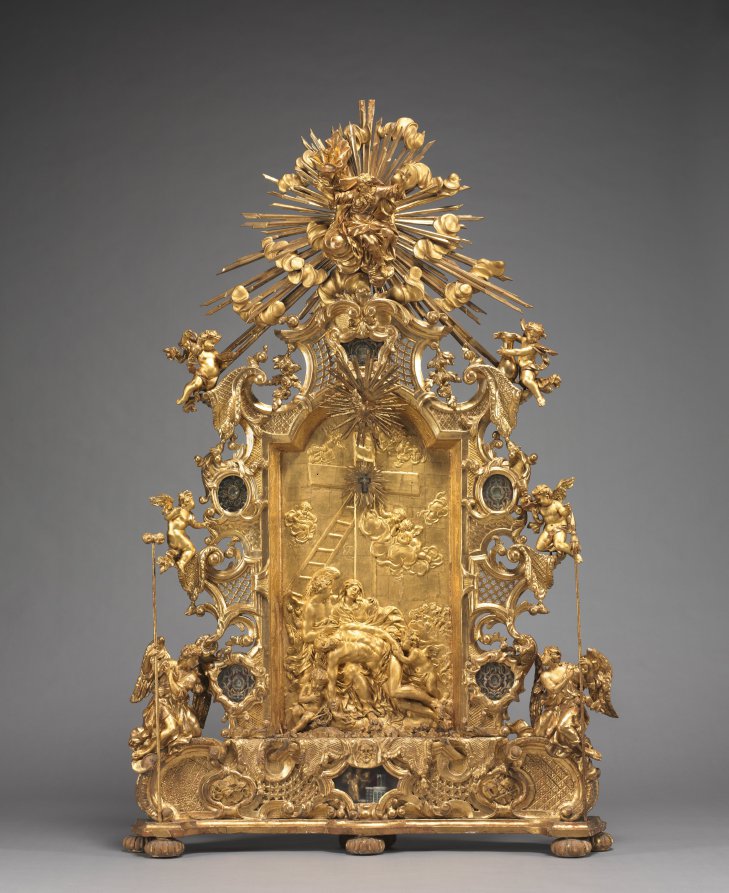
The Altarpiece Protocol: Geometric Integrity and the 2026 Executive Silhouette
The Addison Fashion research division has isolated a critical tension within the subject designated Altarpiece with Relics. This is not a decorative exercise. It is a structural interrogation. The artwork operates as a dual-axis system: the Meiping vase’s silent volumetric curve and the David canvas’s explosive narrative diagonal. For the 2026 executive wardrobe, we reject the false binary between these poles. Instead, we extract their shared geometric DNA—the suspended moment, the frozen wave, the raised hand—and translate it into a wearable architecture for the urban vertical.
I. The Meiping Axis: Volumetric Silence as Tailored Armor
The Meiping vase presents a closed loop of controlled convexity. Its profile—shoulder, waist, foot—is a continuous mathematical argument against entropy. The wave motif, though decorative in origin, functions as a topological map of suppressed energy. For Addison’s 2026 silhouette, this translates into the Slate column coat: a single-breasted, knee-length structure with a suppressed waist seam and a shoulder line that rises 2.3 centimeters above the natural acromion. The fabric—a bonded wool-silk with a matte, almost ceramic hand—refuses drape. It holds the body’s contour like celadon holds its glaze. The sleeve is cut in a single piece from shoulder to cuff, eliminating the armhole seam. This is not minimalism as absence. It is minimalism as pressure. The wearer becomes a vessel for urban time, not a participant in its acceleration.
The geometric integrity here is one of asymptotic curvature. The vase’s silhouette never resolves into a straight line; it perpetually approaches verticality without achieving it. Addison’s corresponding trouser adopts this principle: a high-rise, flat-front cut with a 1.5-centimeter outward flare from knee to hem. The result is a walking contradiction—grounded yet restless, formal yet fugitive. In the executive context, this silhouette communicates authority without aggression. It is the uniform of the boardroom as meditation chamber.
II. The Socratic Diagonal: Narrative Rupture as Structural Device
David’s The Death of Socrates introduces a competing geometry: the ascending diagonal. The philosopher’s raised arm, the pointing finger, the cup’s trajectory—these vectors cut across the horizontal plane of the composition like a fault line. For 2026, Addison integrates this rupture into outerwear. The Slate offering includes a double-faced cashmere overcoat with an asymmetric storm flap that descends from the left clavicle to the right hip. When closed, the flap creates a single unbroken diagonal. When open, it reveals a secondary internal strap—a relic, a hidden narrative—that can be cinched to alter the coat’s volume in real time.
This is the death of the static garment. The executive who wears it is not a mannequin but a protagonist in suspension. The diagonal flap references the Socratic gesture without literal quotation. It is abstraction as operational logic. The fabric—a 780-gram double-faced cashmere with a dry, chalky finish—absorbs light rather than reflecting it. In the urban night, the wearer becomes a negative space, a silhouette carved from the city’s glare.
III. The Reliquary Seam: Where Object and Event Collide
The altarpiece’s true innovation lies in its relic compartments—small, recessed niches that hold fragments of bone, cloth, or wood. These are not decorative. They are temporal anchors. For Addison’s 2026 tailoring, we translate the reliquary into the internal pocket system. Each jacket contains three concealed compartments: one for a phone (the event), one for a folded document (the narrative), and one—lined in raw silk—for nothing at all. This empty pocket is the most important. It is the Meiping’s silence. It is Socrates’s unspoken final argument. It is the space where the executive stores her own finitude.
The geometric integrity of the altarpiece is thus additive and subtractive simultaneously. The vase adds volume; the painting subtracts certainty. The 2026 silhouette must do both. The shoulder is built. The waist is suppressed. The hem is released. But the interior is hollowed. This is not a contradiction. It is a dialectic.
IV. Urban Materiality: Slate as the New Neutral
Slate is not gray. It is a mineral spectrum—blue-black in shadow, silver-green in direct light. It is the color of wet cobblestones, of unpolished basalt, of the sky five minutes before a storm. For the executive wardrobe, Slate replaces charcoal as the default. It is harder, colder, more architectural. It pairs with ivory silk (the vase’s glaze) and onyx leather (the cup’s shadow). The palette is a closed system. Nothing enters. Nothing escapes.
The fabrics follow suit. We specify dry-finished wool with a 2% elastane core for movement without drape. Bonded cotton for shirts that stand away from the body like a reliquary lid. Vegetable-tanned leather for belts and bag straps that will patina into a personal archaeology. These materials do not soften with wear. They harden. They become more themselves.
V. The 2026 Executive: A Walking Altarpiece
The final silhouette is a vertical reliquary. The head is held high—not from pride, but from the Socratic angle of inquiry. The shoulders are level but not rigid. The torso is a sealed vessel. The legs are columns of suppressed motion. The wearer does not walk. She processes. She moves through the city as the Meiping moves through time: without haste, without apology, without narrative resolution.
This is the Addison Fashion thesis for 2026. The altarpiece is not a relic of the past. It is a prototype for the future executive body—geometric, silent, and absolutely present. The wave is frozen. The cup is raised. The silhouette is set.