Urban Form: Bust of a Classical Hero or Emperor
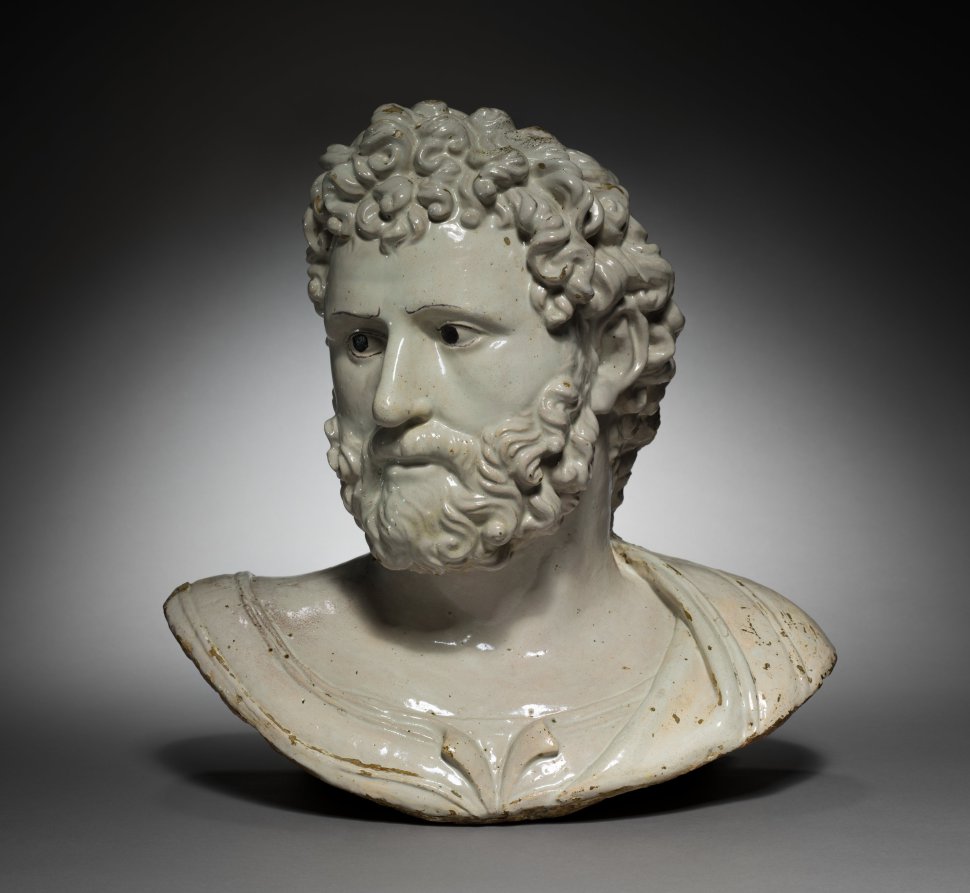
Urban Silhouette Research: The Classical Bust as Structural Archetype
I. Formal Deconstruction of the Source Object
The classical bust of a hero or emperor operates as a closed sculptural system. Its formal logic is predicated on three invariants: axial symmetry, frontal orientation, and the truncation plane—that decisive horizontal cut at the sternum or clavicle that severs the figure from its narrative context and elevates it into pure form. For the Addison design intelligence, this is not antiquarian nostalgia. It is a masterclass in how authority is constructed through subtraction.
The bust’s silhouette is a study in controlled mass. The cranium presents a near-perfect ovoid; the jawline resolves into a planar shelf; the neck functions as a load-bearing column that mediates between the intellectual volume above and the torso’s residual mass below. There is no gesture, no implied movement, no drapery flourish that would compromise the figure’s stillness. The eyes—typically carved without pupils or rendered in shallow relief—refuse reciprocal gaze. The subject does not acknowledge the viewer. This is the original non-engagement protocol, and it remains the most potent signifier of executive presence in the contemporary urban field.
II. The DNA Source: Dialectics of Motion and Stasis
The provided DNA source establishes a binary that maps directly onto the 2026 executive wardrobe’s central tension. The Mold Fragment with Musicians represents the aesthetics of the ephemeral—compressed bodies, implied rhythm, the porosity of unfired clay as a membrane through which sound might still escape. The Mortuary Figure of the Zodiac Ox represents the aesthetics of the eternal—geometric reduction, symmetrical composition, the suppression of muscular tension in favor of symbolic mass.
These are not opposing principles. They are sequential phases of the same sartorial argument. The executive of 2026 must operate in both registers simultaneously: the kinetic competence of the musician (adaptability, responsiveness, the ability to read a room’s acoustic) and the tectonic authority of the Taurus figure (immovability, cyclical certainty, the quiet violence of being the fixed point around which others orbit).
The bust of the classical hero resolves this dialectic. It is a frozen action—a figure that has already acted, already conquered, and now exists in the aftermath of its own momentum. The Addison interpretation: the garment must imply prior motion while presenting absolute stillness.
III. Translation to the 2026 NYC Executive Wardrobe
Form. The bust’s truncation plane informs the modern jacket’s hemline. Where the classical sculptor cut at the sternum, the Addison tailor cuts at the high hip—a horizontal that refuses the elongation of the torso and instead compresses authority into the upper body. Shoulders are not padded into aggression but structured through a single-piece back yoke that mimics the trapezius ridge of the marble original. The collar stands away from the neck by precisely 1.5 centimeters—enough to suggest the columnar neck of the bust without exposing the vulnerability of the throat.
Proportion. The bust’s cranial volume to torso volume ratio is approximately 1:2.3. This is the golden mean of executive presence. Applied to tailoring, it dictates a jacket length that terminates at the wrist’s first knuckle when arms hang naturally—a proportion that reads as neither cropped nor elongated, but inevitable.
Surface. The marble bust’s finish is matte with localized sheen—polished where the sculptor’s thumb passed repeatedly, rough where the chisel left its mark. The 2026 Addison fabric mirrors this: a double-faced wool in Onyx with a dry hand, its surface interrupted only by the faintest diagonal twill that catches light at the shoulder’s apex. No shine. No pattern. The color is not black but the absence of color—a void that absorbs the room’s attention without reflecting it back.
IV. The Onyx Protocol: Color as Strategic Withdrawal
Onyx is not a neutral. It is a terminal color—the chromatic equivalent of the bust’s pupil-less gaze. In the NYC executive context, where visual noise is the default condition, Onyx functions as a subtractive intervention. It removes the wearer from the economy of trend and repositions them within the economy of permanence.
The DNA source’s mortuary ox is carved from dark stone; its power derives from its refusal to participate in the visual field’s chatter. The Addison Onyx program applies this logic to the boardroom: a suit that does not compete for attention but reorganizes attention around itself. The fabric’s matte surface absorbs ambient light, creating a localized dimness that forces the interlocutor’s eye to travel upward—to the face, to the voice, to the decision.
V. Conclusion: The Narrow Path to Eternity
The classical bust endures because it resolved a problem that remains unsolved: how to be present without being available. The 2026 Addison executive wardrobe, informed by this archetype, does not dress the body. It truncates it—severing the wearer from the ephemeral and installing them within a formal system that predates and will outlast the current quarter’s volatility. The musicians’ clay fragment reminds us that life is porous and loud. The Taurus figure reminds us that death is geometric and silent. The bust—and the Addison suit that translates it—occupies the narrow corridor between: a stillness that has already done the work.