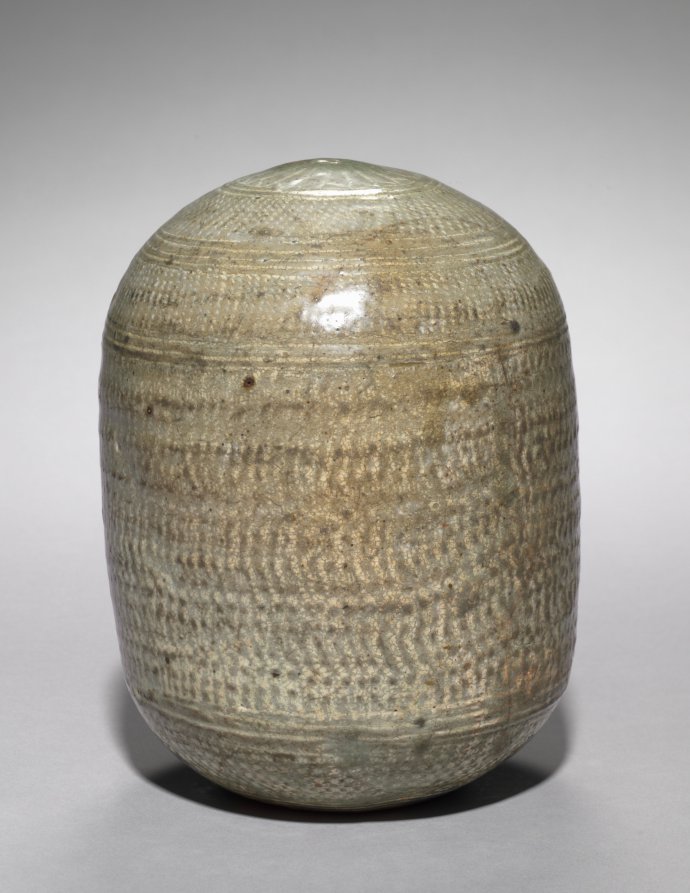
Urban Form: Wine Cask with Stamped Floral Decoration
Urban Silhouette Research: The Wine Cask as Structural Archetype
I. Formal Taxonomy of the Source Object
The wine cask with stamped floral decoration presents a deceptively simple volumetric proposition: a bilaterally symmetrical body, circumferentially reinforced by metallic hoops, terminating in planar staves that converge at the chime. For the purposes of Addison Fashion’s 2026 executive wardrobe, we must abstract this object beyond its oenological function and interrogate it as a silhouette generator—a closed system of tension between containment and expansion, rigidity and yield.
The cask’s primary formal characteristic is its barrel distortion: a convex medial bulge that tapers toward both poles. This is not an arbitrary curve but a calculated response to internal pressure—a structural solution that distributes stress across the surface. Translated to the human form, this suggests a garment that acknowledges the body’s own internal pressures (movement, respiration, gesture) while maintaining a disciplined exterior. The stamped floral decoration, by contrast, introduces a secondary, non-structural layer: ornament that is pressed into the material rather than applied upon it. This distinction—impressed versus appliquéd—is critical for a minimalist executive wardrobe that refuses superfluous surface treatment.
II. Color Logic: Onyx as Chromatic Substrate
The source object’s palette is dominated by the deep, near-black tones of aged oak and oxidized iron—a chromatic register we designate as Onyx. This is not the flat black of synthetic dye but a living darkness, one that absorbs light unevenly across grain and patina. In the context of urban executive dressing, Onyx functions as a chromatic substrate that permits subtle tonal variation without compromising authority. It is the color of the cask’s shadowed interior, the color of the iron hoop’s matte finish, the color of the wine’s deepest sediment.
For 2026, we propose Onyx as the foundational neutral for a wardrobe that must operate across the full diurnal range—from pre-dawn strategy sessions to late-evening negotiations. Unlike pure black, which can read as either funereal or aggressively synthetic, Onyx carries a mineral density that suggests permanence without rigidity. It is the color of things that have been aged, not manufactured.
III. Structural Translation: From Cask to Garment
A. The Barrel Silhouette
The cask’s convex profile informs a new outerwear archetype: the Barrel Coat. This is not the exaggerated cocoon of recent seasons but a precisely engineered volume that expands at the diaphragm and contracts at the hem and shoulder. The key technical intervention is the stave seam—a vertical construction line that runs from shoulder to hem, mimicking the cask’s longitudinal joinery. These seams are not decorative; they are structural, providing the garment with a self-supporting architecture that eliminates the need for interlining or padding.
In Onyx wool-cashmere suiting, the Barrel Coat achieves a matte, light-absorbent surface that resists the urban environment’s visual noise. The silhouette is simultaneously protective and permeable—a mobile architecture for the executive who must navigate between boardroom and street without sartorial transition.
B. The Hoop as Fastening System
The cask’s iron hoops suggest a fastening logic that is circumferential rather than linear. Instead of buttons or zippers, we propose a system of integrated belt channels—horizontal bands of self-fabric that wrap the torso at three critical points: under the bust, at the natural waist, and at the high hip. These channels do not cinch; they articulate, allowing the wearer to adjust the garment’s volume distribution without disrupting its formal integrity.
This system is particularly relevant for the 2026 executive wardrobe, which must accommodate the reality of fluctuating body temperature and layered undergarments without appearing casual or unresolved. The hoop-channel fastening is a closed system—nothing dangles, nothing protrudes, nothing announces its function.
C. Stamped Decoration as Surface Intervention
The floral stamping on the source cask is achieved through compression, not addition. The material is displaced, not covered. For Addison Fashion, this translates to debossed leather and heat-embossed wool—surfaces that carry pattern through physical deformation rather than applied pigment or print. A debossed floral motif on an Onyx leather trench, visible only at raking light, constitutes a private ornament: legible to the wearer, invisible to the casual observer.
This approach aligns with the minimalist executive’s need for coded self-expression. The garment communicates nothing to the uninitiated but everything to the trained eye. It is a form of sartorial encryption.
IV. The 2026 Executive Wardrobe: A Closed System
The wine cask, stripped of its function, offers a model for a wardrobe that is self-referential and self-sufficient. Every element—the barrel volume, the hoop fastening, the stamped surface—derives from a single formal logic. There is no eclecticism, no quotation, no pastiche. The result is a total silhouette that operates as a unified field of meaning.
For the NYC executive in 2026, this translates to a capsule of no more than twelve pieces, each interchangeable, each reinforcing the others. The Onyx palette provides chromatic coherence; the barrel and hoop constructions provide structural coherence; the stamped surfaces provide textural coherence. The wardrobe becomes a closed loop—a system that requires no external validation, no seasonal updates, no trend participation.
This is not minimalism as austerity but minimalism as density. The wine cask is a simple object, but its simplicity is the product of centuries of structural refinement. The 2026 executive wardrobe, at its highest expression, should aspire to the same condition: an object so resolved that it appears inevitable.
V. Conclusion: The Silhouette as Argument
The wine cask with stamped floral decoration is not a garment, but it contains a garment’s DNA. Its form is an argument about containment and expression, about the relationship between internal pressure and external surface, about the possibility of ornament that does not compromise structure. For Addison Fashion’s 2026 urban silhouette research, the cask provides a non-narrative model—a form that does not tell a story but simply is. In the context of the contemporary executive wardrobe, this is the most radical proposition of all: a garment that refuses to explain itself, that stands as its own justification, that asks nothing of the viewer but the discipline of attention.
The Onyx Barrel Coat, the hoop-channel fastening, the debossed surface—these are not trends. They are formal consequences. And in a market saturated with novelty, formal consequence is the ultimate luxury.