Urban Form: The Age of Bronze
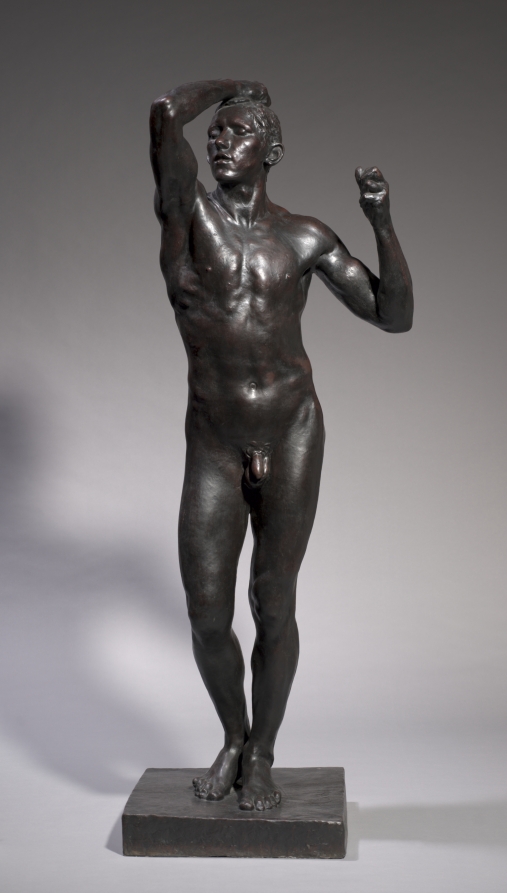
The Age of Bronze: Geometric Integrity and the 2026 Executive Silhouette
I. The Closed Form: David’s Socrates as Tailored Armature
The Addison 2026 executive silhouette begins not with fabric but with a philosophical proposition: that the body, when disciplined by geometry, becomes an argument for order. Jacques-Louis David’s The Death of Socrates presents precisely this thesis. The philosopher’s torso is not anatomy; it is architecture. The pectoral plane reads as a single unbroken slab, the deltoid as a load-bearing capital, the extended arm as a cantilever refusing gravity. Every contour is a decision, every shadow a deliberate omission. This is the closed form—a silhouette that admits no chaos, no excess, no confession.
For the 2026 executive, this translates into a tailoring logic of absolute containment. The shoulder line must be resolved before the waist is considered. The chest plane must remain undisturbed by darting that would introduce narrative softness. We are not designing garments; we are designing load paths. The Socrates silhouette is a compression structure: the body’s weight is transferred through the skeleton of the cloth, not absorbed by it. In urban materiality, this demands a wool of high torsion—Super 150s with a dry hand, woven tight enough to hold a crease without memory of the wearer’s anxiety. The result is a jacket that does not drape but stands, a second skeleton that completes the first.
II. The Open Vessel: The Meiping’s Negative Space as Fluid Counterpoint
Against this, the Ding ware Meiping with Waves offers the opposing pole of the Addison dialectic. The vessel is not a closed argument but an open invitation. Its geometry is defined by what it excludes: the mouth is a threshold, the cavity a lung, the carved wave pattern a rhythm that repeats without resolving. The potter’s knife did not depict water; it disciplined water into a grammar of parallel incisions—each line a decision to stop, to repeat, to refuse the storm’s chaos. This is the fluid silhouette: a form that contains without constricting, that holds tension without breaking.
For 2026, this manifests in the executive’s secondary layer—the overcoat, the cape, the unstructured blazer. Here, the shoulder is not built but implied. The armhole drops. The seam lines curve like the meiping’s waves: parallel, meditative, never intersecting. The fabric must be a double-faced cashmere or a bonded silk-wool, heavy enough to fall in columns but light enough to breathe with the body’s movement. The silhouette is not a cage but a climate—a controlled atmosphere that the wearer inhabits rather than wears. In urban terms, this is the garment for the executive who moves through the city as water moves through stone: by yielding, by persisting, by refusing to break.
III. The Shared Paradox: Subtraction as Structural Method
Both David and the Song potter arrive at their forms through strategic absence. David omits the body’s tremor, the face’s rictus, the room’s clutter. The potter omits the wave’s foam, its roar, its unpredictability. What remains is not a lesser truth but a higher one: the truth of form as a container for what cannot be shown. This is the central principle of the Addison 2026 silhouette. We do not add epaulettes, hardware, or decorative stitching. We subtract until the garment’s geometry becomes inevitable.
In practice, this means a radical reduction of seam count. A jacket should resolve in no more than seven panels. A trouser should have no more than four. Every additional seam is a confession of indecision. The urban executive does not need pockets that gape, lapels that flutter, or vents that flap. They need planes—flat, resolved, load-bearing surfaces that communicate authority through silence. The bronze of the season is not a color but a temperature: the patina of a surface that has resisted time without becoming brittle. It is the hue of the Socrates torso under Athenian light and the meiping’s glaze under Kaifeng kiln fire—a warm neutrality that refuses both gold’s ostentation and gray’s abdication.
IV. The 2026 Synthesis: Bronze as Structural Poetics
The definitive Addison silhouette for 2026 is therefore neither the closed form nor the open vessel alone, but their tectonic union. The base layer—shirt, trouser, knit—adopts the meiping’s fluidity: soft, ribbed, wave-like in its subtle repetition. The outer layer—jacket, coat, cape—adopts the Socrates armature: rigid, planar, philosophically resolved. Between them lies the body, which is neither slave nor master but collaborator. The executive does not wear the garment; they complete it, as the flower completes the vase and the poison completes the philosopher.
In urban materiality, this synthesis demands a new vocabulary of finishes. Matte bronze hardware. Brushed bronze zipper tape. A lining of washed silk in the color of oxidized copper. The silhouette is tall, narrow, and vertical—a column of resolved geometry interrupted only by the body’s necessary movement. It is a silhouette for the executive who understands that power is not assertion but containment: the ability to hold contradiction without spilling it. David’s Socrates died for this principle. The Song potter lived by it. Addison Fashion, in the Age of Bronze, tailors it for the city.