Urban Form: Christ at the Column
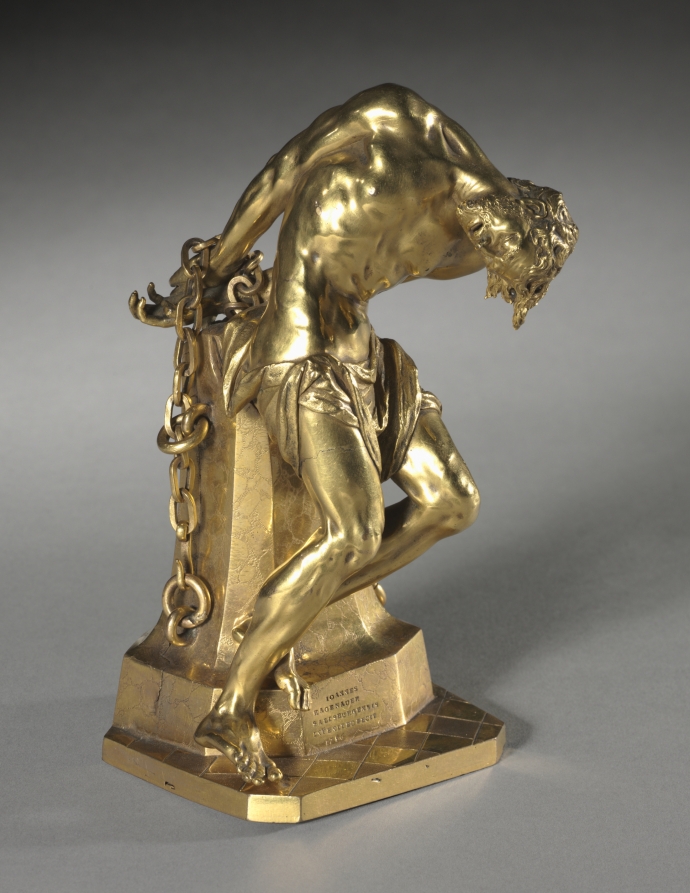
Urban Silhouette Research: Christ at the Column — Structural Poetics of the Bound Axis
I. Geometric Integrity: The Column as Load-Bearing Metaphor
The artwork presents a singular architectural proposition: the human form rendered as a compressed vertical axis, bound to a secondary structural element that functions simultaneously as support and constraint. This is not merely a narrative of suffering. It is a study in load distribution. The column—cylindrical, unadorned, resolute—operates as the spine of the composition. The figure’s torso twists against it, creating a helical tension that reads as both resistance and surrender. For Addison Fashion, this defines the 2026 executive silhouette: a tailored column of fabric that does not drape but anchors, wrapping the body in a geometry of controlled opposition.
The shoulders, pulled back and restrained, establish a horizontal counterforce to the vertical thrust of the column. This is the essence of urban armature—the wearer is not free-floating but tethered to an invisible architecture. The 2026 silhouette rejects the fluidity of the previous decade. It demands structural integrity: a shoulder line that is sharp, a waist that is cinched not for decoration but for compression, and a hem that falls with the weight of intention. The column is not a prop. It is the load-bearing wall of the garment’s logic.
II. Materiality: Onyx, Marble, and the Urban Skin
The surface of the artwork—whether carved stone or painted canvas—carries the patina of urban materiality. It is not pristine. It is weathered, granular, and unapologetically mineral. For Addison Fashion, this translates into a palette of Onyx: deep, absorptive, and devoid of ornament. The fabric must behave like stone that has learned to move. We propose double-faced wool crepe with a matte finish, bonded to a micro-mesh structural interlining that holds the shape without rigidity. The goal is engineered drape—a textile that falls like a monolith but articulates like a second skeleton.
The column itself suggests a smooth, cold surface—polished basalt or honed limestone. This is the urban plinth against which the executive body is measured. In garment terms, this becomes the column dress or the column coat: a single, unbroken line from clavicle to ankle, interrupted only by the strategic torsion at the waist. The binding ropes—if we read them as such—are not restraints but seam lines: visible, deliberate, and structural. Exposed zippers in gunmetal. Topstitching in silver thread. The hardware of restraint becomes the hardware of luxury.
III. The Bound Axis: Silhouette as Psychological Armor
The figure’s posture—arms bound, torso exposed, gaze averted—is often read as vulnerability. We reject this reading. In the context of the 2026 executive, this is strategic exposure. The bound arms are not passive; they are coiled. The exposed torso is not naked; it is armored by attention. The silhouette that emerges is one of contained power: a body that has learned to operate within constraints, and in doing so, has transcended them. This is the Onyx executive: she does not need to raise her arms to command a room. The room is already oriented around her axis.
The column, then, is not a punishment. It is a pedestal. The figure is not bound to it; the figure is it. The 2026 Addison silhouette absorbs this lesson: the garment is not a decoration of the body but a continuation of its architecture. The column dress is not a dress. It is a vertical territory. The column coat is not outerwear. It is a mobile monument. The wearer does not put on clothing; she occupies it.
IV. Urban Poetics: The City as Column, The Body as Capital
In the urban context, the column is everywhere: lampposts, subway pillars, the exposed steel of unfinished towers. The city is a forest of verticals, and the executive body must navigate this forest without being absorbed by it. The Christ at the Column offers a grammar of resistance: the body that holds its shape against the pressure of the environment. For Addison Fashion, this means shoulder construction that is architectural but not aggressive, waist definition that is precise but not corseted, and hemlines that are weighted but not heavy.
The poetics here are cold. There is no warmth in the stone. There is no softness in the binding. The 2026 executive silhouette is Onyx: it absorbs light, it absorbs noise, it absorbs doubt. It is the color of the column at midnight, the color of the city when the crowds have gone and only the structure remains. This is not a silhouette for the faint-hearted. It is a silhouette for those who understand that freedom is a function of form, and that the most powerful gesture is often the one that appears most restrained.
V. Conclusion: The Column as Collection
Christ at the Column is not a religious painting. It is a technical drawing for the 2026 Addison wardrobe. It instructs us to build garments that stand—not because they are stiff, but because they are structured. It instructs us to use Onyx as a foundation, not an accent. It instructs us to treat the body as a column and the column as a body. The result is a silhouette that is neither tailored nor fluid, but architectural: a silhouette that does not follow the figure but defines it. The executive of 2026 does not wear clothes. She wears load-bearing geometry. She wears the column.