Urban Form: Dubia Fortuna
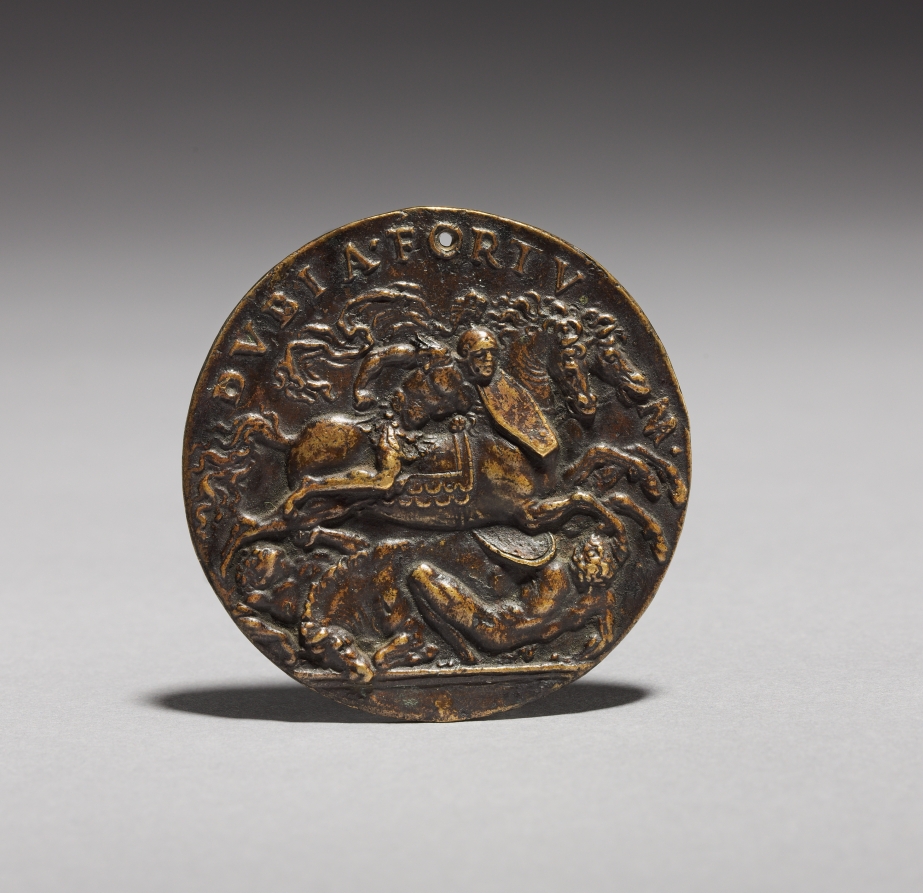
Urban Silhouette Research: Dubia Fortuna — A Technical Deconstruction of Form and Chromatic Restraint
I. Thesis: The Dialectic of Latency and Fixity
The Addison Fashion NYC 2026 executive wardrobe must be understood not as a collection of garments but as a system of spatial propositions. The subject under examination—Dubia Fortuna—derives its structural logic from a fundamental tension identified in two archaeological artifacts: the Mold Fragment with Musicians and the Mortuary Figure of the Zodiac Sign: Ox (Taurus). These objects, separated by material, function, and metaphysical orientation, nonetheless articulate a single aesthetic problem: how does form negotiate the competing demands of potential energy and terminal order? For the 2026 executive, this is not an abstract inquiry. It is the operative principle governing silhouette architecture.
The Mold Fragment represents what I term latent form—a configuration whose beauty resides in its imminent utility, its capacity to generate. The Taurus figure represents fixed form—a configuration whose authority derives from its immutability, its function as cosmic anchor. The Addison wardrobe for 2026 must synthesize both: garments that appear structurally resolved yet retain an internal dynamism, a sense of movement arrested but not extinguished.
II. Silhouette Architecture: The Slate Protocol
Slate, as the governing chromatic register, is not a neutral choice. It is a strategic compression of the tonal spectrum—a color that absorbs light without reflecting it, that signals authority without ostentation. In the context of Dubia Fortuna, Slate operates as the material equivalent of the mortuary fresco's ghostly flatness: it flattens volume, reduces the body to a graphic proposition, and yet—critically—retains sufficient depth to suggest the mold fragment's tactile dimensionality.
The 2026 silhouette must be columnar but not rigid. The shoulder line is extended, yes, but not aggressively so—approximately 2.5 centimeters beyond the acromion process, creating a subtle horizontal that echoes the Taurus figure's geometricized horns. This is not power dressing in the 1980s sense; it is power as containment. The torso is elongated through a high armhole and a suppressed waist, but the suppression is achieved through internal corsetry rather than external cinching. The result is a garment that appears to have no waist at all—a continuous vertical plane that recalls the mold fragment's unbroken drapery lines.
The critical innovation lies in the hem architecture. Rather than a straight fall, the 2026 Addison executive coat employs a variable-weight hem: heavier at the back, lighter at the front, creating a subtle forward pitch. This is a direct translation of the mold fragment's captured motion—the musician's posture frozen mid-breath. The garment does not hang; it leans. This lean is the sartorial equivalent of latent form: the wearer appears perpetually on the verge of movement, yet structurally resolved.
III. Chromatic Stratification: From Slate to Shadow
Slate must be understood as a gradient, not a flat field. The 2026 palette within this register moves from a cool, blue-inflected slate (Pantone 17-4014 TCX) at the shoulder to a warmer, brown-inflected slate (Pantone 18-4006 TCX) at the hem. This vertical gradient mimics the atmospheric perspective of the mortuary fresco—the way the Taurus figure recedes into the wall's surface, its outlines softening as they approach the floor. The executive who wears this garment is not a monolith; she is a stratified presence, her authority distributed across a spectrum rather than concentrated at a single point.
Accents are minimal and metallic: brushed silver hardware, matte onyx buttons, ivory piping at the interior seams. These are not decorative gestures. They are punctuation marks—the equivalent of the Taurus figure's astronomical symbols, small precise notations that anchor the garment within a larger system of meaning. The ivory piping, visible only when the coat is opened, functions as the mold fragment's interior surface: a hidden beauty that rewards intimacy rather than public display.
IV. Materiality and the Tactile Contract
The mold fragment demands a tactile contract with its viewer—it was made to be touched, handled, used. The 2026 Addison executive wardrobe must recover this haptic dimension without sacrificing the Taurus figure's monumental reserve. The solution lies in double-faced fabrics: a bonded wool-silk blend for outerwear, a compact cotton-linen for suiting, each with a distinct hand on obverse and reverse. The exterior is smooth, almost cold—the Slate surface that repels casual engagement. The interior is warm, slightly napped—the latent form that awaits the wearer's body.
This material duality is the garment's metaphysical argument. The executive who wears it is both the Taurus figure—fixed, ordered, publicly legible—and the mold fragment—potential, generative, privately alive. The wardrobe does not resolve this tension. It institutionalizes it.
V. Conclusion: The 2026 Executive as Dubia Fortuna
Dubia Fortuna—doubtful fortune—is the condition of the contemporary executive: a figure who must project certainty while operating within radical uncertainty. The 2026 Addison silhouette addresses this condition not through armor but through structural ambivalence. The Slate palette absorbs without announcing. The columnar form contains without constraining. The variable hem suggests motion without instability. The tactile interior rewards the wearer alone.
This is not a wardrobe for the executive who wishes to dominate space. It is a wardrobe for the executive who wishes to inhabit it—who understands that authority is not a surface but a depth, not a statement but a silence. The mold fragment and the Taurus figure, held in tension, produce a third form: the Addison woman of 2026, who is neither latent nor fixed, but perpetually becoming.