Urban Form: Carving from an Overmantel
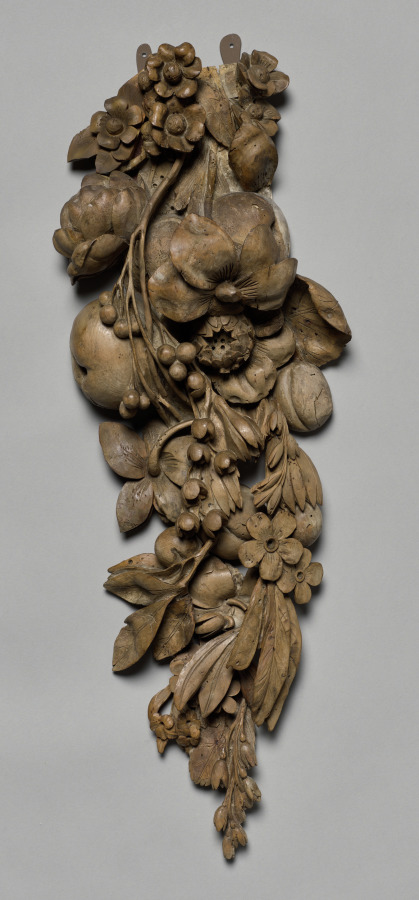
Urban Silhouette Research: Carving from an Overmantel
I. Thesis: The Dialectical Surface
The Addison Fashion NYC design intelligence for the 2026 executive cycle originates in an unexpected archival collision: the lithographic incision of Honoré Daumier’s Caricaturana No. 30—Robert Macaire before the magistrate—set against the undulating wave motif of a twelfth-century Song dynasty meiping. These two artifacts, separated by six centuries and two civilizational grammars, share a single structural proposition: that order and chaos are not opposites but co-dependent surfaces, and that the most disciplined form is the one that has absorbed its own contradiction. For the Addison wardrobe, this is not art-historical ornament. It is a manufacturing brief.
II. Formal Deconstruction: The Daumier Line
Daumier’s lithographic stroke is coarse, directional, and morally impatient. It does not describe volume; it carves it. The black-white binary eliminates tonal transition, forcing the eye to read posture, gesture, and the architecture of the courtroom as a single compressed plane. Macaire’s body is a system of acute angles—elbow, jaw, shoulder—each vector asserting a defense that the composition itself refutes. The silhouette is anti-gravitational: it leans, it juts, it refuses the vertical.
Transposed to tailoring, this yields a Slate-toned architectural shoulder with a suppressed waist and a hem that breaks at the mid-calf—a proportion that elongates the leg while retaining the torso’s angular authority. The lapel is narrow, notched at a severe 75-degree angle, echoing the lithographic cut. Seam lines are exposed, not concealed: a single French dart running from armhole to hip, functioning as the garment’s own caricature—a line that reveals the body’s truth by exaggerating its structure. The fabric is a double-faced wool crepe, matte on the exterior, with a faintly iridescent reverse, so that movement produces a flicker of the hidden surface. This is the Daumier principle: the visible line indicts the invisible one.
III. Formal Deconstruction: The Song Wave
The meiping’s wave motif operates on the opposite logic. Its incised lines are continuous, rhythmic, and non-hierarchical—no single crest dominates; each swell folds into the next. The glaze is warm, semi-opaque, and slightly uneven, a material honesty that refuses the industrial perfection of later porcelain. The vessel’s silhouette is tapered, high-shouldered, and footed: a form that contains turbulence without resolving it. The wave is not a storm; it is the idea of a storm, abstracted into a system of curves.
For Addison’s 2026 executive wardrobe, this translates into a fluid underlayer: a silk-georgette column dress or a bias-cut slip in Slate with a pearlized finish, its surface treated with a micro-pleated wave pattern that catches light only at the wearer’s movement. The pleats are not decorative; they are structural memory—each fold returns to its original position, absorbing the body’s motion without distortion. The neckline is a soft cowl, echoing the meiping’s flared lip, while the hem is weighted with a narrow silk charmeuse binding to maintain the column’s vertical integrity. This is the Song principle: turbulence contained by form, not suppressed by it.
IV. Synthesis: The Overmantel Silhouette
The Addison 2026 silhouette is therefore a two-register system. The outer layer—the Daumier coat—provides the public architecture: sharp, Slate, unyielding in its shoulder and hem. The inner layer—the Song column—provides the private rhythm: fluid, pearlized, responsive. The two are not layered for warmth; they are layered for dialectical tension. The coat’s angular lapel cuts across the column’s soft cowl, producing a visual friction that reads as authority without rigidity. The column’s wave pleats emerge only when the coat is removed or when the wearer gestures—a private aesthetic revealed by public motion.
Color is restricted to Slate in three values: a deep graphite for the coat’s exterior, a mid-tone for the column’s base, and a pale silver-slate for the pleat highlights. This monochrome discipline eliminates the distraction of hue and forces the eye to read form alone. The result is a wardrobe that functions as a carved surface: from a distance, a single austere silhouette; at close range, a system of incisions, folds, and reversals that reward sustained attention.
V. Executive Application: The 2026 NYC Context
The 2026 executive operates in a landscape of compressed credibility—hybrid meetings, asynchronous authority, the demand to signal competence without theatricality. The Addison silhouette answers this by refusing the binary of soft power and hard power. The Daumier coat is not armor; it is a line of inquiry. The Song column is not vulnerability; it is a system of resilience. Together, they propose that the most effective executive presence is one that contains its own critique—that can be read as severe from the hallway and as subtle from the conference table.
This is the overmantel principle: the object that decorates the hearth must also withstand the fire. Addison’s 2026 wardrobe does not choose between the lithograph and the porcelain. It wears both, and in doing so, it carves a new silhouette from the space between them.