Urban Form: Carving from an Overmantel
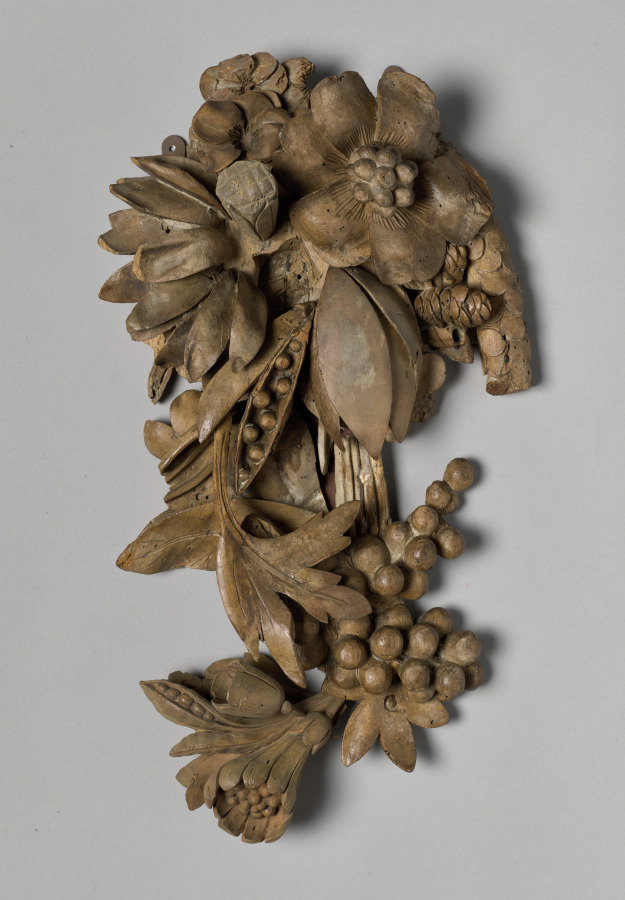
Urban Silhouette Research: Carving from an Overmantel
I. The Mantel as Plinth: Objecthood Against Narrative
The overmantel is an architectural residue—a shelf above the hearth where domestic objects are staged for contemplation. To carve a silhouette from this site is to extract form from the residue of daily ritual. The artwork under analysis presents a fundamental tension: a ceramic vessel named after a painting, a functional object bearing the title of a philosophical death scene. This is not whimsy. It is a precise provocation. The cup does not illustrate Socrates; it is Socrates—or rather, it occupies the same aesthetic plane as the painting without recourse to narrative. For Addison Fashion, this duality is not academic. It is the operating system of the 2026 executive wardrobe.
The painting—Jacques-Louis David's The Death of Socrates—operates through what we may term representational depth. Every gesture, every chain, every exposed chest participates in a legible moral drama. The cup, by contrast, offers existential depth. It is cobalt and indigo in abstract vortex, a three-dimensional fact of clay and glaze. It tells no story. It demands only that we stand before it. This is the distinction between a garment that signals status through logos and one that asserts presence through cut. The 2026 executive silhouette belongs to the latter category.
II. Geometric Integrity: The Vortex as Structural Principle
Examine the cup's surface. The cobalt-indigo vortex is not decoration; it is a diagram of force. The spiral is the most efficient geometric expression of contained energy—it neither begins nor ends, it only rotates inward. In architectural terms, this is a helical load path, transferring stress from rim to base without a single orthogonal interruption. The 2026 Addison silhouette adopts this principle: seams that spiral rather than slice, darts that redirect volume rather than compress it, hems that terminate in a curve rather than a line.
The cup's form—whatever its specific rhythm—refuses the symmetry of classical pottery. It leans. It torques. It implies a body in motion even at rest. This is the structural poetics we translate into tailoring: a shoulder that extends beyond the anatomical joint, a lapel that rolls rather than presses, a trouser that breaks at the ankle with the weight of poured glaze. The geometry is not aggressive. It is inevitable. Like the vortex, it appears to have always been there.
III. Urban Materiality: Clay, Glaze, and the Concrete Condition
The cup is made of earth. Its surface is glass. This is the same material dialectic that defines the contemporary city: concrete and steel, brick and glass, mass and membrane. The 2026 executive does not dress for the office; she dresses for the urban field—a continuous surface of reflective and absorbent planes. Addison's palette for this cycle is Slate: a grey that is neither warm nor cool, neither matte nor gloss, but suspended between states. Slate absorbs the city's noise and returns it as silence.
The cup's cobalt-indigo vortex introduces a single chromatic event—a controlled rupture of the neutral field. In the Addison silhouette, this translates to a single architectural gesture: a collar stand in deep indigo, a cuff lining in cobalt, a belt that interrupts the slate expanse with the weight of pigment. The rest is restraint. The rest is minimalist luxury—not the absence of detail, but the presence of only necessary detail.
IV. The Overmantel as Urban Site: From Hearth to Skyline
The overmantel was once the domestic altar. Now it is the executive's mental shelf—the place where she stages her own contradictions. The cup named after a painting sits there, refusing to resolve. The 2026 silhouette must perform the same function on the body. It must be both vessel and image, both functional and philosophical, both silent and declarative.
This is not a contradiction. It is a compound aesthetic. The painting argues that form achieves immortality through meaning. The cup argues that form achieves presence through being. The executive wardrobe of 2026 argues that both are true—that a garment can carry narrative without illustration, can signify without logos, can be deeply felt without being fully read. The vortex does not explain itself. Neither does the woman who wears it.
V. Conclusion: The Depth of the Surface
Carving from an overmantel is an act of extraction. We take the cup from its shelf and place it on the body. We take the painting's title and strip it of its scene. What remains is pure silhouette—a geometry of containment, a materiality of urban residue, a poetics of the unresolved. The 2026 Addison executive does not choose between Socrates and the cup. She wears both. She is the argument and the object. She is the vortex and the slate. She is, finally, the depth that does not require explanation—only presence.