Urban Form: Carving from an Overmantel
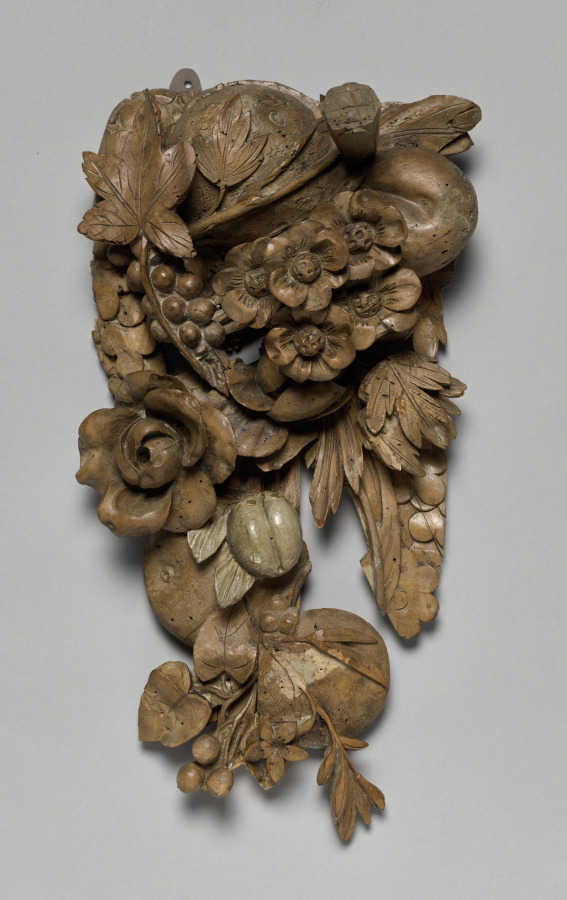
Urban Silhouette Research: Carving from an Overmantel
The Vessel as Structural Proposition
The Cup and Stand presents a geometry of restraint. Its silhouette is defined by a calibrated vertical axis—the stand's foot, the stem's taper, the cup's lip—each element resolving into the next without ornamentation. For Addison Fashion, this is not decorative history; it is a thesis on proportion. The 2026 executive silhouette absorbs this logic directly: a shoulder line that behaves as the cup's rim, level and uninflected; a waist that functions as the stem, narrowed to a precise structural minimum; a hem that grounds the figure with the same quiet authority as the stand's base. The garment becomes a vessel for the body, and the body becomes a column of measured intervals. Nothing is added. Everything is resolved.
From Overmantel to Urban Plane
The object's original context—the overmantel, a site of domestic display—is deliberately displaced. In the Addison wardrobe, the vessel's poetics migrate to the urban plane: the glass curtain wall, the granite lobby, the transitional corridor between transit and office. The silhouette must survive this displacement without losing geometric integrity. This demands materiality that behaves like fired clay or patinated metal—surfaces that hold light rather than reflect it, that register the body's movement as a slow modulation rather than a flash. Slate-toned wool crepe, bonded with a matte technical finish, achieves this. The fabric does not drape; it stands. It carves the wearer into the city's vertical grammar.
The Davidian Counterpoint: Tension Without Rupture
The Death of Socrates supplies the necessary counterweight. Where the vessel is stillness, the painting is a pressure system—gesture, gaze, the raised hand pointing toward an absent absolute. The 2026 executive silhouette cannot afford the painting's theatricality, but it must internalize its tension. This is achieved through concealed structure: a shoulder seam set slightly forward, a back panel cut on a subtle diagonal, a collar that stands away from the neck by a calculated two centimeters. These are not visible gestures. They are the garment's philosophical armature—the equivalent of Socrates' steady hand, a composure that reads as calm only because the underlying tension has been rigorously engineered. The silhouette appears serene. It is, in fact, held.
Materiality as Moral Position
Addison Fashion treats material selection as an ethical and aesthetic decision, not a commercial one. The vessel's clay is humble; its beauty emerges from the maker's discipline. The 2026 collection translates this into a hierarchy of surfaces: primary shells in dense, dry-handed wool; secondary layers in paper-touch silk; structural elements—belts, plackets, stand collars—in brushed silver hardware that reads as oxidized rather than polished. The palette remains within a narrow band: slate, onyx, ivory, with silver as the sole accent. This is not minimalism as absence. It is minimalism as compression—every element carrying the maximum structural load with the minimum visible means.
Geometric Integrity and the Executive Body
The final analysis concerns fit. The vessel's geometry is fixed; the body must accommodate itself to it. The 2026 silhouette reverses this contract: the garment is engineered to the body's architectural truth—the slope of the shoulder, the length of the torso, the angle of the hip—and then compressed into geometric clarity. A tailored coat, therefore, is not a covering but a proposition: the wearer's form resolved into a slate column, the overmantel's vessel enlarged to urban scale, the painting's tension held in the seam allowance. The executive silhouette of 2026 is neither soft nor aggressive. It is carved—from the overmantel, from the canvas, from the city's own relentless geometry—into a single, silent statement of structural poetics.