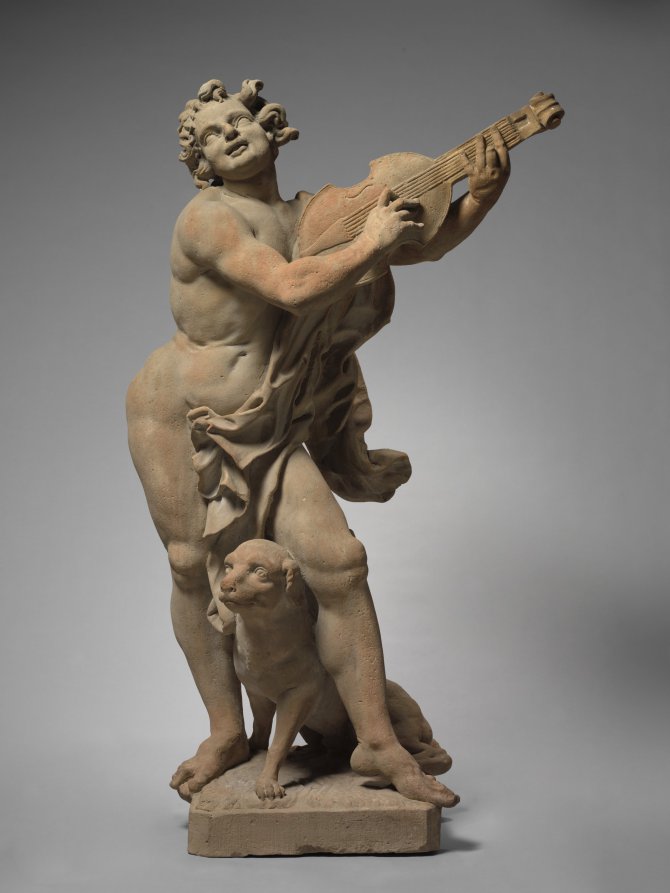
Urban Form: Orpheus and Cerberus
Urban Silhouette Research: The Vessel and the Void — Form as Container in the Addison 2026 Executive Wardrobe
I. Thesis: The Dual Architecture of Containment
The Addison Fashion NYC research division has identified a structural dialectic operating beneath the surface of two ostensibly unrelated artifacts: the late-Renaissance portrait of Saint Philip Neri and the Shang-Zhou bronze zun-vessel. Our 2026 executive wardrobe derives its formal logic from the tension between these two systems of containment. The portrait operates through interiority—the human figure as a vessel for grace, its silhouette defined by the chiaroscuro of internal luminosity pressing outward against a darkened ground. The bronze vessel operates through exteriority—the ritual object as a public container of cosmic order, its silhouette defined by the rhythmic segmentation of taotie and leiwen motifs across a disciplined surface. For the Addison client, this duality resolves into a single proposition: the executive silhouette must function simultaneously as a private vessel of interior authority and a public instrument of institutional order. The 2026 collection is engineered at precisely this intersection.
II. Form Analysis: The Portrait's Interior Silhouette
The Neri portrait presents a silhouette governed by compression and release. The heavy drapery anchors the lower register in a dense, almost sculptural mass, while the face—the sole point of illumination—functions as the apex of a pyramidal structure. The garment does not decorate the body; it frames the site of meaning. Translated into tailoring, this yields the Addison Onyx column silhouette: a single, uninterrupted vertical line from shoulder to hem, with the collar and neckline engineered as the sole aperture. The shoulder is set clean and slightly forward, eliminating the lateral noise of conventional suiting. The result is a garment that reads as a closed volume—a vessel whose contents are inferred rather than displayed. This is the formal grammar of quiet authority: the executive who does not announce, but contains.
III. Form Analysis: The Bronze Vessel's Exterior Rhythm
The Shang-Zhou zun offers a countervailing logic. Its silhouette is not a closed volume but a segmented field—the body divided by horizontal registers and vertical flanges into a grid of disciplined intervals. The taotie motif is not ornament but structure: it organizes the surface into a system of readable zones, each with its own density and rhythm. The Addison interpretation is the Onyx modular overcoat: a garment whose surface is articulated by seam-lines and panel divisions that echo the vessel's flanges. These are not decorative topstitches; they are load-bearing structural elements that segment the body into a legible hierarchy of zones—shoulder, chest, waist, hem—each with a distinct visual weight. The effect is institutional legibility: the wearer is read as a system of ordered parts, a public instrument of governance.
IV. Color: The Onyx Register
The collection is anchored in Onyx—a black of maximum density and minimum reflectance, selected for its capacity to absorb rather than project light. In the portrait, the darkened ground serves to isolate and amplify the illuminated face; in the bronze vessel, the patinated surface accumulates time as a darkening of the original alloy. Onyx operates in both registers: it is the ground against which the wearer's face and hands become the sole points of luminance, and it is the accumulated surface that signals institutional permanence. The palette admits no accent. Variation is achieved through texture and finish—matte wool crepe against a low-sheen silk twill, a brushed cashmere against a dry-handle gabardine—rather than through hue. This is the chromatic discipline of the vessel: one field, many registers.
V. The 2026 Executive Wardrobe: Synthesis
The Addison 2026 wardrobe is organized around three Onyx archetypes. The Column Dress (interior register) is a single-volume sheath in matte crepe, with a high, clean neckline and a shoulder seam set to eliminate lateral excess—the portrait's compression logic applied to the female executive silhouette. The Modular Overcoat (exterior register) is a double-faced wool construction with articulated panel seams and a structured shoulder, its surface segmented into readable zones—the vessel's rhythmic discipline applied to outerwear. The Structured Blazer (synthesis) combines both logics: a closed, columnar torso with a single horizontal seam at the waist that functions as the vessel's central register, dividing the body into a legible hierarchy of upper and lower zones. Each garment is engineered to be read at distance and understood at close range—the public legibility of the bronze vessel, the private interiority of the portrait.
VI. Conclusion: The Container as Content
The Addison 2026 collection proceeds from a single conviction: in the highest register of executive dress, form is content. The Onyx column does not merely clothe the body; it constructs a vessel whose interiority is inferred from its discipline. The modular overcoat does not merely cover the body; it organizes the wearer into a legible system of institutional order. The executive who wears Addison in 2026 is neither decorated nor concealed—she is contained, and in that containment, she is read. The vessel holds; the void defines. This is the Addison proposition: silhouette as architecture, color as discipline, and the executive body as the ultimate container of meaning.