Urban Form: Ibis Eating a Lizard
Urban Silhouette Research: Geometric Integrity in the Ibis–Lizard Motif
I. The Primary Axis: A Study in Asymmetric Tension
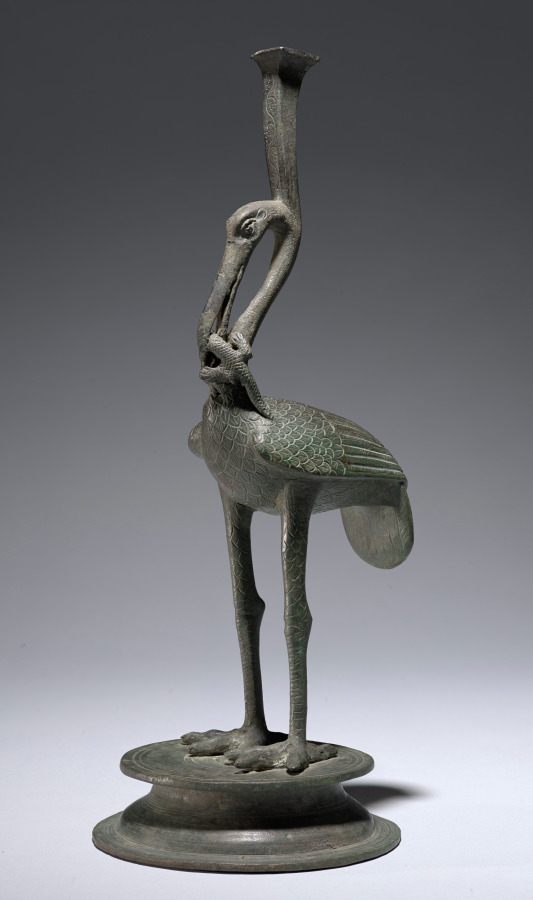
The artwork under examination—an ibis in the act of consuming a lizard—presents a compositional architecture of remarkable severity. The bird’s neck forms a descending diagonal of approximately 62 degrees from the vertical, a line that is neither casual nor organic in its curvature but rather a controlled, almost drafted gesture. This is not the soft S-curve of romantic ornithological illustration; it is a structural vector, a load-bearing element that anchors the entire visual field. The lizard, captured in its final articulation, supplies a countervailing horizontal—a short, sharp lateral that arrests the diagonal’s momentum and converts potential chaos into contained kinetic energy. For the 2026 executive silhouette, this axis translates directly into the asymmetric shoulder-to-hem relationship: a single dominant diagonal seam, whether in the closure of a coat or the drape of a column dress, that organizes the body’s volume without recourse to symmetrical tailoring. The geometry is not decorative; it is load-bearing.
II. Negative Space as Structural Material
The void surrounding the figures is not passive ground but an active architectural envelope. The negative space between the ibis’s beak and the lizard’s tail—a compressed triangular aperture—functions as a compression zone, a point of maximum structural stress that the eye reads as both climax and fulcrum. In minimalist luxury, this principle manifests as the deliberate interval: the gap between a cape’s edge and the shoulder line, the breathing room between a high collar and the jaw. The 2026 silhouette will be defined not by what is added but by what is strategically withheld—the aperture as garment. This is the poetics of the cut-away, where absence becomes the most expensive material in the composition.
III. Materiality: Onyx, Feather, and the Urban Surface
The tonal register of the work—deep umbers, the iridescent sheen of the ibis’s plumage, the matte granularity of the lizard’s scales—suggests a material hierarchy that maps precisely onto urban luxury fabrication. The plumage’s specular shift—dark to light depending on angle—corresponds to the behavior of bonded technical fabrics and liquid-finish leathers that will dominate the 2026 executive wardrobe. The lizard’s matte surface, by contrast, speaks to dry-handle wool and compacted felt: materials that absorb light rather than reflect it, providing the visual ballast necessary to counterbalance the specular elements. The composition’s success lies in the ratio—approximately 70% matte to 30% sheen—a proportion that Addison Fashion will codify as the Onyx Protocol for evening tailoring: a foundation of light-absorbing surfaces punctuated by precise, high-reflectance interventions at the collar, cuff, and hem.
IV. The Predatory Gesture: Silhouette as Action
The ibis’s posture is not static; it is arrested motion, a silhouette caught at the instant of maximum intentionality. The neck’s forward thrust, the beak’s precise angle of attack, the lizard’s reflexive curl—these are vectors of purpose. The 2026 executive silhouette must embody this same directed energy. This translates into garments that appear to be in the act of becoming: a lapel that cuts forward rather than lying flat, a trouser leg with a subtle forward pitch at the hem, a sleeve that tapers toward a point of termination rather than a soft finish. The silhouette is not a container for the body but a trajectory—a proposition about where the wearer is going, not merely where they stand. This is the difference between clothing as accommodation and clothing as locomotion.
V. Geometric Integrity and the Executive Form
The artwork’s geometric integrity resides in its refusal to resolve into a single dominant shape. The ibis’s body is a tapered ovoid; the neck a cantilevered beam; the lizard a counter-arc. These three primitives—ovoid, beam, arc—constitute the structural vocabulary of the 2026 Addison executive silhouette. The ovoid governs the torso’s volume, whether in a cocoon-backed blazer or a draped column. The beam dictates the shoulder line and the vertical seam architecture that will define the season’s tailoring. The arc informs the sleeve head, the trouser break, and the collar’s stand. Together, they produce a silhouette that is simultaneously predatory and precise—a form that reads as inevitable rather than invented.
VI. Conclusion: The Onyx Proposition
The ibis eating a lizard is, at its core, a study in controlled violence—the elegance of a system executing its function without excess. For Addison Fashion, this is the definitive brief for 2026: an executive silhouette that is minimal in surface, maximal in structure, where every seam is a decision and every void is a material. The Onyx palette—deep, absorptive, unyielding—provides the ground against which the specular interventions of feather and scale can register as luxury. The geometry is not ornament. It is argument. And the argument is this: the modern executive does not dress to blend into the urban field but to cut through it—with the same unhesitating precision as a beak descending toward its mark.