Urban Form: Seated Buddha (sculpture)
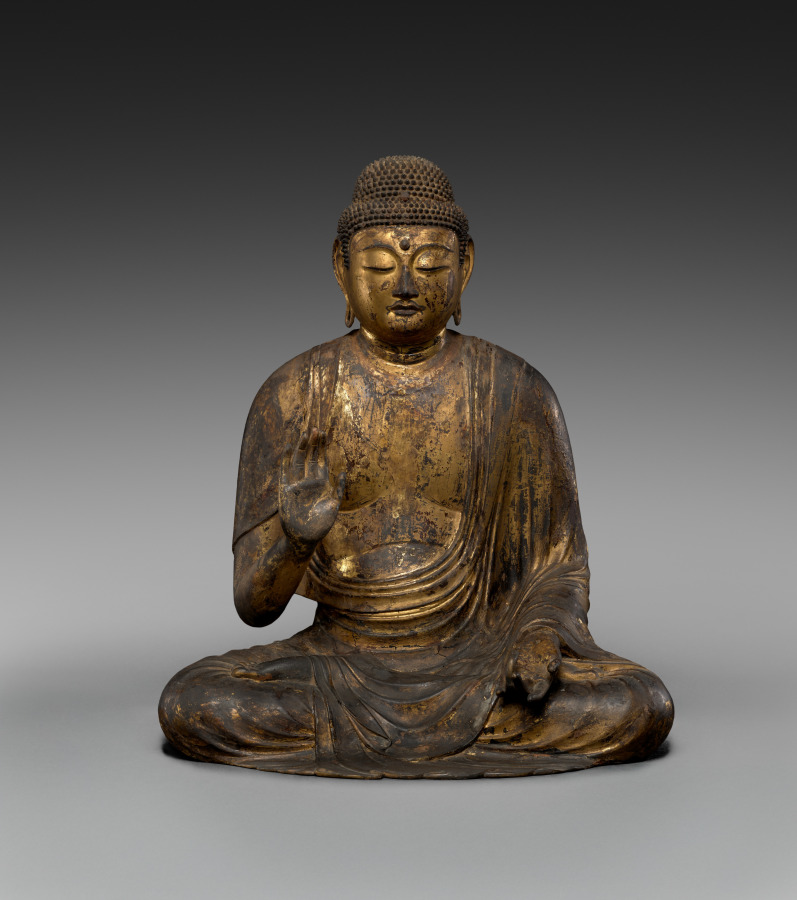
Urban Silhouette Research: The Seated Buddha as Structural Prototype
I. Geometric Integrity: The Architecture of Stillness
The Seated Buddha presents a closed geometric system of extraordinary rigor. The pyramidal mass of the crossed legs establishes a stable base plane; the torso rises as a tapered column, neither cylindrical nor rectilinear but a controlled convergence of both; the shoulders resolve into a horizontal axis that arrests the vertical ascent with deliberate finality. This is not organic form but constructed form—a tripartite architecture of base, shaft, and capital that anticipates the executive silhouette of 2026 with uncanny precision.
The sculpture's geometry operates through compression and release. The folded legs compress mass at the foundation, creating a dense visual weight that anchors the entire composition. The torso releases this density upward, narrowing through the waist before the shoulders reassert horizontal authority. The head, finally, is a contained sphere—the terminal point of a system that has moved from maximum width to minimum width and back to a controlled center. This is the grammar of the 2026 tailored silhouette: a defined shoulder line, a suppressed waist, and a hem that carries structural weight without volume.
II. Structural Poetics: The Paradox of Contained Tension
What distinguishes the Seated Buddha from mere monumentality is its internal tension—the visible effort of form containing force. The drapery folds are not decorative; they are stress lines, recording the pressure of the body beneath the cloth. Each fold is a vector of compression, a record of mass negotiating with gravity. The sculpture does not relax into its seated position; it maintains it through continuous structural negotiation.
This is the poetics that Addison Fashion must translate for 2026: garments that appear serene but are engineered through visible tension. The executive silhouette of the coming season will not be soft or unstructured. It will be architecturally resolved—shoulders that hold their line without padding, waists that narrow through pattern engineering rather than cinching, hems that carry weight through fabric density rather than volume. The Buddha's drapery teaches us that surface is evidence of structure. Every fold in a garment should record a decision, not an accident.
III. Urban Materiality: The Stone That Refuses Ornament
The sculpture's materiality is its most radical proposition. Stone—cold, dense, unyielding—is asked to perform the impossible: to represent cloth, to suggest flesh, to embody breath. The material does not soften; it resists. And in that resistance, it achieves a severity that no softer material could approach. The surface is not polished to illusion but left with the memory of the chisel—a record of the maker's hand that refuses to disappear.
For 2026, urban materiality must follow this logic. The executive wardrobe will favor fabrics that announce their structure: dense wool crepes that hold a fold, bonded cottons that resist drape, technical silks that catch light without shimmer. The palette will be Slate—the color of the sculpture's weathered surface, a grey that is neither warm nor cool but resolved. Slate is the color of stone that has accepted its environment and refused to soften. It is the color of authority that does not announce itself.
IV. The 2026 Executive Silhouette: A Synthesis
The Seated Buddha offers a complete thesis for the coming season. The silhouette will be pyramidal—broad at the shoulder, narrow at the waist, grounded at the hem. It will be closed—no exposed closures, no visible fastenings, no invitation to intimacy. It will be tensioned—every seam a stress line, every fold a record of structural decision. And it will be silent—a garment that does not narrate but occupies, that does not decorate but resolves.
The executive of 2026 will not wear clothing that softens the body into ambiguity. She will wear clothing that constructs the body into clarity—a silhouette that holds its form through internal logic, not external padding. The Buddha does not sit because it is comfortable. It sits because it has achieved structural equilibrium. That is the posture Addison Fashion will dress for the coming season: not relaxation, but resolution.