Urban Form: Figural Pendant
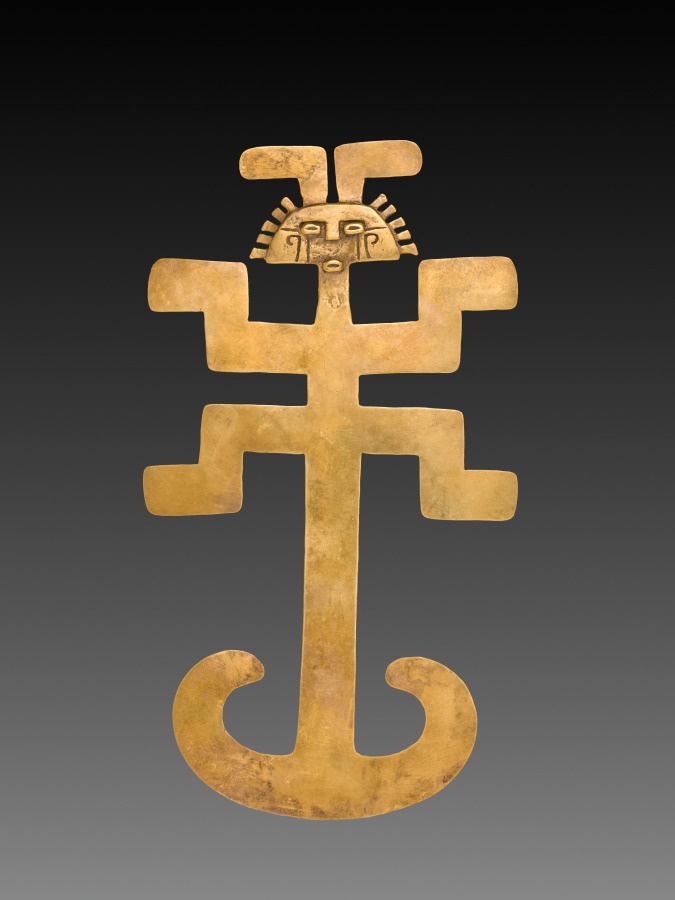
Urban Silhouette Research: The Figural Pendant as Static-Dynamic Dialectic
I. Formal Premise: The Pendant as Contradiction Resolution
The figural pendant under examination constitutes a deliberate formal paradox. Its DNA derives from two opposed visual regimes: the still-life ontology of The Death of Socrates — wherein the hemlock cup, the scroll, and the collapsing torso compress temporality into a ritualistic static frame — and the kinetic ontology of The Hunt — wherein the hound's leap, the drawn bow, and the quarry's struggle suspend death at the threshold of arrival. The pendant, as a wearable object, must reconcile these registers. It cannot merely depict; it must perform the tension between the objectified residue of death and the accelerated approach toward it. The result is a silhouette that reads as arrested motion — a form that appears to have been caught mid-transit, its contours neither fully resolved nor fully dissolved.
II. Form Analysis: The Geometry of Suspension
The pendant's primary mass is asymmetrical, its vertical axis deliberately offset to the left — a formal citation of Socrates' reclining posture, wherein the body's weight distributes unevenly across the compositional plane. This offset creates a gravitational ambiguity: the eye cannot immediately determine whether the form is rising or descending, whether it is being lifted by the chain or pulled downward by its own density. The silhouette thus operates in a state of perpetual imminence, echoing The Hunt's strategy of stretching the pre-death instant into an unbearable duration.
The pendant's lower terminus is not a point but a truncated plane — a flat, sheared edge that recalls the hemlock cup's rim, the cold horizontal that anchors the static composition. This edge functions as the object's temporal floor: below it, nothing; above it, the accumulated weight of the form's upward aspiration. The chain attachment, positioned at the pendant's upper third rather than its apex, introduces a secondary asymmetry — the object hangs not from its center of gravity but from a point of deliberate imbalance, ensuring that the silhouette never settles into repose. It is, in effect, a form that is always about to move, never moving.
Surface treatment reinforces this dialectic. The pendant's face is divided into two zones: a polished plane that catches and refracts ambient light — the "cold gleam" of the cup's edge, the objectified residue of the static tradition — and a matte, striated field whose linear texture mimics the tension lines of a drawn bowstring. The transition between these zones is not gradual but abrupt, a hard edge that cuts diagonally across the form. This edge is the pendant's event horizon: the line at which stillness becomes motion, at which the objectified death of the still life collides with the kinetic death of the hunt.
III. Color Analysis: Slate as Chromatic Mediation
The specified color, Slate, is not a neutral but a compressed spectrum. It occupies the narrow band between the cold gray of the hemlock cup's shadow and the blue-black of the hunter's silhouette against the sky. Slate is the color of twilight — the hour when the static and the kinetic are indistinguishable, when the object and the action share the same diminished light. In the pendant's polished zone, Slate reads as liquid metal, a surface that reflects without warmth, that returns the viewer's gaze with the same indifference as the cup's rim. In the matte zone, Slate becomes particulate, almost granular — the color of stone, of dust, of the residue that death leaves behind.
This chromatic duality is essential to the pendant's function within the 2026 executive wardrobe. Slate is the color of institutional authority without ostentation — it is the hue of the boardroom at dusk, of the legal brief's cover, of the architectural rendering's shadow. It does not announce; it withholds. And in its withholding, it performs the same operation as the pendant's form: it presents a surface that is legible but not transparent, a presence that is felt but not fully seen.
IV. Wardrobe Integration: The Pendant as Executive Signifier
The 2026 NYC executive wardrobe is defined by compression — the reduction of signifiers to their most efficient forms, the elimination of the merely decorative in favor of the structurally necessary. The figural pendant, in Slate, operates within this regime as a focal compression: a single object that carries the weight of an entire aesthetic argument. Worn against a minimalist column silhouette — a tailored wool coat in Onyx, a silk charmeuse blouse in Ivory — the pendant's asymmetry disrupts the verticality of the garment without overwhelming it. It introduces a controlled irregularity into the executive uniform, a reminder that authority is not synonymous with symmetry.
The pendant's scale is deliberately sub-dramatic: large enough to register as a deliberate choice, small enough to avoid the theatrical. It sits at the sternum, the body's center of respiratory function — the point at which breath becomes visible. In this position, it functions as a metronome of composure, a static object that nonetheless vibrates with the suppressed kinetic energy of its source material. The executive who wears it carries, at the center of her body, a compressed dialectic: the stillness of the boardroom and the acceleration of the trading floor, the objectified death of the quarterly report and the kinetic death of the merger negotiation.
In the context of the Addison Fashion NYC 2026 collection, the figural pendant is not an accessory but a thesis statement. It argues that the executive wardrobe's minimalism is not an absence but a density — a form of compression in which every element carries the weight of its own contradictions. The pendant, in Slate, is the chromatic and formal residue of that argument: a small, cold, asymmetrical object that hangs at the center of the body and refuses to resolve.
V. Conclusion: The Pendant as Temporal Artifact
The figural pendant, derived from the dialectic of The Death of Socrates and The Hunt, is ultimately a temporal artifact — an object that does not depict time but inhabits it. Its form is the shape of suspension; its color is the hue of twilight; its function is to remind the wearer that authority is not the absence of contradiction but the management of contradiction at the highest possible compression. In the 2026 executive wardrobe, it is the point at which stillness and motion, object and action, death and life, become indistinguishable — and in that indistinguishability, become wearable.