Urban Form: Carving from an Overmantel
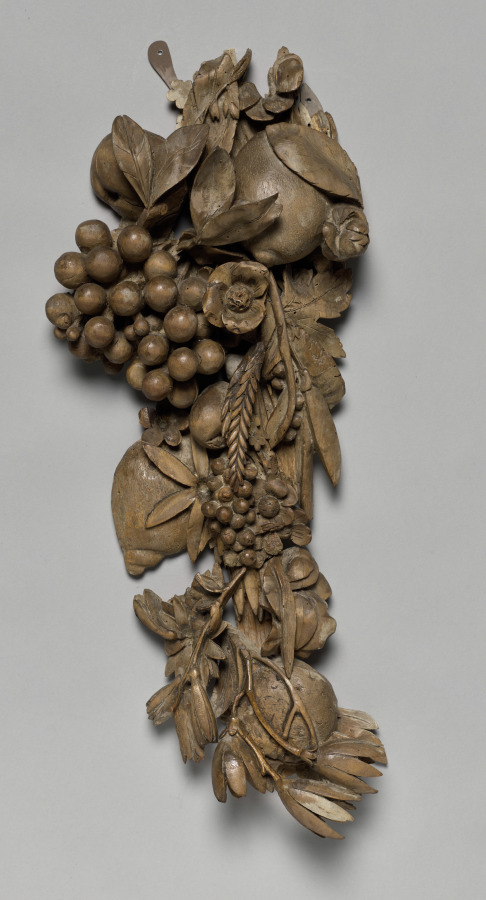
Urban Silhouette Research: Carving from an Overmantel
I. Source Artifact Analysis: The Mediating Object as Formal Proposition
The two artifacts under consideration—the Bodhisattva and the Amulet in the Form of a Seated Figure with Bovine Head—operate within distinct semiotic economies yet converge upon a singular formal problem: the compression of metaphysical force into a bounded, wearable, or installable volume. For the purposes of Addison Fashion's 2026 executive wardrobe, we treat both objects not as devotional endpoints but as structural precedents—case studies in how mass, contour, and surface treatment can encode authority without ornamentation.
The Bodhisattva presents a vertical hierarchy of drapery: cascading folds that establish a central axis of gravity while permitting lateral flow. The silhouette is neither rigid nor unstructured; it is a controlled descent—shoulder-to-hem continuity interrupted only by the deliberate punctuation of the mudra. The amulet, by contrast, operates at compressed scale: a seated bovine-headed figure whose formal logic is density over extension. Where the Bodhisattva expands, the amulet contracts. Where one invites contemplation through slowness of line, the other demands proximity through compactness of mass.
This dialectic—expansion versus compression—is the operative principle we extract for the overmantel carving concept. The 2026 executive does not require a single silhouette but a repertoire of volumes that can shift between the ceremonial and the tactical without abandoning formal integrity.
II. Formal Deconstruction: Line, Plane, and the Ethics of Restraint
The Bodhisattva's formal success lies in its subordination of anatomy to geometry. The body is present but disciplined; the shoulders describe a near-horizontal plane, the torso a tapering column, the lower garment a series of parallel arcs that resolve the figure into a stable triangular base. There is no excess. Every fold serves the logic of descent. For tailoring, this translates to a shoulder line that reads as architectural datum—not padded into aggression, but extended just enough to establish authority. The lapel, in this reading, is not a decorative flourish but a fold-line: a controlled break in the chest plane that mirrors the Bodhisattva's drapery logic.
The amulet contributes a countervailing discipline: the ethics of the bounded form. Its bovine head is not naturalistic but reductive—horn, muzzle, and ear resolved into discrete geometric units. The seated posture is compact, self-contained, refusing spatial leakage. Translated to the overmantel carving, this suggests a jacket that closes with finality: a button stance that functions as a seal, a hem that terminates rather than trails. The executive who wears this silhouette is not in motion through space but in occupation of it—a distinction that matters in boardrooms where presence is evaluated before speech.
Critically, neither artifact employs surface noise. The Bodhisattva's gilding is uniform; the amulet's material—likely faience or steatite—is matte and undifferentiated. The lesson for 2026 is a prohibition on textural distraction. No visible topstitching as ornament. No hardware as jewelry. The overmantel carving must read as a single carved plane from three meters and reveal its joinery only at conversational distance.
III. Color Logic: Onyx as Structural Neutral
The selection of Onyx as the governing color is not a default but a formal decision. Onyx—the near-black with a cool, mineral undertone—performs the same function as the Bodhisattva's patinated bronze: it absorbs light rather than reflecting it, thereby prioritizing silhouette over surface. In the amulet, the dark stone ground serves to contain the figure's symbolic charge; the color does not compete with the form. For the executive wardrobe, Onyx provides chromatic compression: it collapses the visual field so that the wearer's contour becomes the primary information. This is the opposite of the logo-driven aesthetic. It is authority through subtraction.
Within the Onyx field, we permit one tonal deviation: a slate-grey underlayer visible only at the cuff and collar—a reference to the amulet's occasional use of contrasting inlay. This is not contrast for its own sake but a controlled disclosure, a signal that the garment's interior logic is as considered as its exterior.
IV. Application: The 2026 Overmantel Carving Wardrobe
The resulting capsule comprises three volume archetypes derived directly from the source artifacts:
1. The Bodhisattva Column. A long, single-breasted coat with a shoulder plane extended by 1.5 cm beyond the natural acromion, a suppressed waist achieved through darting that follows the drapery arc rather than anatomical curvature, and a hem that terminates at mid-calf with a weighted tape to ensure vertical fall. The closure is concealed; the only visible seam is the center-back, which functions as the axis of gravity.
2. The Amulet Compact. A cropped, double-faced wool jacket with a sealed button stance—three buttons, no lapel roll—and a collar that stands 4 cm at the neck, echoing the amulet's bovine head as a bounded volume. The hem is straight and slightly extended at the back to prevent ride-up during seated work.
3. The Mediating Layer. A silk-cotton poplin shirt in Onyx with a convertible collar that can be worn closed (amulet logic) or open (Bodhisattva logic), its placket concealed to maintain the single-plane reading.
Each piece is designed for interchangeability without visual fragmentation. The Onyx field unifies; the slate underlayer differentiates. The overmantel carving is not a metaphor for the wardrobe—it is its operating manual. We are not decorating the executive body; we are carving a silhouette that mediates between the room and the self, exactly as the Bodhisattva mediates between the devotee and the absolute, and the amulet between the wearer and the uncertain world.
The 2026 Addison executive does not dress to be seen. She dresses to be read—in a single, unambiguous line.