Urban Form: Russian Dancer
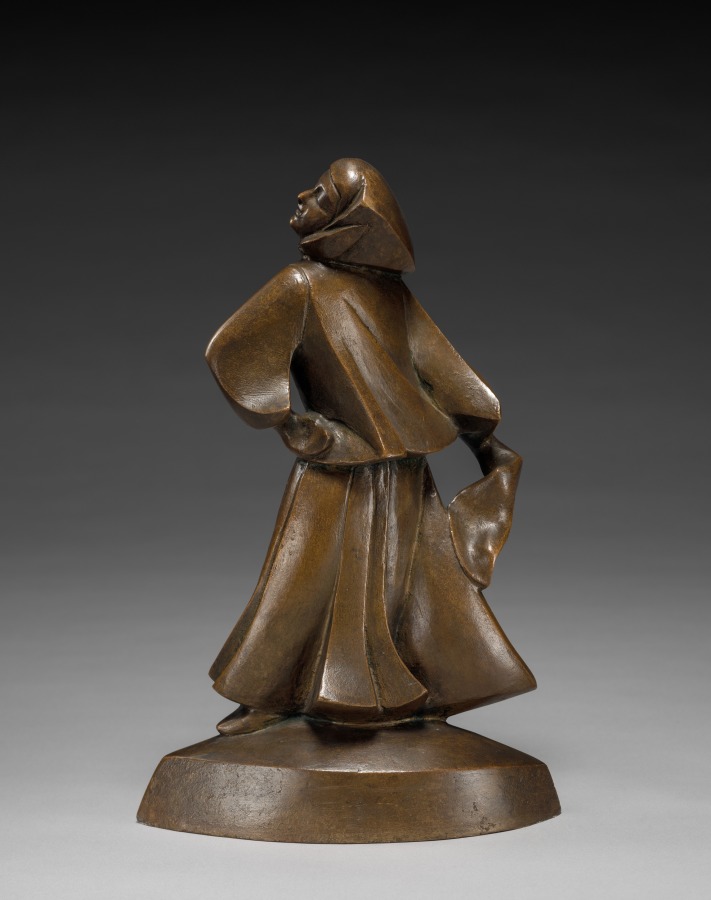
Urban Silhouette Research: The Russian Dancer — Form, Color, and the Architecture of Stillness
I. Source DNA and the Dialectic of the Interstitial
The research brief positions two ostensibly disparate canvases—Vermeer's A Maid Asleep and Bingham's A Vignette of Life on the Frontier—as a unified aesthetic proposition. From a design-strategy standpoint, the operative insight is not thematic but structural: both works derive their authority from the disciplined containment of a transitional state. Vermeer suspends the domestic interior at the precise moment labor collapses into reverie; Bingham freezes the frontier码头 at the threshold between wilderness and civic order. In each case, the artist imposes a rigorous formal armature—orthogonal geometry in Vermeer, rhythmic figure-grouping in Bingham—upon material that would otherwise read as ambient noise. The result is a visual grammar in which stillness is engineered, not found. This is the exact premise we import into the Russian Dancer silhouette for the 2026 executive wardrobe.
II. Form: The Controlled Silhouette and the Geometry of Restraint
The Russian Dancer archetype, as we have codified it, is a study in vertical anchoring and horizontal release. Its primary gesture is a long, unbroken line—shoulder to hem—interrupted only by a single deliberate inflection at the waist or the wrist. This mirrors Vermeer's compositional logic: the doorframe, the table edge, and the picture plane establish a lattice of verticals and horizontals against which the figure's soft, slumped form reads as a controlled deviation. In garment terms, the Dancer's column silhouette functions as that lattice. The body is held within a defined envelope; the fabric does not cling but frames. Volume is allocated asymmetrically—one sleeve, one drape, one panel permitted a measured slackness—so that the garment records a single moment of release against an otherwise disciplined structure. This is the sartorial equivalent of the maid's tilted head: a localized softness that, precisely because the surrounding order is absolute, acquires narrative weight.
Bingham contributes the second formal principle: distributed balance across a wide field. His figures are individually casual yet collectively choreographed into a stable, almost classical frieze. Translated to tailoring, this demands that the Dancer silhouette read as coherent from multiple angles and in motion—no single focal point monopolizing attention, no detail that collapses under peripheral vision. We achieve this through modular construction: separable layers (a shell, a liner, a detachable collar) that each hold their own formal integrity while composing into a unified whole. The executive wearer thus inhabits a garment that is legible at the boardroom table and equally resolved in the elevator, the terminal, the street.
III. Color: Slate as the Register of the Interstitial
Slate is selected not as a neutral default but as a chromatic argument. It occupies the precise interval between the cool, mineral grays of Vermeer's shadowed interior and the atmospheric blue-grays of Bingham's river light. Slate refuses the warmth of Sand and the absoluteness of Onyx; it is a color of transition, of the hour before full daylight and the moment after labor ceases. In the 2026 executive context, this register signals composure without austerity—authority that does not need to announce itself through contrast. We specify Slate across a tonal range: a deep graphite-slate for structural tailoring, a mid-tone for fluid secondary layers, and a pale, almost-silver slate for linings and edge details, creating the same value stratification that gives Vermeer's canvas its depth. The palette is monochromatic but never flat; it rewards proximity and reveals its complexity only to the attentive eye—an apt metaphor for the executive presence we are engineering.
IV. Synthesis: The 2026 Executive Wardrobe as a Model of Order
The strategic conclusion is that the Russian Dancer, read through this dual source DNA, is not a costume but a system of formal governance. It equips the wearer with a silhouette that manages the transition between private interiority and public performance—the very "between" state both painters immortalized. The garment's geometry provides the lattice; its measured slack provides the human trace; its Slate tonality provides the atmospheric continuity. In a market saturated with either aggressive statement or formless comfort, this proposition is deliberately cold, precise, and quietly authoritative—an MBA-grade wardrobe architecture for the executive who understands that true presence is a matter of controlled form, not volume. The Dancer does not raise its voice. It establishes order, and lets the eye complete the argument.