Urban Form: Saint Sebastian
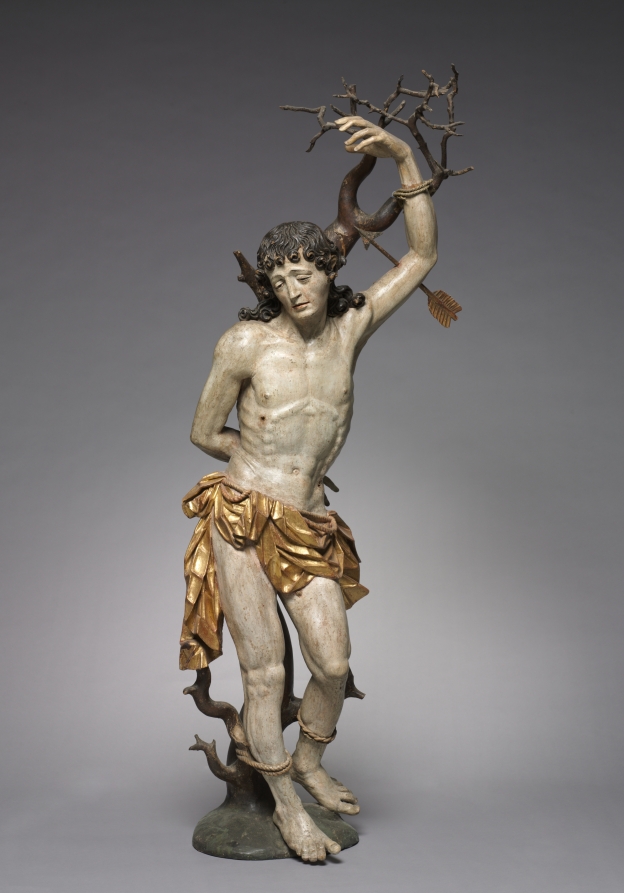
Urban Silhouette Research: Saint Sebastian — Form, Color, and the Phenomenology of the Executive Wardrobe
I. The Iconographic Subject as Structural Premise
Saint Sebastian, as a sartorial DNA source, presents a paradox of extraordinary utility for the 2026 executive wardrobe. The iconography is defined by penetration and restraint — the arrow as an instrument of both violence and precision, the body as a surface that receives and resists simultaneously. For Addison Fashion NYC, the operative principle is not martyrdom but controlled vulnerability: the silhouette must register impact without surrendering structural integrity. This is the foundational tension we will resolve through form.
The Sebastian body is elongated, vertical, and asymmetrically punctuated. It is a column interrupted by vectors. In tailoring terms, this translates to a linear architecture — a shoulder line that extends without exaggeration, a torso that maintains a disciplined fall, and a deliberate disruption of that fall through strategic seam placement or hardware. The arrow becomes the seam; the wound becomes the dart. The garment does not narrate suffering — it performs endurance through construction.
II. Form: The Vertical Discipline and the Interrupting Vector
The 2026 executive wardrobe demands a silhouette that communicates authority without rigidity. The Sebastian-derived form achieves this through a dual-axis system. The primary axis is vertical: a narrow, elongated line that runs from the shoulder point through the hip, creating the impression of height and containment. This is achieved through a suppressed waist — not cinched, but implied — and a shoulder that sits precisely at the acromion, neither extended nor collapsed. The result is a columnar read that flatters the boardroom and the gallery opening with equal fluency.
The secondary axis is the interrupting vector — the arrow. In practice, this manifests as a diagonal seam, a displaced closure, or a hardware element that breaks the vertical monotony. A coat may feature an asymmetric storm flap; a trouser may carry a single diagonal welt pocket that disrupts the otherwise clean hip line. These are not decorative gestures. They are structural interventions that prevent the vertical from becoming bureaucratic. The vector introduces tension, and tension is the precondition of presence.
Critically, the Sebastian form avoids the theatrical. There is no excess fabric, no billowing, no romantic drape. The silhouette is taut — it clings to the body's architecture without compression. This is achieved through a fabric selection that privileges memory and recovery: a four-way stretch wool crepe, a bonded cotton with a dry hand, a technical silk that holds a crease without stiffness. The garment must move with the executive body, not against it, yet retain the discipline of a uniform.
III. Color: Slate as the Phenomenological Ground
Slate is the chromatic equivalent of the Sebastian condition: a cool, mineral gray that sits between the hardness of onyx and the neutrality of ivory. It is neither warm nor inviting; it is resolute. For the 2026 executive, slate functions as a chromatic substrate — a ground against which the interrupting vector can register without competing for attention. It is the color of the boardroom table, the concrete facade, the overcast sky at 7 a.m. It is the color of readiness.
The technical deployment of slate requires attention to value variation. A monochromatic slate ensemble risks flattening into anonymity. The Addison approach introduces a three-tone gradient: a deep slate for the primary garment (the coat or the trouser), a mid-slate for the secondary layer (the shirt or the knit), and a pale slate for the accent (the lining, the stitch, the hardware). This gradient creates depth without color contrast — a tonal architecture that rewards proximity and punishes distance. The executive who wears it is read as composed rather than decorated.
Slate also functions as a chromatic neutralizer for the skin tone. Unlike black, which can drain, or gray, which can muddy, slate carries a blue undertone that flatters a range of complexions while maintaining an austere, non-negotiable coolness. It is the color of the flâneur and the chief financial officer — a democratic austerity.
IV. The 2026 Executive Wardrobe: Synthesis and Application
The Sebastian-derived silhouette, rendered in slate, produces a wardrobe that is minimalist in form and maximalist in implication. The key pieces are as follows:
The Column Coat: A single-breasted, knee-length coat in bonded slate wool, with a suppressed waist and a diagonal seam running from the right shoulder to the left hip — the vector made permanent. The closure is concealed; the hardware is matte silver. The coat reads as a single gesture: containment.
The Vector Trouser: A high-waisted, straight-leg trouser in slate technical crepe, featuring a single asymmetric seam that runs from the waistband to the knee. The hem is clean, the break is minimal. The trouser is designed to be worn with a cropped knit or a tucked shirt — the vector is visible only in motion, which is precisely the point.
The Interrupted Shirt: A slate silk-cotton blend shirt with a displaced placket — the buttons run off-center, creating a subtle diagonal that echoes the coat's seam. The collar is narrow, the cuff is French. The shirt is the quiet vector, the one that registers only on second glance.
The Slate Knit: A fine-gauge merino crewneck in pale slate, designed to be worn under the coat as a tonal layer. The knit is the ground — it provides warmth without bulk, and its pale value creates the gradient that prevents the ensemble from flattening.
V. Conclusion: The Depth of the Surface
The Sebastian wardrobe does not tell a story. It is a story — one of endurance, precision, and the refusal of excess. In the terms of the Addison design philosophy, this is the existential depth that the ceramic cup proposes against the narrative painting: the garment does not represent authority; it enacts it through form and color. The executive who wears it is not asked to perform a role. They are asked to inhabit a structure — and in that inhabitation, the structure becomes invisible, and only the presence remains.
Slate is the color of that presence. The vector is the mark of its tension. The column is the shape of its discipline. This is the Addison Fashion NYC proposition for 2026: a wardrobe that is silent, precise, and unanswerable.