Urban Form: Fragment
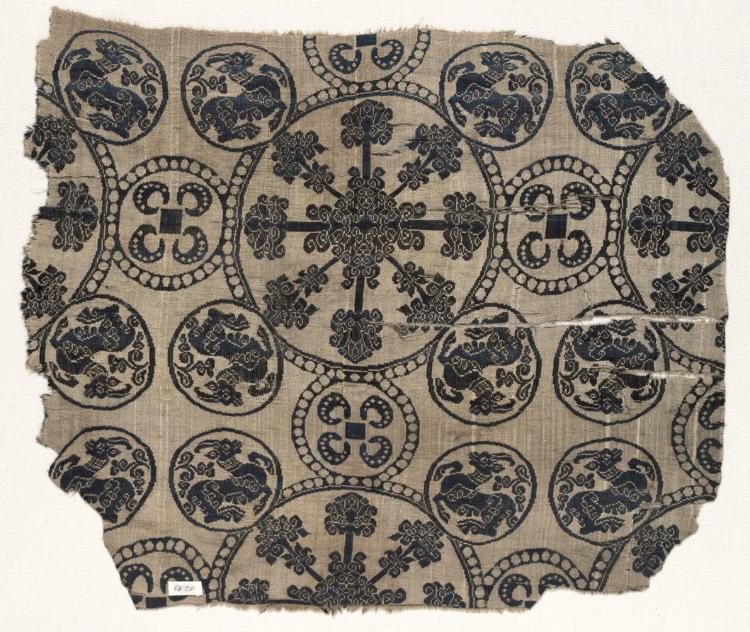
Urban Silhouette Research: Fragment — Form, Color, and the Architecture of Impermanence
I. Thesis: The Silhouette as Civilizational Artifact
The Fragment capsule operates on a single, non-negotiable premise: that the executive silhouette is not a decorative proposition but an epistemological instrument—a structure through which the wearer negotiates transience. Our DNA sourcing is deliberately bifurcated. From Jacques-Louis David's Death of Socrates we extract the geometry of the event: the vertical column of the torso, the triangulated drapery, the chiaroscuro that converts a body into a moral symbol. From the Longquan wave-patterned meiping we extract the geometry of the continuum: the continuous celadon curve, the incised wave that repeats without terminus, the vessel that absorbs use rather than narrating it. The 2026 executive wardrobe must reconcile both registers—the decisive gesture and the enduring surface—within a single wearable architecture. Fragment is that reconciliation, executed in slate.
II. Form: Columnar Mass and the Suppression of the Waist
The governing form is a modified column. Where David's Socrates is stabilized by an unbroken vertical axis—shoulder to hip to heel—Fragment translates that axis into tailoring: a suppressed shoulder line, an elongated armhole, and a torso that declines to cinch. The waist is acknowledged but not articulated; darting is internalized, displaced rearward, so that the frontal plane reads as a single continuous surface. This is a deliberate refusal of the hourglass, which we classify as a narrative silhouette—one that tells the viewer where to look. Fragment does not direct the gaze. It withholds.
The shoulder is the critical load-bearing element. We have engineered a soft-structured shoulder—canvas and horsehair, no pad—that extends 4mm beyond the natural acromion. The effect is a horizontal that is present but unresolved, echoing the meiping's shoulder: a swell, not a corner. Sleeves are set with a high, rotated armhole to permit the forward reach of the desk-bound executive while preserving the frontal column when at rest. The result is a garment that performs authority in stillness and efficiency in motion—two registers that conventional power dressing forces into conflict.
Below the waist, the form bifurcates by category. Trousers carry a straight, slightly tapered leg with a raised rise and a clean, unpleated front—the vertical continued to the floor. Skirts, where deployed, are A-line but compressed: the flare begins below the knee, not at the hip, preserving the column through the pelvic zone. In every case, the hem is the terminus of the argument, not its decoration. No vents, no slits, no hardware. The silhouette closes.
III. Color: Slate as Chromatic Restraint
Slate is selected not as a neutral but as a chromatic position. It occupies the narrow band between blue and grey—cool, desaturated, and structurally ambiguous under varying light. This ambiguity is the point. Under office fluorescents, slate reads as authority; under evening tungsten, it warms toward graphite; in daylight, it discloses a faint mineral blue that resists categorization. The color thus performs the same function as the meiping's celadon: it absorbs its environment without surrendering its identity.
We specify slate across a three-value tonal system—deep slate (near-onyx) for suiting, mid-slate for shirting and knitwear, pale slate for lining and secondary layers. The system permits monochromatic dressing without flatness: value shifts replace contrast, and the eye reads depth through tonality rather than through pattern. This is the David lesson inverted—where he used light to dramatize, we use value to de-dramatize, allowing the wearer's face and gesture to carry the event.
Materially, slate is executed in matte wool-silk suiting, compact cotton poplin, and brushed cashmere—three surfaces that hold the color differently, producing a subtle textural counterpoint that substitutes for ornament. The palette admits exactly one accent: a silver-grey hardware on closures, restrained to buttons and a single concealed zip pull. Nothing else.
IV. Wardrobe Application: The 2026 Executive Register
Fragment resolves into a nine-piece modular system: column jacket, straight trouser, compressed A-line skirt, column dress, poplin shirt, cashmere crew, sleeveless shell, long coat, and a single flat. Each piece is designed to function as a complete proposition and as a component of the whole. The system is season-agnostic in silhouette and layer-dependent in warmth—the executive assembles the register appropriate to the room, not the calendar.
The strategic value is cognitive load reduction. A wardrobe that does not require daily negotiation of form or color returns decision-making capacity to the wearer. This is the meiping's final lesson: the vessel that holds without demanding attention. The executive dressed in Fragment is not styled; she is equipped—and the equipment is calibrated to the only two conditions that matter in the 2026 market: the room where the decision is made, and the street between rooms. Fragment performs in both, and in neither does it announce itself. It simply holds.
The silhouette, in sum, is a quiet architecture—columnar, tonal, closed. It does not argue. It endures.