Minimalist
Onyx
Urban Form: Portrait of Philip II, King of Spain
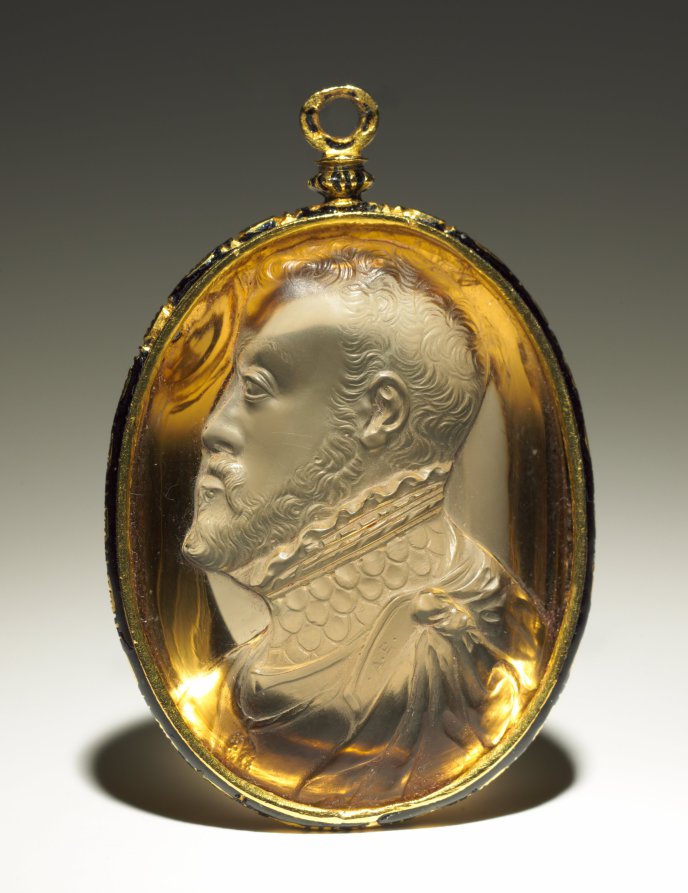
Geometric Integrity as a Structural Manifesto
The portrait of Philip II, King of Spain, presents a study in controlled austerity. The subject’s rigid posture, the severe geometry of the collar, and the stark division between the illuminated face and the dark, unyielding background establish a visual language of absolute restraint. For the 2026 executive silhouette, this work dictates a departure from organic fluidity toward a system of architectural precision. The geometric integrity here is not decorative but foundational: it is a blueprint for volume that denies excess. The collar, a crisp, white, almost architectural ruffle, functions as a structural fulcrum. It separates the head—the seat of intellect and authority—from the body’s drapery. In our analysis, this translates to a sharp, defined neckline in tailored jackets. The 2026 silhouette must feature a collar that acts as a visual bracket, a rigid frame that supports the entire upper torso. We propose a stand-collar or a modified mandarin collar, executed in a high-density wool or a bonded cotton. The material must be stiff enough to hold a precise angle, mirroring the portrait’s refusal of softness. The shoulder line, in turn, must be extended and squared, not padded into softness, but cut with a clean, linear seam that mimics the horizontal axis of the king’s shoulders. This creates a T-shaped silhouette—broad at the top, narrowing through the torso—that projects an aura of unassailable stability.Structural Poetics: The Architecture of Authority
The portrait’s background is a void of near-black, a negative space that forces the viewer’s focus onto the subject’s form. This is the core of our structural poetics: the garment must create its own negative space. The 2026 executive silhouette is not about covering the body but about defining the air around it. We achieve this through strategic volume. The jacket’s body should be cut with a slight, controlled A-line, falling from the shoulders without clinging to the waist. This is not a relaxed fit; it is a deliberate, architectural void. The fabric must be heavy enough to fall in clean, unbroken planes, like the dark expanse behind the king. We recommend a double-faced wool in Onyx, a color that absorbs light and eliminates texture, creating a monolithic presence. The sleeve head is critical. It must be set with a high, crisp cap that creates a slight, deliberate break at the shoulder, echoing the sharp transition between the king’s collar and his doublet. This is not a naturalistic drape; it is a constructed, engineered line. The sleeve itself should taper to a narrow, unadorned cuff, eliminating any suggestion of volume at the wrist. This creates a visual arrow, drawing the eye from the broad shoulder down to the hand—the instrument of command. The entire construction is a study in tension: the tension between the rigid upper body and the controlled fall of the fabric, the tension between the dark void of the background and the stark white of the collar.Urban Materiality: The Fabric of Power
Urban materiality demands fabrics that perform as surfaces. The portrait’s rendering of the king’s doublet is not about softness but about a dense, almost impenetrable surface. For the 2026 collection, we reject traditional suiting fabrics that drape and wrinkle. Instead, we specify materials that behave like architectural membranes. A technical wool-cashmere blend, woven at a high thread count, offers a surface that is both matte and dense. It resists light, creating a uniform, shadowless field. Alternatively, a bonded nylon-cotton twill provides a slight, industrial sheen, referencing the urban environment’s glass and steel. The Onyx color is non-negotiable. It is not black; it is a deep, absorbing darkness that negates all reflection, forcing the garment to exist as a pure, volumetric shape. The interior construction must be equally rigorous. A full canvas chest piece, fused with a lightweight, non-woven interlining, ensures the jacket’s front remains flat and unyielding. The lining should be a matte cupro, chosen for its smooth, silent glide against the body, eliminating any tactile distraction. Every seam must be flat-felled or taped, creating a clean, uninterrupted line. Buttons, if used, must be matte horn or polished obsidian, set flush with the fabric. The goal is to erase all ornamentation, leaving only the pure, geometric form.Conclusion: The Silhouette as a Statement of Intent
The 2026 executive silhouette, derived from the portrait of Philip II, is a declaration of minimalism as power. It is not about comfort or ease; it is about presence. The garment becomes a second skin of authority, a structural exoskeleton that communicates control, precision, and an unwavering focus. The interior DNA of the “Udumbara Flower” temple plaque and the “Beast and Grape” mirror, with their dialectic of emptiness and fullness, finds its resolution here. The plaque’s “emptiness” is the negative space of the silhouette; the mirror’s “fullness” is the dense, unbroken surface of the fabric. The garment is both a void and a vessel, a symbol of the transcendent within the mundane. In the urban landscape, this silhouette is not worn; it is inhabited. It is the uniform of the executive who commands not through noise, but through the sheer, silent geometry of their presence.
Technical Insight
Technical Insight: Translating Onyx palettes into Minimalist silhouettes for the modern metropolis.