Urban Form: Cupid Secretly Drawing an Arrow
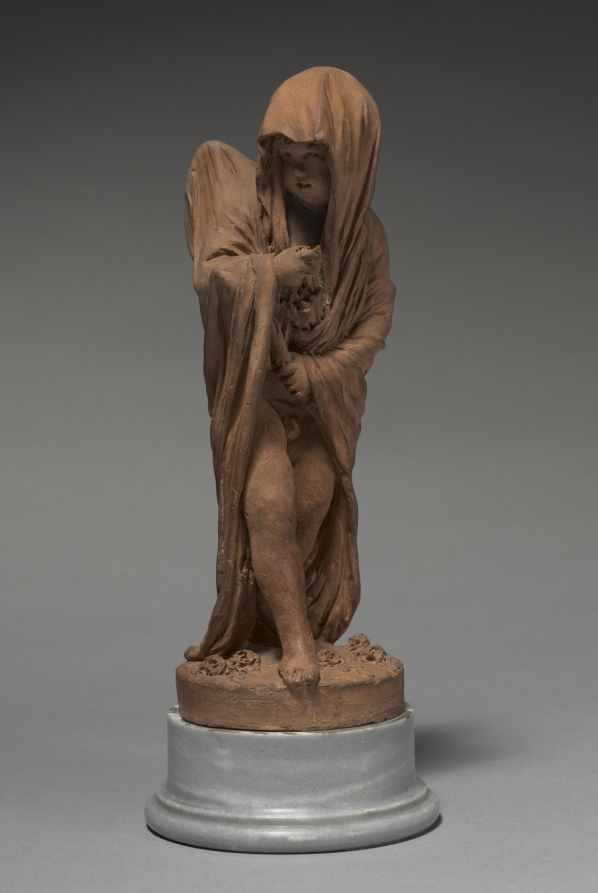
Urban Silhouette Research: Cupid Secretly Drawing an Arrow — A Technical Deconstruction of Form
I. The Premise: Latency as Silhouette
The subject — Cupid Secretly Drawing an Arrow — is not, at first inspection, a subject of motion. It is a subject of suspended intent. The bow is drawn; the arrow is not loosed. This distinction is the entire architectural thesis of the 2026 executive wardrobe. Where the Baroque treated the drawn bow as theatrical climax, the Addison position treats it as latent kinetic potential held in reserve — a form that has committed to direction without committing to release. The silhouette we derive is therefore not dynamic. It is poised. Poise, in tailoring terms, is the difference between a garment that moves and a garment that is about to move.
This is the first principle of the collection: form must encode restraint as a visible value. The executive does not gesture. The executive is capable of gesture, and the cut must make that capability legible without enacting it.
II. The Torsion Line: Reading the Archer's Spine
Anatomically, the secretly-drawing Cupid presents a contrapposto of concealment: the torso rotates away from the viewer while the head counter-rotates toward the target. This produces a helical tension through the spinal axis — a torsion that the classical tradition resolved through drapery and that we resolve through seam engineering. The 2026 blazer adopts a single diagonal dart running from the contralateral shoulder to the waist suppression point, translating the archer's torque into a two-dimensional plane of cloth. The result is a front panel that reads as flat from the frontal axis and as compressed volume from the three-quarter — precisely the angle at which the executive is most often perceived in a boardroom.
The shoulder is not padded into aggression. It is extended along the scapular line by 4–6mm of structured canvas, producing a shoulder that suggests the drawn state — elevated, retracted, loaded — without the military severity of the 1980s power shoulder. We are not building a warrior. We are building a negotiator in repose.
III. The Arrow as Negative Space
The most consequential formal decision concerns what is absent. The arrow, in the source, is the vector of intention — yet it is the least material element in the composition. We translate this into the collection's governing principle of negative-space tailoring: the garment's authority is located in the interval between body and cloth, not in the cloth itself. The Slate palette — a cool, desaturated graphite with a blue undertone — is selected precisely because it recedes at the edges and holds at the fold, allowing the eye to register the void between lapel and sternum as a deliberate formal event.
Practically: the lapel is narrowed to 7.2cm and set at a lower gorge, elongating the V and widening the negative field. The trouser break is eliminated entirely — a clean vertical terminus that extends the arrow's implied trajectory to the floor plane. The silhouette becomes a single unbroken vector from clavicle to hem: the arrow, drawn but never released, rendered as line rather than object.
IV. Color Discipline: Slate as Strategic Neutrality
Slate operates in the collection as a chromatic withholding. It is neither the authority-claim of Onyx nor the diplomatic concession of Sand. It is the color of calculated ambiguity — legible under fluorescent boardroom light, recessive under gallery lighting, and structurally indifferent to the seasonal palette churn. For the 2026 executive, this indifference is the point. Slate does not signal. It substantiates. We pair it exclusively with Ivory shirting at a 92/8 value split, producing a contrast ratio calibrated to read as composure rather than contrast — the visual equivalent of a voice that never rises.
V. The 2026 Executive Application
The resulting wardrobe is a system of latent gestures: the unstructured Slate blazer with diagonal dart; the columnar trouser with no break; the collarless Ivory underpinning that removes the last decorative interruption at the neckline. Each piece is designed to be read in stillness and to fail gracefully in motion — because the executive who moves constantly does not require a garment that performs movement. She requires a garment that documents her restraint. Cupid's secret is not the arrow. It is the discipline of not loosing it. The collection is that discipline, cut in Slate.