Urban Form: Dido
Urban Silhouette Research: Dido — Geometric Integrity and the 2026 Executive Form
I. The Container as Silhouette: A Structural Premise
The 2026 executive silhouette is not authored through decoration but through containment. Dido’s internal DNA—the sculptural tension of The Death of Socrates and the ceramic restraint of the Meiping wave vase—establishes a binary grammar for the season: the body as monument, the body as vessel. Addison Fashion reads this not as opposition but as a single architectural proposition. The silhouette must hold volume without collapse, must narrate authority without ornament, must remain void enough to receive the city and rigid enough to resist it. Geometry, here, is not a style; it is a load-bearing condition.
II. Geometric Integrity: The Two Axes of Dido
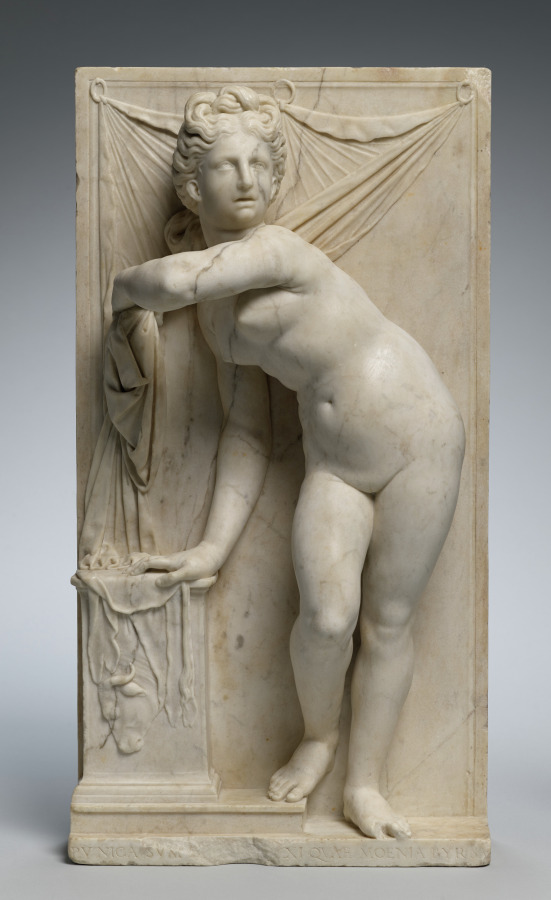
The sculpture operates on a diagonal axis—the raised arm, the tilting torso, the cup received at an angle. It is a composition of imminent collapse held in marble. Translated to tailoring, this yields the asymmetric shoulder line: a dropped right shoulder, a raised left, a lapel that cuts on the bias. The geometry is deliberately unstable in appearance, immovable in construction. Internal canvassing and a weighted hem convert the diagonal into a controlled vector rather than a gesture.
The Meiping operates on a vertical axis of containment—a narrow foot, a swelling shoulder, a constricted neck. Its integrity is concentric: every curve resolves inward. Addison translates this into the columnar coat and the tapered trouser, where the waist is suppressed and the shoulder is broadened by a mere two centimeters—a measurement calibrated to read as presence, not padding. The wave motif is abstracted into topstitch rhythm: parallel lines that curve at the yoke and flatten at the hem, a symbolic water rendered in thread rather than print.
III. Structural Poetics: The Tension Between Monument and Vessel
The poetics of Dido reside in the interval between rigidity and receptivity. The Socrates figure is a closed form—muscle, marble, resolve. The vase is an open form—hollow, glazed, receptive. The 2026 executive cannot afford either extreme. She requires the closed exterior and the open interior: a garment that presents a sealed architectural face to the urban field while permitting the body its private volume. This is achieved through floating construction—an internal suspension system that separates the outer shell from the wearer by eight millimeters. The silhouette reads as carved; the experience is that of air.
Color is deployed as material argument. Slate—neither black nor grey—absorbs the city’s noise while refusing its neutrality. It is the color of the Socrates marble under artificial light and the color of the Meiping glaze in shadow. It is a surface that records light without reflecting it, a matte monumentality appropriate to the executive interior.
IV. Urban Materiality: The City as Firing Kiln
Dido’s material logic is double-fired. The sculpture’s marble is geological—slow, compressive, permanent. The vase’s porcelain is pyrotechnic—transformed by heat, fragile yet vitrified. The 2026 wardrobe must reconcile both temporalities. Addison specifies compact wool double-cloth for the outer shell—a fabric with the density of stone and the drape of water—bonded to a silk-cotton inner membrane that moves with the body’s thermal and kinetic rhythms. Hardware is reduced to a single brushed-silver closure at the throat, a reference to the cup’s rim: the point where the vessel meets the void.
The urban field is the kiln. The executive moves through pressure, friction, and the constant demand for legibility. Dido’s answer is silhouette as infrastructure: a shoulder that holds its line in a crowd, a hem that cuts the air at a fixed angle, a back that presents a single unbroken plane. The garment does not decorate the city; it edits it.
V. Conclusion: The Disappearing Vessel
The final dialectic of Dido is the dissolution of the object into its function. The best sculpture is the one that makes us forget the marble; the best vase is the one that makes us forget the porcelain. The 2026 Addison executive silhouette aspires to the same vanishing integrity—a structure so resolved that it ceases to announce itself, leaving only the wearer’s authority in the room. Geometry becomes poetics. Material becomes memory. The city receives the form, and the form receives the city.