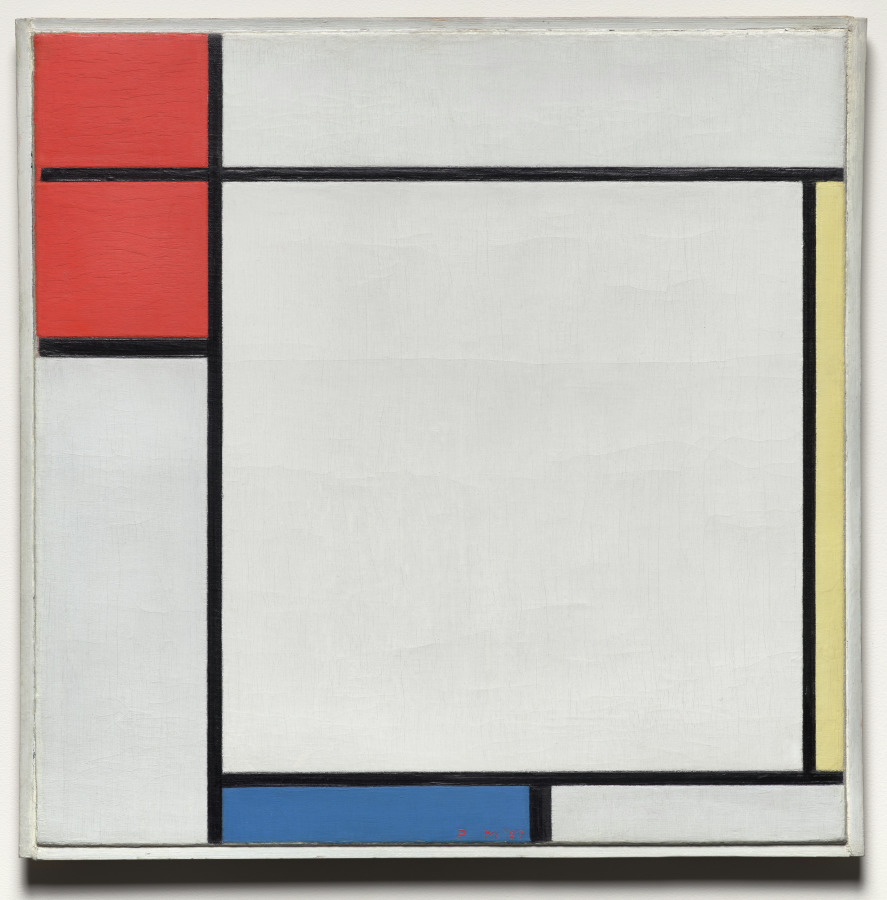
Urban Form: Composition with Red, Yellow, and Blue
Executive Summary: The Dialectic of Stasis and Dynamism in Urban Silhouette
This Urban Silhouette Research deconstructs the aesthetic DNA of two disparate Eastern artifacts—a Musician Motif Pottery Mold Fragment and a Diptych of Arhats Holding a Peach and a Dog—to derive a rigorous framework for the 2026 NYC executive wardrobe. The core thesis posits that the modern urban silhouette must reconcile two opposing forces: the kinetic energy of temporal performance (the mold’s captured music) and the absolute stillness of transcendental presence (the arhat’s meditative poise). The resulting aesthetic is not a compromise but a dialectical synthesis, manifesting as a Minimalist form language executed in a Slate color palette. This combination yields a wardrobe that is simultaneously a tool for professional action and a monument to personal authority.
I. Formal Deconstruction: The Architecture of Motion and Stillness
A. The Kinetic Fragment: Dynamic Silhouette from the Pottery Mold
The Musician Motif Pottery Mold Fragment is a study in arrested motion. Its formal value lies not in completeness but in the tension of the incomplete gesture. The artisan’s knife strokes create a rhythm of asymmetrical drape (the floating sleeves) and angular torsion (the twisting torsos). For the 2026 executive, this translates into silhouettes that reject static symmetry. We propose:
- Asymmetric Shoulder Lines: A single-shouldered blazer or a jacket with a dropped sleeve on one side. This mimics the mold’s off-balance, dynamic composition, suggesting a body in mid-action.
- Fluid, Unhemmed Edges: Raw-cut hems on trousers or coat panels. The “fragment” aesthetic—a deliberate lack of finish—signals a disregard for conventional finality, embodying the ongoing process of negotiation inherent in high-stakes urban commerce.
- Kinetic Drape: Fabrics with a liquid weight (e.g., a 4-ply silk crepe or a high-twist wool challis) that capture the “frozen melody” of the mold. The garment should hold a memory of movement, settling into creases that tell a story of the day’s trajectory.
The mold’s fragmentation is not a flaw but a formal asset. It teaches us that absence creates presence. A jacket that is deliberately missing a lapel, or a pant that is cropped to reveal the ankle bone, creates a visual “silence” that amplifies the surrounding form. This is the power of the negative space in a minimalist wardrobe.
B. The Static Icon: The Arhat’s Architecture of Stillness
In stark contrast, the Arhats Holding a Peach and a Dog diptych presents a geometry of absolute stillness. The figures are composed within a vertical, axial symmetry. Their robes fall in parallel, unbroken lines, and their postures are defined by a centered, grounded gravity. This is the formal language of authority and permanence. For the executive wardrobe, this dictates:
- Vertical Monoliths: Long, unbroken lines in outerwear—a floor-length slate coat with a single, central seam. The silhouette should be a column, not a bell or an hourglass. This projects an unassailable, meditative calm.
- Closed Necklines and High Collars: The arhat’s robes cover the neck, creating a visual seal. A mandarin collar or a turtleneck in a fine-gauge cashmere serves the same function: it closes the form, directing the viewer’s eye to the face as the sole locus of expression.
- Weighted Hems: The garments must have a terminal gravity. The fabric should fall with a decisive weight, not flutter. This is achieved through dense wools (e.g., a 24-ounce worsted) or bonded fabrics that create a clean, architectural edge.
The arhat’s stillness is not passive; it is a highly charged, potential energy. The executive’s silhouette must convey this: a quiet, unshakeable readiness. The garment is a vessel for presence, not a distraction from it.
II. Chromatic Analysis: The Slate Spectrum as a Neutral of Power
A. From Earth to Ether: The Color of the Fragment and the Icon
The pottery mold is a material of the earth—terracotta, ochre, burnt umber. The arhat paintings employ mineral pigments—cinnabar, azurite, malachite. Our chosen palette, Slate, is the synthetic resolution of these two chromatic worlds. Slate is not a single color but a spectrum of grays that contain the memory of both the warm earth and the cool mineral.
- Warm Slate (Charcoal with a umber undertone): References the pottery’s clay. Used for foundational pieces—trousers, skirts, the base layer of a suit. It provides a grounded, tactile warmth.
- Cool Slate (Blue-gray with a graphite cast): Echoes the arhat’s mineral pigments and the stone of the mountain. Used for structured outerwear and blazers. It projects intellectual clarity and emotional distance.
- Pale Slate (Aged silver with a hint of lavender): The color of the negative space in both artifacts. Used for shirts, blouses, and interior linings. It is the color of potential—the silence between notes, the emptiness before action.
B. The Executive Application: Monochrome as a Strategy
In the 2026 NYC executive context, a monochromatic Slate wardrobe is not a lack of color but a highly refined chromatic strategy. It functions as a visual uniform, eliminating the noise of color contrast and forcing the observer to engage with texture, form, and proportion. This is the ultimate expression of minimalist power.
The palette’s chromatic neutrality allows for the introduction of a single accent—a tie, a pocket square, a shoe—in a saturated color (a deep cinnabar red, a lapis blue) that directly references the artifacts’ original pigments. This accent becomes a strategic punctuation, a moment of deliberate, controlled expression within a field of disciplined restraint.
III. Synthesis: The 2026 NYC Executive Silhouette
A. The Core Garment: The Slate Column Coat
The primary garment of this research is the Slate Column Coat. It is a direct formal translation of the arhat’s stillness: a floor-length, single-breasted coat in a dense, cool-slate wool. Its defining features are:
- Zero Closure: No buttons, no zippers. The coat is held closed by the wearer’s hand in a pocket, or left open to reveal the kinetic layer beneath. This is the fragment’s absence applied to the icon’s form.
- Asymmetric Pocket: A single, deep pocket on the left side, cut at a 15-degree angle. This is the kinetic gesture—the musician’s strumming hand—frozen into the garment’s architecture.
- Weighted, Unfinished Hem: The coat’s hem is raw, cut with a laser to prevent fraying. It is a deliberate fragment, a reminder that even the most static form exists within time.
B. The Layering System: A Dialectic of Textures
The wardrobe operates as a layered system of three distinct textures, each corresponding to a phase of the executive’s day:
- Layer 1 (Base): Pale Slate, Fluid Silk. The kinetic layer. A high-neck, long-sleeve top in a liquid silk. It moves with the body, capturing the music of the day.
- Layer 2 (Structure): Cool Slate, Worsted Wool. The static layer. A single-breasted, high-closure vest or a cropped jacket. It provides the architectural frame, the arhat’s axial stillness.
- Layer 3 (Armor): Warm Slate, Heavy Cashmere or Wool. The column coat. It is the outer shell, the public face. It projects unassailable calm, the transcendental presence of the icon.
IV. Conclusion: The Wardrobe as a Philosophical Instrument
The 2026 NYC executive wardrobe, derived from the Composition with Red, Yellow, and Blue of these two artifacts, is not merely a collection of garments. It is a philosophical instrument for navigating the urban environment. The Minimalist form and Slate color palette allow the wearer to embody both the dynamic energy of the musician and the absolute stillness of the arhat. The silhouette is a dialectical tool: it enables action while projecting contemplation, it invites engagement while maintaining distance. This is the uniform for the executive who understands that true power is not in the noise of performance, but in the silent, weighted presence that commands attention without demanding it.