Urban Form: Carving from an Overmantel
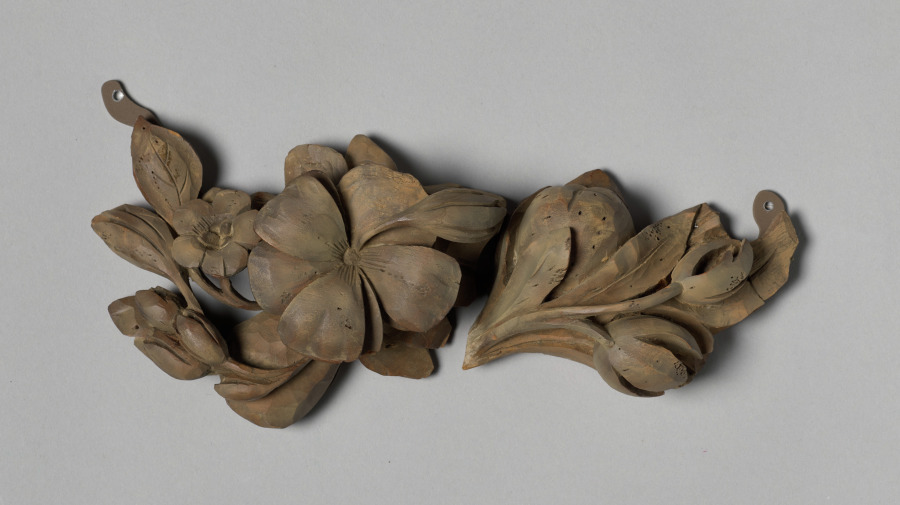
Urban Silhouette Research: Carving from an Overmantel
I. The Overmantel as Structural Precedent
The overmantel—that architectural panel suspended above the hearth—operates as a liminal surface: decorative yet load-bearing, ornamental yet structural. For the 2026 executive wardrobe, this duality provides the governing thesis. The Addison silhouette must function as an overmantel functions: a composed plane that conceals its own engineering. The reference object, a Shang-Zhou fangyou ritual vessel, and its Western counterpart, David's Death of Socrates, supply two distinct grammars of form that we translate into garment architecture. The fangyou offers the logic of the vessel—rectilinear, compartmentalized, self-contained. The David offers the logic of the tableau—frontal, planar, lit from a single source. Our task is to carve a silhouette that borrows the vessel's containment and the painting's frontality without inheriting either's theatricality.
II. Form: The Rectilinear Vessel and the Carved Plane
The fangyou's defining formal property is its insistence on the rectangular section. Unlike the rounded hu or the flared zun, the square vessel refuses the organic curve. Its walls are parallel; its corners are disciplined; its taotie and leiwen registers are stacked in horizontal bands that read as structural strata rather than ornament. Translated to tailoring, this yields a box-dominant shoulder line with a suppressed waist—a columnar torso in which the horizontal seam (yoke, waistband, hem facing) becomes the organizing device. The 2026 Addison jacket adopts a three-register construction: shoulder plane, thoracic plane, and hem plane, each separated by a narrow seam allowance that reads as the bronze vessel's raised banding. The result is a garment that appears carved rather than sewn—a silhouette with the compressive authority of cast metal.
The David contributes the frontal plane. The painting's composition is relentlessly shallow: figures pressed against the picture plane, light raking from the left, the entire drama legible from a single vantage. For the executive wardrobe, this mandates a single-reading silhouette—a garment whose authority is established in the first 1.5 seconds of visual contact, with no rear-dependent narrative. The Addison coat therefore closes on a centered placket, its lapel a shallow notch cut at 72 degrees, its back a clean yoke with no vent. The garment is a façade, and the façade is the argument.
III. Color: Slate as the Pigment of Restraint
The palette resolves to Slate—a blue-grey of low chroma and mid-to-low value, the color of oxidized bronze patina and of the shadowed stone in David's cell. Slate is the correct chromatic register for the 2026 executive because it performs the double function of the overmantel: it recedes as architecture yet asserts as material. In the fangyou, the patina is not decay but evidence of ritual use—the color of time. In Slate, we encode that same temporal authority: a color that reads as seasoned rather than new, deliberate rather than trended.
The tonal program is strictly monochromatic with a single value shift. Jacket and trouser in Slate at 18% reflectance; shirt in Ivory at 82%; the differential is calibrated to produce a hard edge at the collar and cuff—the visual equivalent of the bronze vessel's raised register lines. No pattern. No secondary hue. The leiwen thunder-scroll, if referenced at all, appears only as a micro-jacquard at 4% contrast on the interior lining—a private ornament, visible only to the wearer, functioning as the taotie functions on the vessel's interior: a hidden cosmology.
IV. The Carved Silhouette: Construction Notes
The technical execution proceeds from three constraints. First, the shoulder: a structured roped shoulder with 8mm foam insert, extending 12mm beyond the natural acromion, producing the squared plane of the vessel's rim. Second, the torso: a half-canvas front with horsehair chest piece, suppressing drape and enforcing the carved plane; the waist is suppressed 4cm via a floating canvas rather than darts, preserving the uninterrupted frontal reading. Third, the hem: a weighted hem facing in Slate wool flannel, 6cm deep, which anchors the garment's verticality and prevents the silhouette from softening in motion. The trouser follows the same logic: a flat-front, single-pleat cut in a 340g Slate wool, with a 2cm turn-up that reads as the vessel's foot ring—a terminal band that closes the form.
V. Conclusion: The Executive as Participant
The David demands a spectator; the fangyou demands a participant. The 2026 Addison executive is neither. She is the carrier of the overmantel—a figure who wears structure as a form of discretion, whose silhouette is legible at a glance and inexhaustible on inspection. Slate is her pigment; the carved plane is her grammar; the vessel's containment is her posture. The wardrobe does not narrate her authority. It carves it.