Urban Form: Woman in Profile
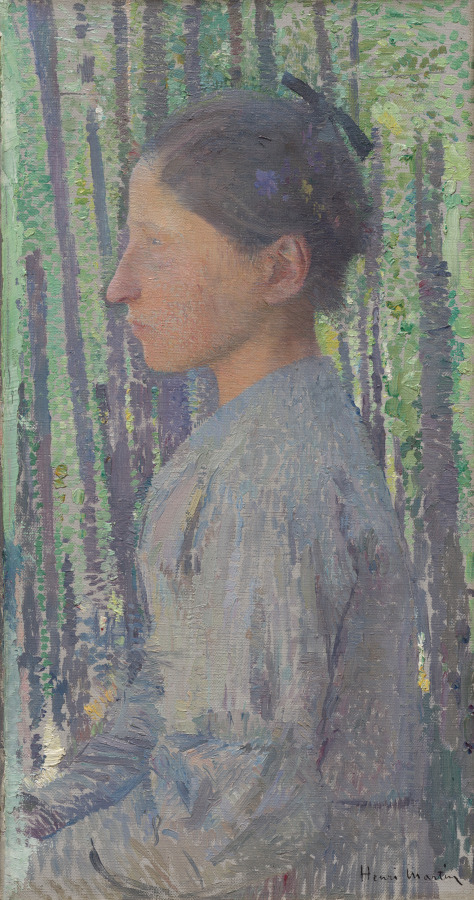
Urban Silhouette Research: Form as Negative Space in the 2026 Executive Wardrobe
I. The Udumbara Plaque as Tailoring Doctrine: Subtraction as Structural Authority
The temple plaque dedicated to the Udumbara flower presents a critical lesson for the Addison atelier: the garment that withholds is the garment that commands. In the plaque's composition, the designer refused figuration—no petal rendered, no stamen articulated—and instead entrusted the wood grain, the interval between carved strokes, and the deliberate void with the entire burden of meaning. For the 2026 executive wardrobe, this translates into a tailoring philosophy of strategic absence. The shoulder seam is not padded into aggression; it is released, allowed to fall along the body's natural axis so that the wearer's posture—not the garment's architecture—becomes the statement. The lapel is narrowed to a near-invisible line, a whisper of structure that frames the face without competing with it.
Consider the plaque's material honesty: the wood's patina deepens with time, and its surface growth and decay render the internal Buddha-nature more legible, not less. This is the precise logic of the Addison Slate wool crepe suiting—a fabric selected for its capacity to record wear without degrading. The crepe's matte surface absorbs light rather than reflecting it, creating a tonal depth that reads as authority without ostentation. In profile, the woman wearing this suit presents a silhouette defined by what it does not claim: no exaggerated shoulder, no cinched waist, no decorative hardware. The form is a vessel for the wearer's presence, and the void between body and cloth is the breathing room in which executive composure resides.
II. The Han Mirror as Dynamic Counterpoint: The Case for Controlled Motion
The Mirror with Deities, Chariot, and the White Tiger offers the necessary dialectical counterweight. Where the plaque is static, the mirror is kinetic; where the plaque withdraws, the mirror projects. The Han artisans rendered celestial chariots in motion, cloud scrolls in turbulent flow, the White Tiger poised between restraint and release. The lines are not decorative—they are diagrams of qi, the vital rhythm that animates the cosmos. For the 2026 wardrobe, this principle manifests in garments that acknowledge the body's movement without sacrificing the discipline of the line.
The Addison interpretation is a Slate silk-wool blend column dress with a single asymmetric seam that traces the body's contour from clavicle to hem, a line that behaves like the mirror's cloud scrolls—present, directional, but never ornamental. When the wearer walks, the seam shifts; when she stands in profile, it resolves into a clean vertical. This is motion held in check, the dynamic captured and disciplined. The dress does not flow; it advances. The fabric weight—a 280-gram blend—ensures that the garment's movement is deliberate rather than reactive, each fold a considered gesture rather than an accident of air.
III. The Dialectical Wardrobe: Integrating Void and Vessel
The genius of the Eastern aesthetic tradition, as evidenced by these two objects, is its refusal to choose between emptiness and form. The plaque and the mirror are not opposites; they are two registers of the same inquiry—how to make the invisible visible through the disciplined manipulation of the visible. The 2026 executive wardrobe must operate on precisely this principle. The Addison woman in profile is neither a monument nor a motion study; she is a calibrated synthesis.
Practically, this means a wardrobe built on interchangeable modules of Slate: a wool crepe blazer with an unstructured shoulder and a single-button closure that sits at the natural waist; a silk-wool column skirt with a bias cut that reveals the body's line only in movement; a matte jersey turtleneck that functions as the void between the two, the negative space that allows the blazer and skirt to read as a composition rather than a uniform. The palette is monochromatic not out of caution but out of conviction—Slate absorbs the city's ambient gray light and returns it as depth, much as the plaque's aged wood absorbs centuries and returns them as stillness.
The mirror's lesson is that reflection is not replication. The bronze surface does not reproduce the world; it interprets it through the lens of its own materiality. Similarly, the Addison suit does not mimic the body—it rearticulates it through the grammar of the cut. The shoulder line is lowered by 1.5 centimeters; the sleeve is cropped to the wrist bone; the trouser break is eliminated entirely. These are not adjustments; they are arguments about proportion, each one a decision to subtract rather than add.
IV. Conclusion: The Profile as Thesis
The woman in profile is the ultimate test of a garment's integrity. Frontal presentation allows for symmetry, for decoration, for the easy seduction of surface. Profile reveals the truth: the fall of the back, the set of the shoulder, the relationship between the jawline and the collar. The Addison 2026 collection is designed for this view—for the executive who is seen in transit, in conversation, in the corridor between meetings, where the silhouette must hold without assistance. The Udumbara plaque teaches restraint; the Han mirror teaches rhythm. The Addison woman wears both, in Slate, and says nothing. The silence is the point.