Urban Form: Carving from an Overmantel
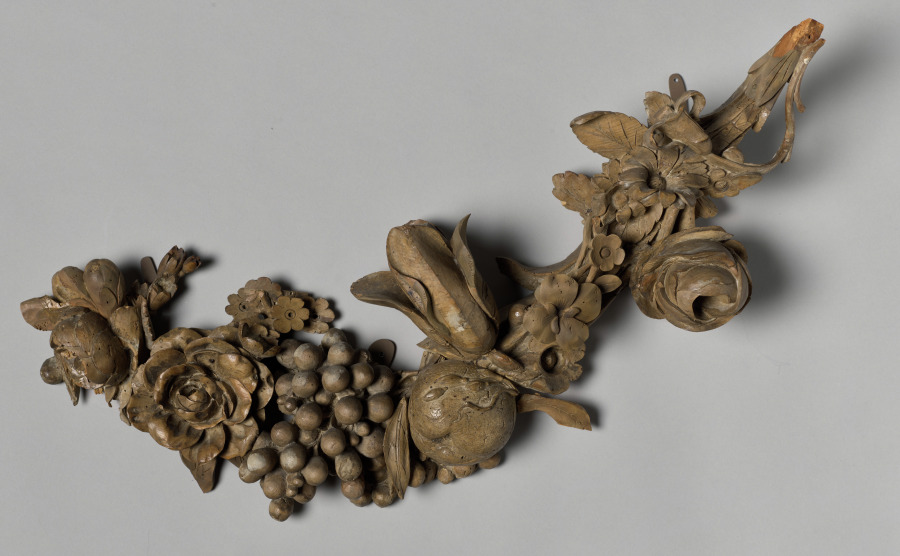
Urban Silhouette Research: Carving from an Overmantel
I. The Overmantel as Structural Precedent
The overmantel—that architectural residue suspended above the hearth—operates as a liminal register: neither fully structural nor fully decorative, it frames the void while governing the room's vertical hierarchy. For Addison Fashion's 2026 executive wardrobe, the overmantel functions as a formal analogue rather than a literal reference. We are not quoting the domestic interior; we are extracting its logic of suspension—the manner in which a planar mass is held aloft, anchored at its extremities, and permitted to read as weightless despite demonstrable density. This is the central problem of the modern executive silhouette: how to construct authority without mass, presence without bulk.
II. David's Pictorial Grid: The Rationalized Plane
Jacques-Louis David's The Death of Socrates (1787) offers a compositional discipline directly transferable to tailoring. The canvas is governed by an orthogonal armature: the vertical of the philosopher's raised hand, the horizontal of the bed, the recession of the cell's masonry. Every gesture is subordinated to a geometric contract. The result is a surface that reads as simultaneously frozen and inevitable—a quality we are pursuing in the 2026 suiting block.
Technically, this translates into a shoulder line calibrated to the millimeter: the sleeve head set at a precise 12-degree pitch, the armhole raised to permit the arm's elevation without disturbing the chest plane. The lapel—narrowed to 6.5 centimeters—functions as the painting's directional vector, drawing the eye along a controlled diagonal from clavicle to sternum. Where David's light isolates the figure against darkness, our Slate palette isolates the wearer against the urban field: a cool, desaturated grey-blue that absorbs ambient light rather than reflecting it, producing the same figure-ground separation the painter achieved through chiaroscuro.
III. The Fangyou Vessel: Ritualized Volume and the Logic of Containment
The Shang-Zhou bronze fangyou presents the inverse proposition: a vessel whose surface is saturated with taotie, kui-dragon, and thunder patterns, yet whose silhouette remains rigorously rectilinear. The ornament does not disrupt the form; it indexes the form's cosmological function. The vessel is a container, and its decoration is a contract between interior volume and exterior legibility.
For the 2026 wardrobe, this principle governs our approach to the oversized yet controlled executive coat. The volume is permitted—shoulder breadth extended to 52 centimeters, body width increased by 8 percent—but the surface is disciplined by a single, continuous seam structure that reads as ornament: a raised princess seam running from shoulder to hem, its topstitch density calibrated at 7 stitches per inch. The coat does not decorate the body; it contains it, and the seam language announces the containment. The fangyou's beast-head handles—mediators between vessel and ritual—find their analogue in the coat's hardware: a single, brushed-silver toggle at the throat, positioned at the precise midpoint of the collar stand, functioning as the garment's ritual pivot.
IV. The Participant versus the Spectator: A Wardrobe for the Engaged Executive
The critical distinction between the painting and the vessel is one of spectatorship versus participation. David's canvas demands a viewer; the fangyou demands a user. The 2026 executive cannot afford to be a spectator of her own presentation. The wardrobe must therefore be constructed for use—for the tactile, the kinetic, the transactional.
This mandates a fabric architecture that rewards touch: a 280-gram wool-silk blend with a matte hand, its surface treated to resist the sheen that betrays synthetic fiber under office lighting. The interior—never visible, always felt—is lined in Ivory cupro, a deliberate chromatic inversion that registers only in motion, when the coat opens. The garment thus performs the fangyou's interior-exterior dialectic: the public face is Slate, austere and continuous; the private face is Ivory, warm and cyclical. The wearer experiences the transition; the observer sees only its trace.
V. Form as Ethical Position
The synthesis of these two sources—David's rationalized plane and the fangyou's ritualized volume—produces a silhouette that is neither classical nor archaic but operationally modern. The executive jacket is cut close through the waist (David's geometry) but extended through the hem (the vessel's containment). The trouser is pleated once, deeply, and tapered to a 17-centimeter opening—a proportion that reads as authoritative at rest and kinetic in stride.
This is not decoration. It is a formal argument about competence: that the wearer commands both the legible and the latent, the surface and the volume, the moment and the cycle. Addison Fashion's 2026 proposition is that the executive wardrobe, like the overmantel, must frame the void without filling it—must hold authority aloft, anchored at its extremities, and permit the wearer to read as weightless despite demonstrable density.
VI. Specification Summary
Palette: Slate (primary), Ivory (interior register), Onyx (hardware). Silhouette: Minimalist, with controlled volume at shoulder and hem. Key garments: single-breasted jacket (6.5cm lapel, 12-degree sleeve pitch), extended executive coat (52cm shoulder, princess-seam surface), single-pleat trouser (17cm hem). Fabric: 280gsm wool-silk, matte finish, cupro lining. Hardware: brushed-silver toggle, throat-positioned. Construction philosophy: containment over decoration; seam as ornament; interior as private ritual.