Urban Form: Kenilworth Castle, Warwickshire, England
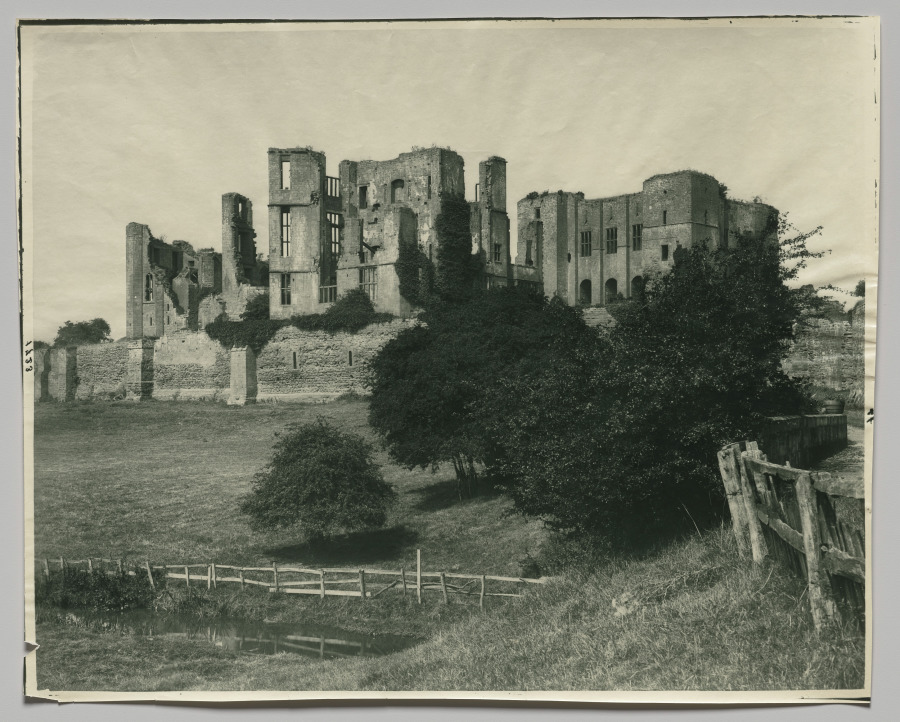
Urban Silhouette Research: Kenilworth Castle — Structural Poetics of the Fragment
I. The Fortified Line: Reading Kenilworth as Garment Architecture
Kenilworth Castle presents itself not as a single structure but as a stratified geological record of power — Norman keep, Elizabethan loggia, ruined curtain wall — each layer a decision made under constraint. For the Addison 2026 executive silhouette, the castle operates as a primary source of geometric integrity under erosion. The keep's plan is a near-square of massive wall thickness relative to interior volume; the ratio of mass to void is deliberately inefficient, and it is precisely this inefficiency that reads as authority. We translate this into a shoulder line that carries weight without bulk: a squared, slightly forward-set shoulder, the seam dropped two centimeters below the natural acromion to create a shadow gap — a moat between body and garment. The waist is not cinched but contained, held by internal structure rather than external pressure. The result is a columnar torso that refuses ornament yet asserts presence through proportion alone.
II. The Fragment as Generative Principle
The internal DNA of this research — the Mold Fragment with Musicians and the Tang-Fang rubbing — establishes a dialectic we apply directly to the castle's ruined state. Kenilworth's broken walls are not failures of preservation; they are completed objects of a different order. The missing roof, the absent floor, the sky occupying the great hall: these are the negative spaces through which the structure achieves its final form. In tailoring terms, this is the logic of the unfinished edge. The 2026 executive jacket will employ raw-cut lapels in bonded wool-silk, the fiber sealed but the line unhemmed — a controlled fray that reads as intention, not neglect. The fragment teaches us that a garment's authority resides in what it withholds. We do not complete the silhouette; we frame the absence.
III. Materiality: Stone, Mortar, and the Urban Surface
The castle's stone is Warwickshire sandstone, weathered to a surface that is neither smooth nor rough but tactically irregular — pitted, veined, darkened by centuries of moisture. This is the material register for the collection's outerwear: a double-faced wool in slate, milled to a density that resists drape while permitting a slow, architectural fold. The mortar joints — recessed, shadowed, rhythmically spaced — inform the topstitching program: single-needle channels at eight-millimeter intervals along the princess seams, creating a linear shadow that reads at distance as texture and at proximity as precision. We reject the high-gloss technical fabric of the previous cycle. The urban surface for 2026 is matte, mineral, and slightly porous — a fabric that absorbs light rather than reflecting it, that records the wearer's movement in subtle surface variation.
IV. The Silhouette in Motion: From Plan to Elevation
Kenilworth's curtain wall curves — not a perfect arc but a sequence of short chords, each segment a straight line that collectively produces a curve. This is the structural poetry of the collection: the curve achieved through the articulation of straight elements. In the tailored coat, this manifests as a back panel cut in three vertical sections, each with a slight bias rotation, so that the garment's movement through space produces a controlled undulation rather than a fluid sweep. The sleeve is set with a high, narrow crown and a tapered forearm, the cuff extended to the base of the thumb — a defensive proportion that references the castle's arrow loops: narrow apertures through which the world is observed but not entered. The executive woman of 2026 does not gesture broadly. She is contained, deliberate, and structurally irreducible.
V. Color and the Atmospheric Register
The slate palette is drawn from the castle's north face at dusk — a grey that holds blue without becoming blue, a neutral that refuses warmth. We pair it with onyx for the internal layers and a single ivory accent at the collar edge, a reference to the exposed mortar in the ruined sections. The color logic is stratigraphic: each layer visible only at its boundary, the whole reading as a single mineral mass until movement reveals its construction. This is the final principle of the Addison 2026 executive silhouette: the garment must appear, at rest, as a single carved object; in motion, as a system of deliberate fragments. Kenilworth, even in ruin, is never less than architecture. So too the collection.