Urban Form: Fontaine du Jardin du Luxembourg (grotte de Marie de Médécis)
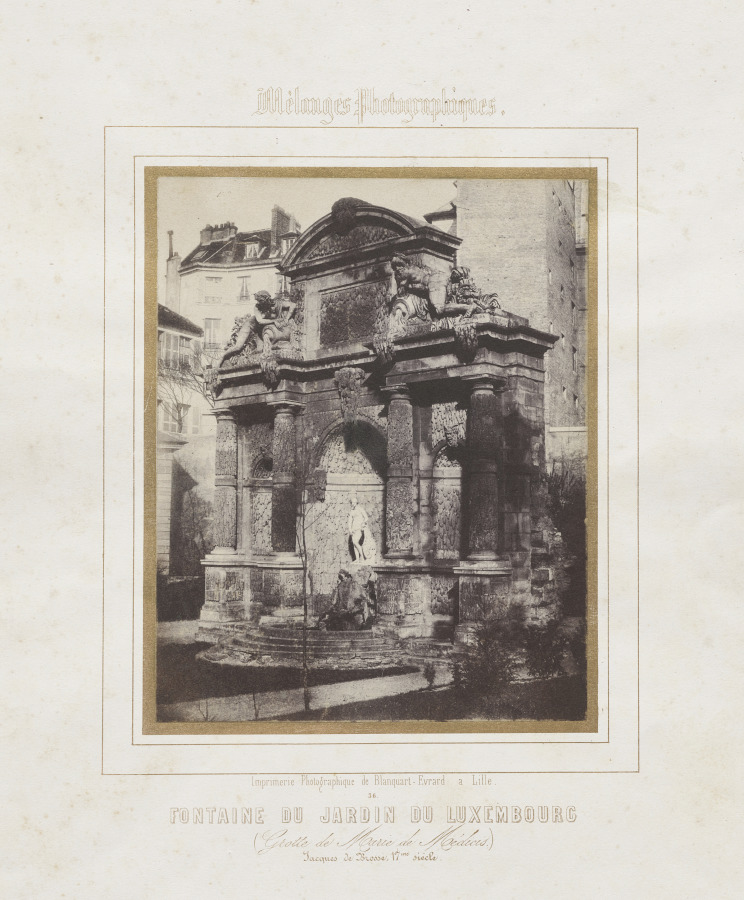
Urban Silhouette Research: The Medici Grotto as Structural Archetype
I. The Architecture of Containment
The Fontaine du Jardin du Luxembourg—specifically the grotto commissioned by Marie de Médicis—operates not as ornament but as a geometric proposition. Its rusticated limestone façade, carved to simulate organic decay, is in fact a rigorously controlled system of interlocking planes. The arch does not merely span; it compresses. The niche does not merely recess; it withholds. This is the first principle of the 2026 executive silhouette: architecture as a discipline of negative space, where the void is as deliberately constructed as the mass.
For Addison Fashion, the grotto's façade establishes a vocabulary of calcified geometry—surfaces that appear eroded yet remain structurally absolute. The 2026 tailoring must absorb this paradox: garments that read as weathered but are engineered with the precision of load-bearing stone. The shoulder line, therefore, is not padded but quarried—a deliberate horizontal that anchors the vertical descent of the torso, much like the grotto's entablature restrains its rusticated columns.
II. Rustication as Material Intelligence
The grotto's surface treatment—the bossage that mimics geological accretion—is a study in controlled irregularity. Each stone block asserts its individuality while submitting to the whole. This is the essence of urban materiality for 2026: textiles that perform the tension between the handcrafted and the systemic. The Addison executive suit will employ slate-toned wool with a dry, mineral hand—fabrics that absorb light rather than reflect it, that suggest the patina of wet limestone without resorting to literal texture.
The grotto's interior, by contrast, offers a lesson in acoustic minimalism. Its vaulted chamber, designed to host water's murmur, is a cavity of calculated reverberation. Translated to silhouette: the interior construction of the 2026 coat—the doublure, the canvassing, the precise placement of seam allowances—must function as a resonant chamber. The garment should hold the body's silence, not announce its presence. This is the difference between clothing that speaks and clothing that listens.
III. The Arch as Executive Gesture
The grotto's central arch is its most legible geometric statement: a compression curve that distributes weight without visible effort. In tailoring terms, this arch manifests as the lapel roll—not pressed flat but coaxed into a three-dimensional curve that mirrors the structural logic of the masonry. The 2026 Addison lapel will be narrower, steeper, and more architecturally assertive than its predecessors: a line that begins at the shoulder seam and terminates at the waist with the finality of a keystone.
Beneath the arch, the grotto's recesses create a rhythm of occlusion—light enters, is withheld, then released. This is the principle of strategic opacity that will define the 2026 executive wardrobe. Fabrics will layer: a slate wool over a silver-grey silk, the underlayer visible only at the cuff and collar—a controlled revelation that mirrors the grotto's interplay of shadow and aperture. The silhouette is not transparent; it is selectively permeable.
IV. The Grotto's Lesson: Permanence Through Erosion
What distinguishes the Medici grotto from mere classical pastiche is its simulated decay—the deliberate cultivation of an aesthetic of endurance. The stone is not pristine; it is survivor-material. For 2026, Addison Fashion rejects the polished and the new. The executive silhouette must communicate geological time: garments that appear to have existed before the wearer and will persist after. This is achieved through slate-toned palette discipline—monochromatic strata of grey that shift in value rather than hue—and through construction that privileges structural integrity over surface decoration.
The grotto's fountain, now silent, once animated the space with water's movement. The 2026 silhouette absorbs this lesson in latent dynamism: a garment that appears static but contains within its cut the potential for movement—the vent that opens, the sleeve that articulates, the hem that responds to pace. The executive does not require clothing that performs motion; the executive requires clothing that anticipates it.
V. Conclusion: The Silhouette as Civic Monument
The Fontaine du Jardin du Luxembourg grotto is not a retreat from the urban; it is the urban internalized—a constructed landscape that mirrors the city's own logic of density, occlusion, and structural poetics. The 2026 Addison executive silhouette adopts this mandate: minimalist in surface, maximalist in engineering. The slate palette is not a concession to sobriety but a declaration of material intelligence. The geometry is not decorative but load-bearing. In the grotto's rusticated arch, we find the prototype for a tailoring that does not adorn the body but architects it—a silhouette that stands as a civic monument to precision, restraint, and the quiet authority of the constructed void.