Urban Form: Julius Caesar
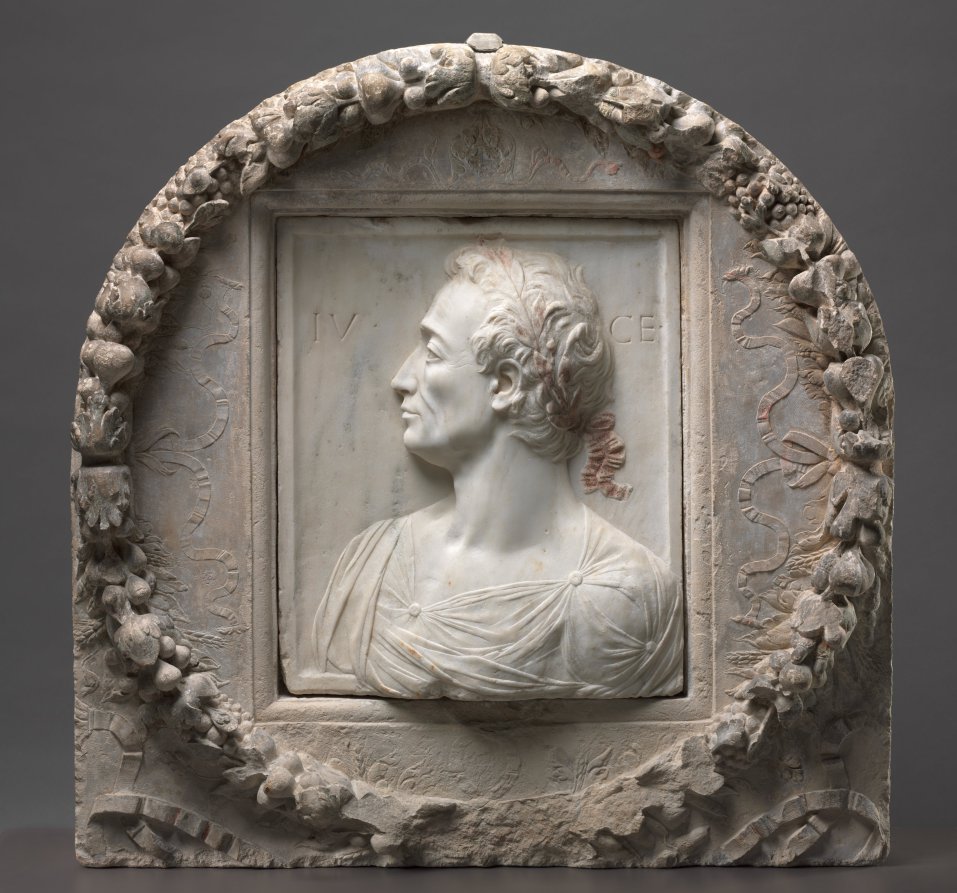
Urban Silhouette Research: The Caesar Protocol — Form, Authority, and the Architecture of Restraint
I. The Imperial Silhouette as Structural Proposition
The Julius Caesar archetype, when stripped of its historical ornamentation and subjected to rigorous formal analysis, reveals itself as a study in controlled verticality. The toga—that most misunderstood of garments—was never merely drapery; it was a calculated volume distribution system, a textile architecture that negotiated the tension between the body's organic asymmetry and the state's demand for legible authority. For the 2026 executive wardrobe, this distinction is not academic. It is the difference between a garment that performs power and one that possesses it.
The Caesar silhouette operates on a principle we at Addison Fashion term asymmetric bilateralism: a central axis of visual gravity (the spine, the sternum, the vertical closure) flanked by controlled lateral volume. The left shoulder carries more fabric than the right; the drape accumulates on one side, creating a diagonal tension line that the eye reads as dynamism rather than imbalance. This is not accident. It is the same principle that governs the Bodhisattva's tribhanga posture—the gentle S-curve that animates stone without breaking its frontal symmetry. The executive who understands this principle understands that authority is not symmetry; it is the management of asymmetry within a legible frame.
II. Color as Jurisdictional Claim: The Onyx Register
Onyx—not black, but the mineral black that absorbs light rather than reflecting it—functions in the Caesar protocol as a jurisdictional color. It does not decorate; it claims territory. The psychological literature on color and status perception consistently demonstrates that low-reflectance dark neutrals signal resource security and boundary enforcement. In the context of the 2026 boardroom, where hybrid presence and digital mediation have eroded the semiotics of physical proximity, Onyx reasserts the body as a site of consequence.
The critical distinction is between Onyx as ground and Onyx as field. When deployed as ground—a trouser, a base layer—it recedes, providing a neutral substrate for the strategic deployment of texture. When deployed as field—a full-length coat, a column dress, a suit—it becomes a monolithic visual statement that compresses the wearer's form into a single, legible silhouette. The Caesar protocol demands the latter: Onyx as field, with textural variation (matte wool against subtle sheen of silk faille) providing the only permissible differentiation. This is the sartorial equivalent of the Amulet's bovine head—a single, unmistakable signifier that communicates protection and power without ornamentation.
III. The Drape Mechanics: From Toga to Tailoring
The technical challenge of translating Caesar's draped volume into contemporary tailoring lies in load distribution. The toga's weight was carried across the left shoulder and arm, creating a natural cantilever that distributed fabric mass across the body's strongest structural points. Modern tailoring achieves this through shoulder seam manipulation—specifically, the extended shoulder line with a dropped armhole, which allows the sleeve to hang from the deltoid rather than the acromion, creating a similar cantilever effect.
For the 2026 executive wardrobe, this manifests as the unstructured overcoat in Onyx wool-cashmere: no shoulder pad, no chest canvas, but a carefully engineered armhole that allows the fabric to cascade from the shoulder point in a controlled diagonal. The result is a garment that reads as formal but behaves as fluid—what we term soft authority. It is the sartorial equivalent of the Bodhisattva's lotus seat: a stable base from which the figure can project serenity without rigidity.
IV. The Neckline as Command Axis
The Caesar portrait bust—that ubiquitous artifact of imperial self-presentation—reveals a consistent formal strategy: the exposed neck as command axis. The V-neck of the toga, the drape of the paludamentum, all serve to frame the throat and clavicle as the body's most vulnerable and therefore most powerful zone. In the 2026 wardrobe, this translates to the deep-plunge lapel on tailored jackets and the columnar high-neck on knitwear—two opposing solutions to the same problem of framing the face and throat as the locus of authority.
The Onyx register amplifies this effect. Against the skin, Onyx creates a high-contrast boundary that draws the eye upward to the face, effectively elongating the neck and compressing the visual field. This is not vanity; it is optical hierarchy management. The executive who controls where the eye lands controls the room.
V. Conclusion: The Minimalist Mandate
The Caesar protocol, filtered through the Addison Fashion lens, resolves into a single directive: authority through subtraction. The toga's complexity was not in its ornamentation but in its engineering. The 2026 executive wardrobe, in Onyx, in Minimalist register, must achieve the same: garments that appear simple but are structurally sophisticated, that communicate power through proportion, weight, and the disciplined refusal of excess. The Bodhisattva and the Amulet both understood this. So did Caesar. So, too, must the modern executive.