Urban Form: Julius Caesar
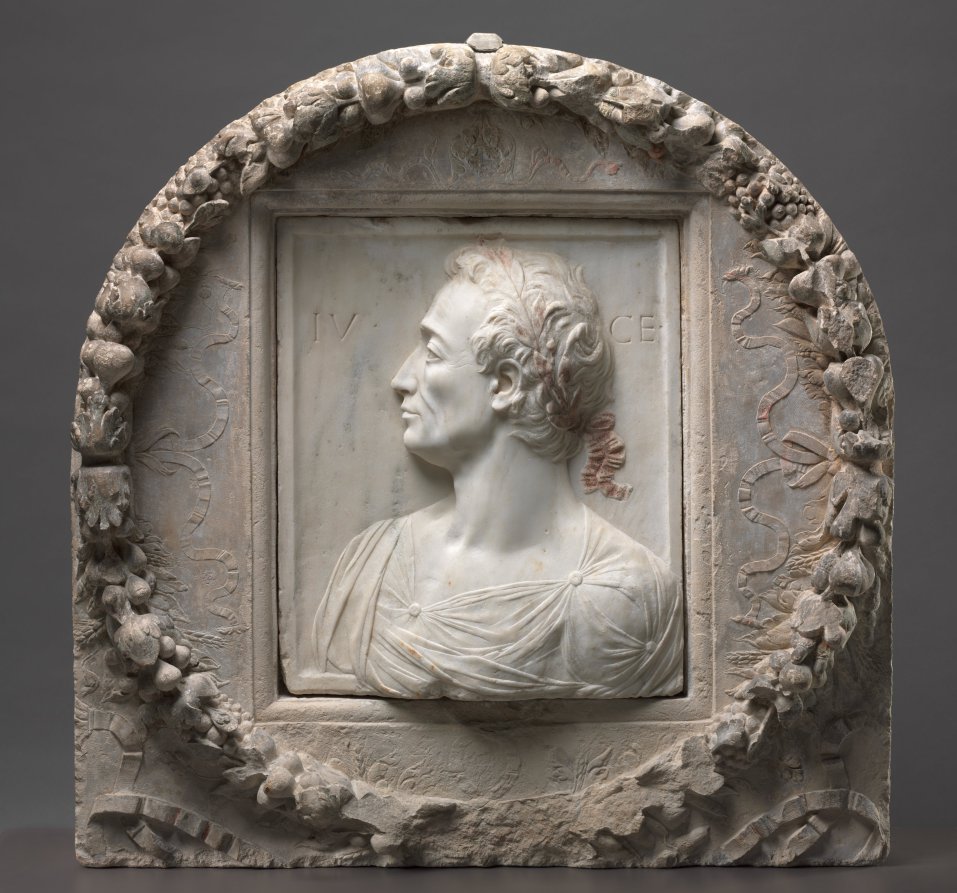
Urban Silhouette Research: The Caesarian Armature
Preliminary Note on the Subject
The figure of Julius Caesar, read through the Addison lens, is not a historical costume but a structural proposition. The internal DNA supplied—David’s Death of Socrates and the anonymous Wave-Pattern Meiping—establishes the operative dialectic: the oil-painted arc of a body in moral collapse, and the ceramic vessel that contains motion without narrating it. Caesar, the man who crossed the Rubicon and was undone by the geometry of the Senate floor, is the precise intersection of these two artifacts. He is the toga as tectonic plate, the laurel as load-bearing crown. Our task is to translate this into the 2026 executive silhouette.
Geometric Integrity: The Paradoxical Arc
In David’s canvas, Socrates’ body forms a contrapuntal curve: the left arm falls, the right arm ascends, and the torso tilts along an axis that is neither vertical nor horizontal. This is the Caesarian gesture—the diagonal of ascent and collapse held in a single line. For 2026 tailoring, we extract this as the asymmetric shoulder-to-hem trajectory: a dropped left shoulder, a raised right lapel peak, and a waist suppression that reads as a philosophical argument rather than a cinch. The garment does not follow the body; it adjudicates it.
The Meiping’s wave pattern offers the counter-discipline. Its cobalt spirals are repetitive, non-hierarchical, and self-contained—a rhythm without a protagonist. Applied to the executive silhouette, this becomes the engineered pleat and the blind seam: surface disruptions that are structural, not decorative. The wave is not printed; it is folded into the cloth’s memory. The result is a garment that appears monolithic from three meters and reveals its kinetic logic only at close range—precisely the urban poetics of restrained disclosure.
Structural Poetics: The Toga as Armature
The Roman toga was never drapery in the romantic sense. It was a calculated volume, a semicircular plane of wool whose folds were mandated by law and whose weight disciplined the wearer’s gait. Caesar’s assassination—twenty-three wounds delivered through a garment that offered no resistance—exposes the toga’s tragic inefficiency: it was a silhouette of authority that could not protect the body it signified. The 2026 executive silhouette corrects this. We retain the monumental shoulder and the columnar fall, but we introduce an internal harness: a hidden grosgrain spine, a magnetic closure at the sternum, a blade-straight seam running from the seventh cervical vertebra to the hem. The garment is no longer a shroud of state; it is a defensible architecture.
The Socrates painting’s light source—left-upper, cold, surgical—dictates our palette logic. Slate, as specified, is the correct chromatic register: it is the color of marble under overcast sky, of the tablinum floor before the blood is mopped. It absorbs shadow without becoming black; it reflects light without becoming silver. In the 2026 executive wardrobe, slate functions as the neutral that refuses neutrality—a ground for the wave-pattern’s quiet insistence.
Urban Materiality: Oil versus Glaze
The internal DNA insists on a material dialectic: oil paint as time’s accelerant, porcelain as time’s insulator. The 2026 executive silhouette must resolve this without choosing a side. We propose a double-faced wool-silk with a matte outer surface and a glazed inner lining—the exterior oxidizes with wear, the interior remains vitreous. The lapel is bonded, not stitched, producing an edge that reads as fired clay rather than sewn cloth. The trouser is unpressed, its crease a wave-pattern in negative: a fold that appears only when the body moves, then disappears into the fabric’s memory.
This is the Caesarian compromise: the garment acknowledges its own mortality—the oil-paint fade at the elbow, the patina of the commute—while maintaining the vessel’s physical indifference to entropy. The executive who wears it is neither Socrates nor the potter. She is the senator who has read both.
Conclusion: The Silhouette as Verdict
The 2026 Addison executive silhouette, derived from Caesar and filtered through the Socrates-Meiping axis, is a minimalist armature with maximalist internal logic. It is slate, columnar, asymmetrically loaded, and seamlessly defended. It does not narrate the assassination; it contains the possibility of one—and renders it, through geometry and material, beautiful rather than fatal. The wave repeats. The light falls from the left. The garment holds.