Urban Form: Candlesticks
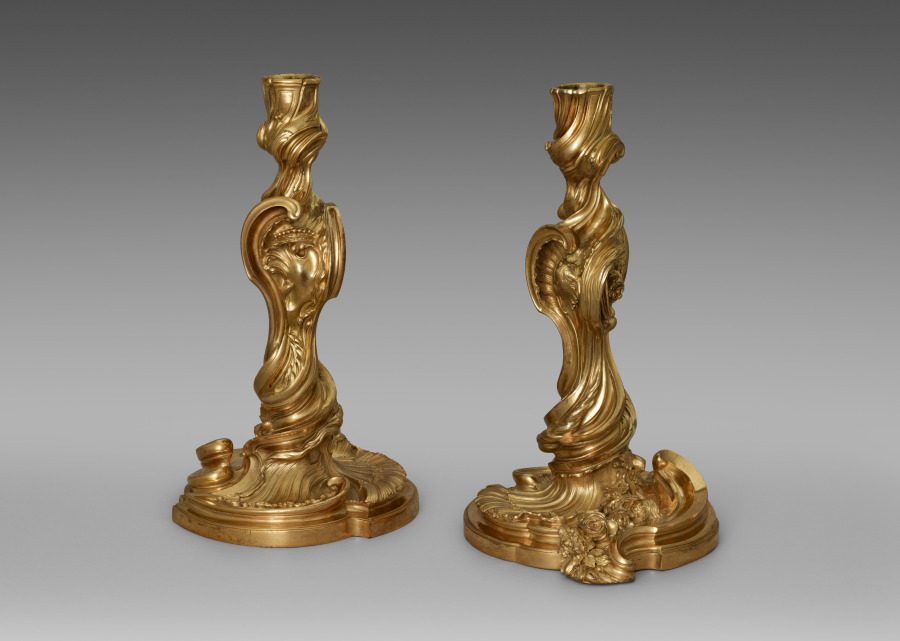
Urban Silhouette Research: Candlestick Form and the 2026 Executive Wardrobe
I. The Candlestick as Structural Archetype
The candlestick is, at its core, a study in vertical tension—a slender column engineered to hold light aloft without collapsing under its own proportions. For the Addison Fashion NYC research division, the candlestick is not a decorative object but a structural archetype: a form defined by a weighted base, a tapered shaft, and a terminal aperture that receives and elevates. This tripartite anatomy maps directly onto the executive silhouette we are developing for 2026. The base corresponds to the shoulder line and torso anchor; the shaft to the elongated column of the body; the aperture to the neckline and the point of interface with the environment. In each case, the form succeeds not through ornament but through proportional discipline—the precise calibration of mass at the bottom and attenuation at the top.
The candlestick's silhouette is inherently Minimalist in category. It admits no excess. Every curve is load-bearing; every taper is a structural decision. This is the governing logic for the 2026 wardrobe: garments that read as single, continuous gestures rather than assemblies of parts. The executive woman does not require embellishment to signal authority; she requires a form that holds its line under pressure.
II. Color: The Slate Register
The color register we assign to this research is Slate—not the flat gray of corporate convention, but the mineral slate of roofing and writing tablets: a cool, blue-shifted neutral with a matte surface that absorbs rather than reflects light. Slate operates as the chromatic equivalent of the candlestick's structural logic. It is non-decorative, non-negotiable, and profoundly urban. In the NYC context, slate reads against concrete, steel, and glass without competing; it recedes into the architectural field while maintaining a distinct tonal identity.
Within the Addison palette, Slate functions as a chromatic anchor. It permits the introduction of secondary tones—Ivory for contrast at the collar and cuff, Onyx for structural definition at the waist and hem—without disrupting the overall sobriety of the look. The candlestick's material history (bronze, iron, ceramic) informs this color choice: we are drawn to the patinated, the oxidized, the surfaces that record time rather than resist it. Slate is a color that ages with intention.
III. Form Deconstruction: Base, Shaft, Aperture
The Base. The candlestick's foot is its center of gravity—often wider than the shaft, sometimes stepped or fluted, always visually weighted. In garment terms, this translates to the shoulder and upper torso: a defined shoulder line, a structured bodice, a waist that anchors rather than cinches. The 2026 executive jacket will feature a compressed shoulder—not the aggressive padding of the 1980s nor the unstructured softness of the 2010s, but a precise, low-profile extension that reads as architectural rather than theatrical. The base must be stable without being heavy.
The Shaft. The candlestick's column is its most distinctive feature: a long, unbroken vertical that tapers subtly from base to aperture. This is the torso and leg line—the continuous vertical that the executive silhouette must preserve. Our research indicates that the 2026 wardrobe will favor column dressing: trousers and skirts that extend the line of the torso without interruption, jackets that fall in a single plane from shoulder to hem, and a deliberate avoidance of horizontal breaks at the waist or hip. The shaft is where the candlestick achieves its urban poetics—the sense of a form that rises rather than sits.
The Aperture. The candlestick's top is its point of function: the socket that receives the candle. In garment terms, this is the neckline and collar—the interface between the body and the environment. The 2026 executive neckline will be precise and unadorned: a clean V, a narrow shawl, a standing collar that frames the face without framing the ego. The aperture is where the candlestick meets the flame; in the wardrobe, it is where the wearer meets the room. It must be open without being exposed, defined without being defended.
IV. Material and Surface: The Patinated Logic
The candlestick's surface is rarely pristine. Bronze oxidizes; ceramic crazes; iron rusts. This patinated logic informs our material selection for 2026. We are specifying matte wool crepe for the shaft, brushed cotton twill for the base, and silk-cotton blends for the aperture—all surfaces that absorb light and record wear rather than repel it. The executive wardrobe must function as a living surface, not a sealed product. Slate as a color reinforces this: it is a tone that deepens with use, that acquires character through repetition rather than deteriorating through it.
V. Synthesis: The 2026 Executive Silhouette
The candlestick, read through the lens of Minimalist form and Slate color, yields a wardrobe proposition that is vertical, weighted, and unadorned. The 2026 executive does not dress to impress; she dresses to hold her line. The silhouette is a single gesture—base to shaft to aperture—executed in materials that accept time and color that absorbs light. This is the Addison Fashion NYC position: form as function, color as discipline, and the urban silhouette as a structure that elevates without ornament.
The candlestick holds light. The wardrobe holds presence. In both cases, the form is the message.