Urban Form: Kenilworth Castle, Warwickshire, England
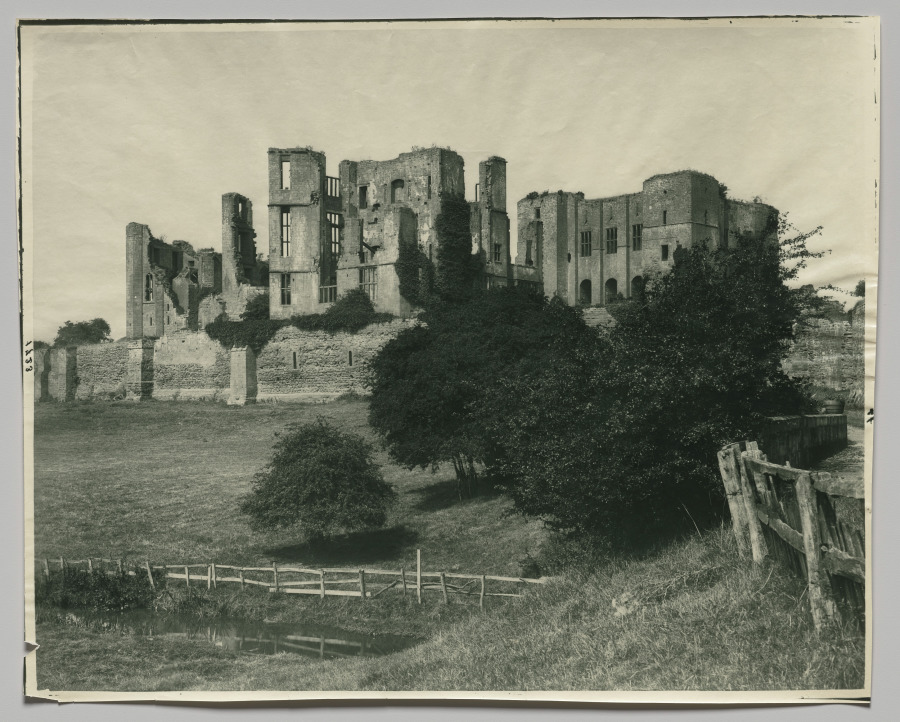
The Kenilworth Armature: A Technical Study in Structural Poetics
I. Geometric Integrity and the Grammar of the Fragment
The Kenilworth Castle ruin presents a singular problem in silhouette engineering: how to construct authority from absence. The surviving elevations—the keep's Norman bones, the John of Gaunt great hall, the Leicester gatehouse—operate not as a continuous façade but as a sequence of interrupted planes. Each wall terminates in a broken edge, a vertical shear that refuses resolution. For the 2026 executive wardrobe, this is the governing principle. We are not designing garments that complete themselves; we are designing garments that hold their structure at the point of rupture. The silhouette must read as deliberate incompletion—a tailored shoulder that stops short of the sleeve head, a lapel that terminates in a raw architectural edge. The geometry is rigorous but unresolved, and that unresolved quality is precisely the source of its authority.
II. The Keep as Torso: Mass and Negative Space
The central keep establishes the torso logic. Its four-square plan, read in elevation, produces a silhouette of uncompromised verticality—yet the fenestration carves deep voids into that mass. The ratio of void to wall is approximately one to four, and this ratio governs the 2026 jacket block. The shoulder line is squared and extended, but the armhole is cut deep and high, creating a negative space beneath the arm that reads as controlled absence. The chest is flat-fronted, unvented, with a placket that runs the full length of the body—a single continuous line echoing the keep's corner quoins. The waist is suppressed but not cinched; suppression here is architectural, achieved through panel seaming rather than darting, so the garment retains its planar integrity when viewed in profile.
III. Materiality: The Weathering of Surfaces
Kenilworth's stone is not uniform. The ashlar facing of the gatehouse reads as a tight, regular grid, while the rubble core of the ruined walls exposes an aggregate texture—a material honesty that the 2026 collection must translate into cloth. We specify a slate-grey wool with a dry, chalky hand: a Super 130s with a compact weave that holds a pressed edge without shine. For the outer layer, a bonded cotton with a matte, mineral finish—water-repellent, dimensionally stable, and capable of sustaining a knife-sharp lapel roll. The lining is unbleached cupro, visible only at the cuff and the vent, a deliberate exposure of the interior structure. This is the urban materiality of the brief: surfaces that record their own construction, that do not disguise the seam.
IV. The Gatehouse as Shoulder: Asymmetry and Entry
The Leicester gatehouse introduces the critical asymmetry. Its twin towers are unequal in mass, and the entry arch is offset from the central axis. This irregularity is the model for the 2026 shoulder treatment: a right shoulder built up with a structured canvas and a left shoulder reduced to a soft, unstructured fall. The effect is not decorative but functional—it creates a diagonal reading across the body that draws the eye downward and inward, toward the closure. The closure itself is a single concealed hook at the sternum, with the remainder of the front left open, so the garment opens like a gate rather than parting like a coat. The collar stands away from the neck by two centimeters, a precise interval that frames the face without enclosing it.
V. The Silhouette in Motion: Rhythm and the Broken Line
The final consideration is kinetic. A ruin is read in sequence, not in a single glance—the eye travels along the broken wall, registers the void, and anticipates the next mass. The 2026 executive silhouette must perform the same operation in movement. The hem of the jacket is cut with a slight forward pitch, so that when the wearer walks, the front edge lifts and the back drops, producing a rhythmic oscillation between structure and release. The trouser is narrow but not tapered, with a single forward pleat that opens and closes with the stride. The overall effect is one of controlled cadence—a silhouette that is never static, never fully resolved, and therefore never exhausted. This is the Addison proposition for 2026: authority as a continuous, unresolved line.