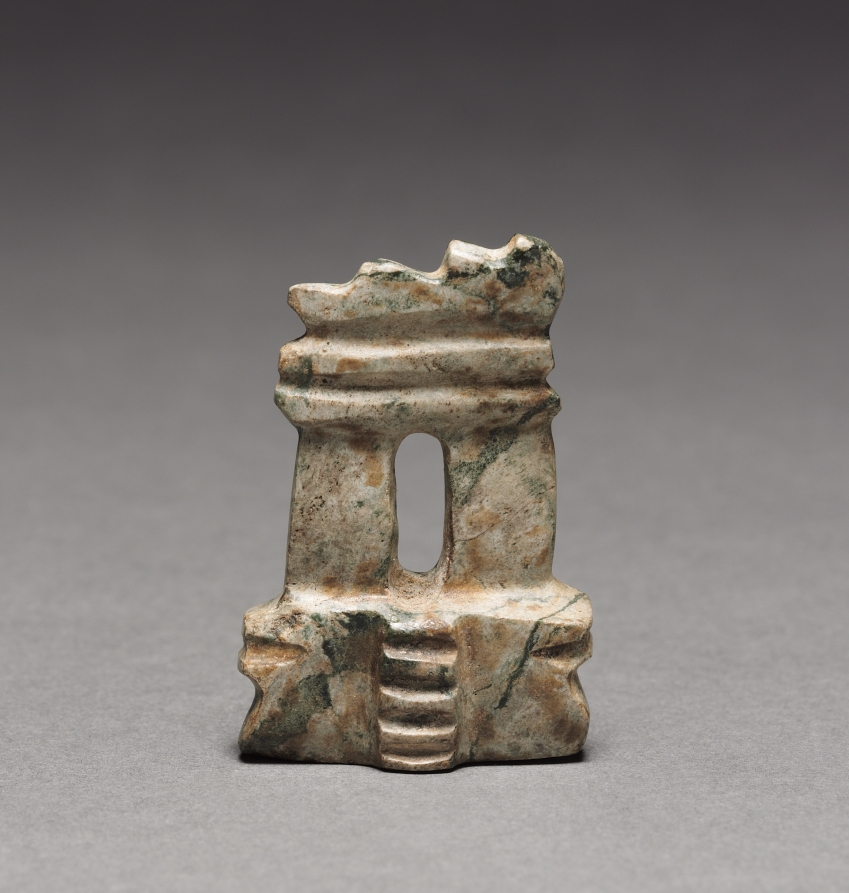
Urban Form: Architectural Model
Geometric Integrity and the 2026 Executive Silhouette
The Cup with Dragon Handles and the Head of a ruler present a dialectic of containment and monumentality that is directly translatable to the 2026 executive wardrobe. Their shared aesthetic—a rigorous imposition of order upon form—defines a silhouette that is less about the body and more about the architecture that contains it. For Addison Fashion, this translates into a Minimalist approach, rendered in Onyx, a color that absorbs light and asserts absolute presence.
Structural Poetics: The Dialectic of Vessel and Monolith
The Cup with Dragon Handles operates as a study in controlled volume. Its body is a pristine, geometric vessel—a cylinder or truncated cone—whose function is to hold. The dragon handles are not mere ornament; they are structural counterpoints that define the cup’s negative space. They create a tension between the vessel’s static containment and the dynamic, upward thrust of the handles. This is the poetics of restrained power: the silhouette is not aggressive but authoritative through containment.
In the 2026 executive silhouette, this translates to a jacket with a clean, unbroken torso—a single, sculpted block of fabric. The shoulder is not padded into a sharp peak but is instead a continuous, architectural curve that flows from the collar to the sleeve head, mimicking the cup’s seamless transition from body to handle. The waist is suppressed, not cinched, creating a subtle hourglass that suggests the vessel’s capacity. The fabric itself, a dense wool-cashmere blend in Onyx, behaves like polished stone: it holds its shape without draping, creating a static, monolithic presence.
Conversely, the Head of a ruler is a study in frontal monumentality. It is a pure, abstracted form—a block of stone that has been carved down to its essential geometry. The face is a series of planar reductions: the brow is a horizontal plane, the cheeks are vertical planes, the jaw is a sharp, angular line. There is no softness, no transition. This is the poetics of absolute authority: the silhouette is not about the body’s movement but about its static, commanding presence.
For the 2026 executive, this manifests in a long, lean overcoat that falls from the shoulder to the ankle in a single, unbroken column. The collar is a high, standing band—a direct reference to the ruler’s headdress—that frames the face without interruption. The closure is a single, hidden button at the sternum, creating a seamless front plane. The fabric is a double-faced wool, heavy and dense, that falls without a whisper. The silhouette is not tailored to the body; it is a carapace, a second skin of authority that the executive inhabits.
Urban Materiality: Onyx and the Architecture of the City
The color Onyx is not a choice; it is a material statement. It is the color of polished obsidian, of the deepest shadows in a skyscraper’s core, of the void that defines form. In the context of the Cup with Dragon Handles, Onyx represents the dark, reflective surface of the bronze, which absorbs light and reveals only the pure geometry of the vessel. In the Head of a ruler, Onyx is the color of basalt, the stone of eternal monuments that stand against the erosion of time.
In the urban landscape, Onyx is the color of the corporate monolith. It is the color of the glass curtain wall at dusk, when the interior lights are off and the building becomes a dark, reflective mass. It is the color of the executive’s armor—a color that does not compete with the city’s chaos but instead absorbs and neutralizes it. The 2026 silhouette in Onyx is a negative space in the urban fabric, a void that commands attention by its refusal to reflect.
The materiality of this silhouette is defined by density and weight. The fabrics are not soft; they are structural. A wool-mohair blend for the jacket, with a crisp hand that holds a crease like a stone ledge. A double-faced cashmere for the overcoat, with a surface so smooth it feels like polished slate. The linings are silk, but they are invisible—the interior is as refined as the exterior, but it is never revealed. The silhouette is a closed system, a self-contained architecture that does not invite touch or inquiry.
The 2026 Executive Silhouette: A Synthesis
The definitive 2026 executive silhouette is a synthesis of these two ancient forms. It is a vessel-monolith: a jacket that contains the body like the cup, and an overcoat that monumentalizes it like the ruler’s head. The silhouette is long, lean, and unbroken. The jacket is cropped at the hip, creating a clean horizontal line that echoes the cup’s rim. The trousers are a straight, wide leg that falls to the floor, creating a continuous vertical plane from shoulder to ground. The entire ensemble is a single, unified form—a block of Onyx that moves through the city with the gravity of a monument.
This is not a silhouette for the body; it is a silhouette for the authority of the body. It is a geometric manifesto that declares: I am contained. I am monumental. I am order. The 2026 executive does not wear clothes; they inhabit an architectural form that is a direct descendant of the dragon-handled cup and the ruler’s stone head. The power is not in the gesture; it is in the static, unyielding presence of the silhouette itself.
In the urban landscape of 2026, where chaos and noise are the default, the executive in Onyx is a silent, commanding void. They are the architectural model of power: a form that is both vessel and monolith, containing authority while projecting an unassailable front. This is the definitive urban silhouette—a study in structural poetics and material authority, rendered in the only color that can contain it: Onyx.