Urban Form: Niagara Falls
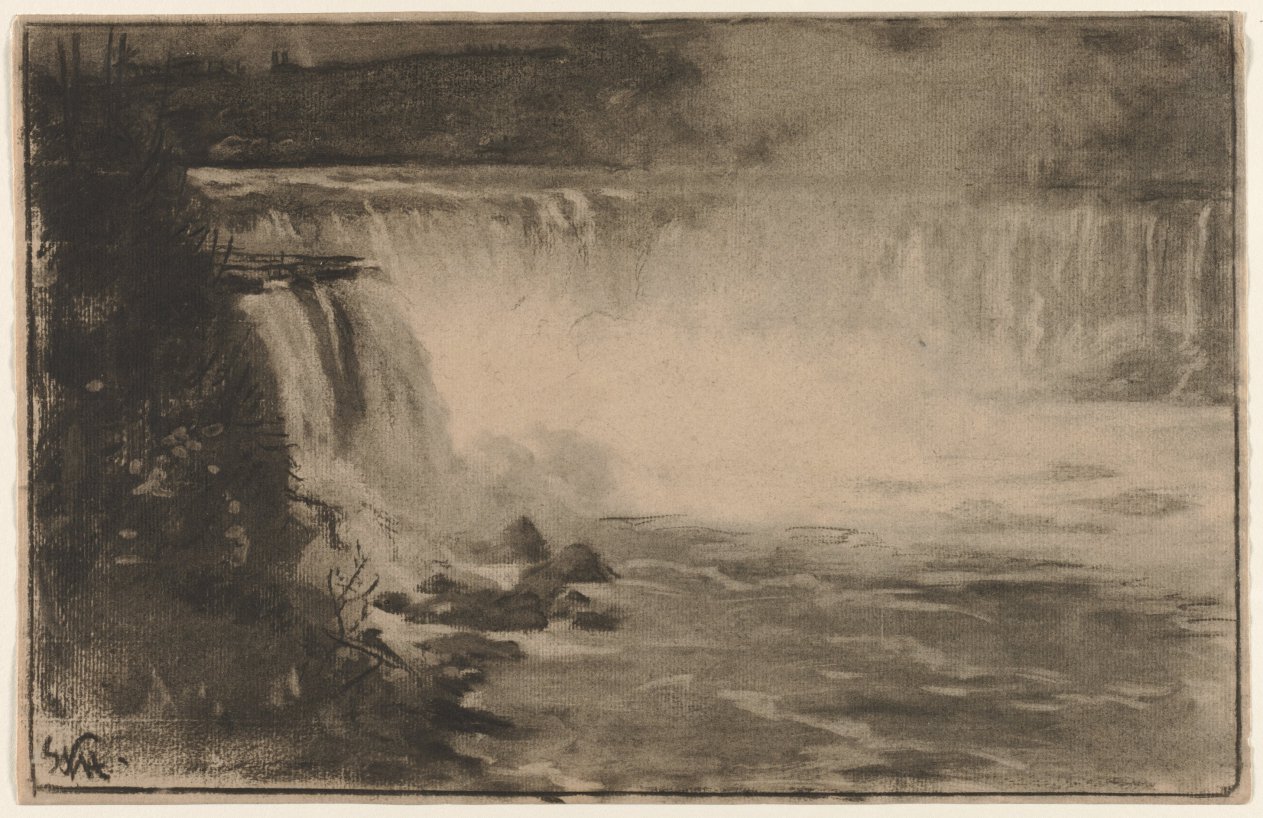
Urban Silhouette Research: Niagara Falls — Form and Chromatic Deconstruction
I. Thematic Premise: Aqueous Mass and the Disciplined Edge
Niagara Falls presents a singular formal proposition: the collision of an unstructured, continuous aqueous mass with a geological constraint that arrests and channels it. For the 2026 executive wardrobe, this duality is not decorative but structural. The falls operate as a study in controlled volume—an immense, kinetic body of water whose silhouette is dictated entirely by the hard perimeter of the escarpment. Our research translates this into a garment architecture wherein soft, fluid mass is held within a precise, engineered boundary. The result is a silhouette that reads as monumental yet disciplined: the executive presence of weight without the liability of bulk.
II. Form: The Vertical Plane and the Falling Line
The dominant formal gesture of the falls is the vertical descent—a sheer, uninterrupted plane of motion. In tailoring terms, this mandates an elongation of the torso line and a suppression of horizontal interruption at the waist. We propose a columnar silhouette for the outerwear and suiting layers: shoulder seams set marginally inward, armholes dropped to a clean vertical, and a hemline that extends without taper. The falling line is rendered as a continuous seam from clavicle to hem, eliminating the conventional waist suppression that fragments the vertical read.
The escarpment—the hard rock lip over which the water passes—is translated as the shoulder and collar structure. This is the point of constraint: a defined, almost architectural shoulder that establishes the perimeter from which the softer body of the garment descends. We specify a lightly structured shoulder with minimal padding, achieving definition through pattern engineering rather than filler. The collar sits close to the neck, a horizontal lip that mirrors the geological shelf, from which the vertical mass is released.
Critically, the falls are not a single plane but a layered cascade. Our construction mirrors this through graduated underlayers: a fluid inner shell of matte silk or cupro, a mid-layer of lightweight wool crepe, and an outer shell of bonded cotton or technical gabardine. Each layer falls at a marginally different length and weight, producing a controlled, rhythmic descent rather than a monolithic drop. This stratification is visible only in motion—a deliberate restraint consistent with the Addison minimalist doctrine.
III. Chromatic Strategy: Onyx as Absorptive Mass
The palette is anchored in Onyx, selected not for its neutrality but for its optical behavior. Onyx absorbs light rather than reflecting it, producing a chromatic mass that reads as depth rather than surface. This is the formal equivalent of the deep water at the base of the falls—a darkness that is volumetric, not flat. In the executive context, Onyx provides authority without the aggressive sheen of true black; it is a recessive power, a color that holds the room rather than entering it.
The chromatic system operates on a tonal gradient within the Onyx register. We specify three values: a near-black Onyx for the outer shell, a mid-tone charcoal for the structural shoulder and collar elements, and a deep graphite for the inner fluid layers. This gradient is not decorative but functional: it reinforces the vertical read by creating a subtle value shift from the constrained upper body to the released lower body, mimicking the transition from rock to water. The eye is drawn downward along the tonal descent, elongating the silhouette.
Accents are restricted to Silver in hardware only—a single, cold metallic note at the closure or cuff, referencing the mist and spray as a point of luminance against the absorptive mass. No secondary color is introduced. The discipline of the palette is absolute; the falls admit no chromatic distraction, and neither does the wardrobe.
IV. Material and the Physics of Drape
The falls demand a study in mass-to-drape ratio. A fabric that is too light produces uncontrolled flutter; too heavy, and the vertical line collapses into stiffness. We specify a mid-weight bonded wool (280–320 gsm) for the outer shell, engineered with a slight cross-grain bias to encourage a clean, gravitational fall. The inner cupro layer is cut on the true bias, allowing it to move independently of the shell—a controlled internal cascade. Seams are finished flat and pressed open, eliminating bulk at the vertical line. The hem is weighted with a narrow, concealed tape, ensuring the falling line terminates with intention rather than drift.
V. Executive Application: The 2026 Wardrobe
The Niagara research yields a three-piece executive system: a columnar overcoat with defined shoulder and weighted hem; a tunic-length inner layer in fluid cupro; and a straight-leg trouser in bonded wool with a clean, uncuffed finish. Worn together, the system produces a single, unbroken vertical read—the executive as a disciplined aqueous mass, constrained by structure, released by drape. It is a silhouette of cold authority and continuous motion, resolved entirely within the Onyx register. The falls do not shout; they descend. So too does the wardrobe.