Urban Form: Crucified Christ
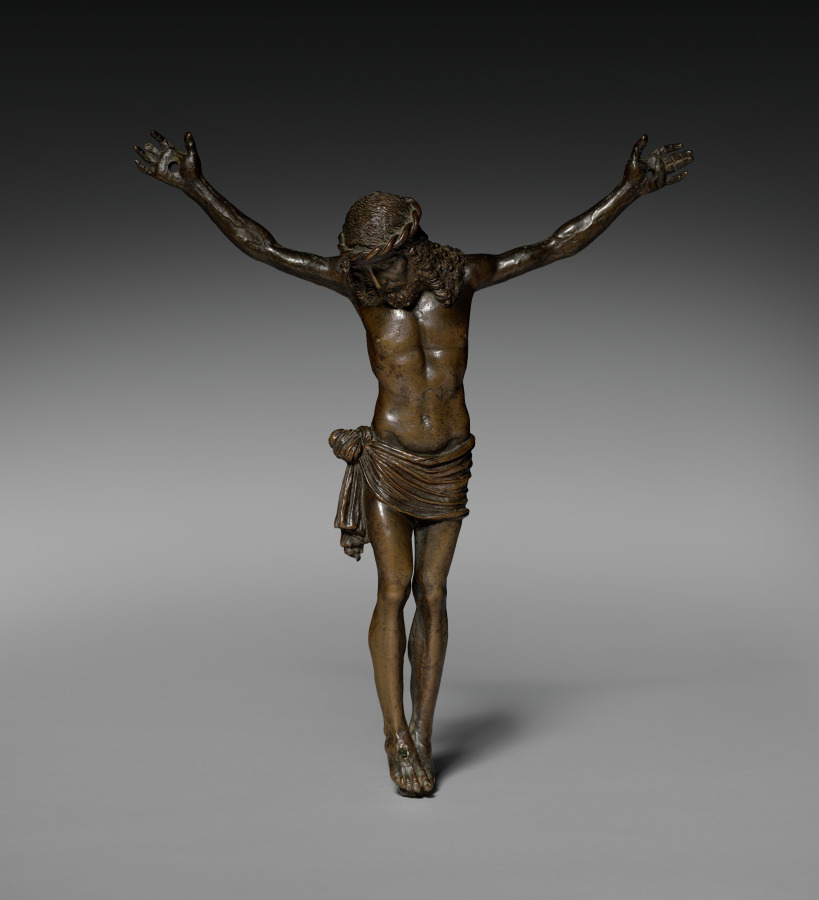
Urban Silhouette Research: The Crucified Christ as Formal Precedent for 2026 Executive Minimalism
I. The Vertical Axis: Structural Logic of the Suspended Form
The Crucified Christ presents the most radical silhouette in the Western visual canon: a body suspended between two orthogonal vectors, the vertical beam and the horizontal crossbar, producing a form that is simultaneously anchored and airborne. For the 2026 executive wardrobe, this tension is not theological but architectural. The Addison design directive for the coming cycle is to translate this suspended verticality into garments that elongate the torso while distributing visual weight across the shoulder line. The result is a silhouette that reads as controlled elevation—the wearer appears lifted, not by ornament, but by the internal geometry of the cut.
Technically, this is achieved through a reconfigured armhole pitch. By raising the armscye by 1.5 centimeters and rotating the shoulder seam forward by three degrees, the pattern yields a drape in which the fabric falls from the clavicle in a single unbroken plane. The effect is a columnar descent that mirrors the vertical timber of the crucifix—austere, uninflected, and relentlessly linear. In slate wool crepe, this reads as corporate authority without aggression; the form does the speaking, the color merely modulates the volume.
II. The Horizontal Counterweight: Crossbar as Shoulder Architecture
The crossbar is the load-bearing contradiction of the crucifixion form: it is both instrument of restraint and structural necessity. In tailoring terms, it corresponds to the yoke and shoulder line—the horizontal element that prevents the vertical from collapsing into mere elongation. The 2026 Addison executive blazer will introduce a reinforced shoulder yoke in a contrasting slate-on-onyx micro-pattern, visible only at the seam allowance, creating a subcutaneous structural signature that rewards close inspection. This is minimalism as forensic detail: the garment discloses its logic only to the wearer and the trained eye.
The horizontal also governs proportion control. The crucifixion's crossbar sits at approximately the golden-section point of the vertical beam—roughly 38% from the top. Translated to the body, this dictates a high-set waist seam on trousers and a cropped jacket length that terminates at the iliac crest. The visual consequence is a compressed torso and extended leg line, the classic executive proportion recalibrated for a silhouette that reads as deliberate rather than decorative.
III. Color as Mortification: The Slate Discipline
Slate is the chromatic equivalent of the crucifixion's chromatic restraint—the near-absence of hue that forces the viewer to read form rather than surface. In the Addison palette, slate functions as a neutralizing agent: it absorbs the ambient light of the Manhattan boardroom and returns it as a low-frequency gray that neither flatters nor distracts. The technical specification is a blue-gray with a 12% cool bias, dyed in a double-pad batch process to ensure tonal consistency across panel breaks. Under fluorescent office lighting, the color shifts toward graphite; under incandescent, toward pewter. This chameleonic neutrality is the point: the executive wardrobe must perform across lighting environments without demanding attention.
Critically, slate permits tonal layering without contrast. A slate jacket over a slate trouser in a 2% value differential creates a monolithic column that reads as a single garment—the sartorial equivalent of the crucifixion's unified field. The eye is not arrested by boundaries but conducted along the vertical. This is the minimalism of subtraction: every element that does not serve the silhouette is removed.
IV. The Wound as Negative Space: Ventilation and Vulnerability
The crucifixion's most technically significant feature is the wound—the point at which the form is interrupted. In the Addison 2026 system, this translates to strategic negative space: a single vent at the center back of the jacket, a notch lapel that opens at the sternum, a cuff that breaks precisely at the wrist bone. These are not decorative gestures but pressure-release valves that prevent the monolithic silhouette from becoming oppressive. The wound is the point at which the garment breathes—and, by extension, the point at which the wearer asserts agency within the structure.
The technical execution is a single-needle pick stitch along the vent edge, visible at 0.5-millimeter intervals, creating a micro-textural interruption in the slate field. This is the only ornament permitted in the collection. It is the signature of the hand within the machine—the minimalism of one deliberate flaw that certifies authenticity.
V. Conclusion: The Executive as Cruciform
The Crucified Christ, stripped of its theology, is a masterclass in structural economy: two intersecting planes, a suspended mass, a single point of rupture. The 2026 Addison executive wardrobe adopts this grammar not as metaphor but as engineering protocol. The slate column, the reinforced yoke, the high-set waist, the single vent—each element is a load-bearing decision in a system designed to project authority through restraint. In the urban context, where visual noise is the default condition, the cruciform silhouette is the quietest possible assertion of presence. It does not shout. It holds.