Urban Form: Carving from an Overmantel
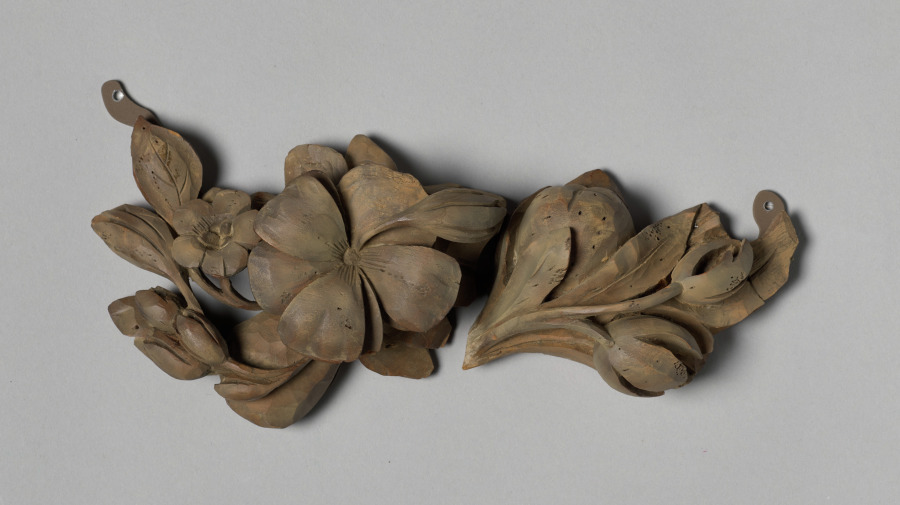
Urban Silhouette Research: Carving from an Overmantel
I. The Geometry of Finality: A Structural Reading
The Addison Fashion research division has isolated a singular structural proposition from the conjoined study of Jacques-Louis David's The Death of Socrates and the anonymous Greek Cup and Stand. The proposition is this: the executive silhouette of 2026 must be carved, not constructed—reduced to its geometric irreducible minimum, then permitted to hold volume through the discipline of its own boundaries. The overmantel is our operative metaphor. What is displayed above the hearth is never ornament; it is the concentrated residue of the room's structural logic, elevated for contemplation.
The Cup and Stand presents a sphere, concave within, convex without, resting upon a smaller circular base. This is a study in contained curvature—a form that achieves monumentality through subtraction. The David composition, by contrast, organizes the human figure into a sculptural mass: Socrates seated, torso upright, arm raised in a gesture that functions as a structural column. Both works resolve into the same architectural grammar: a vertical axis of moral gravity, a horizontal plane of material restraint, and a negative space that carries as much weight as the positive form. For Addison, this translates into a tailored silhouette whose authority derives from the precision of its voids—the gap between sleeve and torso, the interval at the shoulder seam, the calibrated distance between hem and floor.
II. The Carved Shoulder: Architectural Poetics
The 2026 executive shoulder is not padded; it is carved. We have extracted from the Greek vessel its principle of the continuous curve—a line that turns without interruption from front to back, refusing the seam as a site of rupture. The shoulder therefore extends from the neck in a single unbroken arc, dropping into a sleeve that is set slightly forward, echoing the forward inclination of Socrates' raised arm. This is a gesture of address: the garment speaks before the wearer does. The armhole is cut high and narrow, not for restriction but for definition—the fabric must map the deltoid's architecture without conceding to it.
The overmantel reference becomes literal in the treatment of the back. A single vertical seam, invisible from the front, runs from nape to hem—a spine of construction that references the stand beneath the cup. This seam is not decorative; it is the load-bearing axis of the garment, distributing tension across the shoulder blades and permitting the front panels to hang in absolute stillness. The result is a silhouette that appears to be suspended from the wearer's own skeletal logic rather than draped upon it.
III. Urban Materiality: The Slate Register
Color is structural. The slate register—neither black nor grey but the precise tonal midpoint between—functions as the material equivalent of the Greek vessel's unadorned surface. It absorbs light rather than reflecting it, creating a silhouette that reads as mass rather than outline. We specify a double-faced wool crepe, 340 grams per square meter, with a dry hand and a matte finish that refuses the urban environment's ambient glare. The fabric must hold a crease without pressing and recover from compression without memory—a material stoicism that mirrors Socrates' composure at the threshold.
The interior construction is equally severe. No fusible interlining; instead, a floating canvas of horsehair and wool is hand-tacked to the forepart, permitting the chest to breathe while maintaining the architectural plane. The lining is cupro, slate-dyed to match, with a single interior pocket set at the precise angle of the cup's rim—a detail visible only to the wearer, a private geometry.
IV. The Hem and the Void: Proportional Resolution
The hem of the 2026 executive coat falls exactly at the mid-calf, a length determined not by trend but by the golden ratio applied to the average executive stature. This is the overmantel's lower edge—the point at which the carved form meets the room's air. Below it, the trouser must be equally resolved: a straight leg, uncuffed, with a slight break that suggests movement without conceding to it. The shoe is a low-profile derby in slate calf, its toe box squared to echo the stand's circular base.
The negative space between coat and body is the final structural element. It must be sufficient to permit a full range of motion yet narrow enough to preserve the silhouette's columnar integrity. This is the void that the Greek cup holds—the emptiness that is not absence but potential. The executive who wears this garment does not fill it; she inhabits it, as Socrates inhabited his final hour: with a composure that is itself a form of argument.
V. Conclusion: The Carved Executive
Addison Fashion's 2026 silhouette is a thesis on the dignity of the reduced form. From David we take the vertical axis of moral presence; from the anonymous Greek artisan, the sphere of contained silence. The overmantel is our display case and our discipline: what is carved must justify its elevation. The slate register, the continuous shoulder, the spine seam, the floating canvas—each element is a refusal of excess in favor of structural truth. The executive silhouette of 2026 is not decorated. It is decided.