Urban Form: Portrait of Philip II, King of Spain
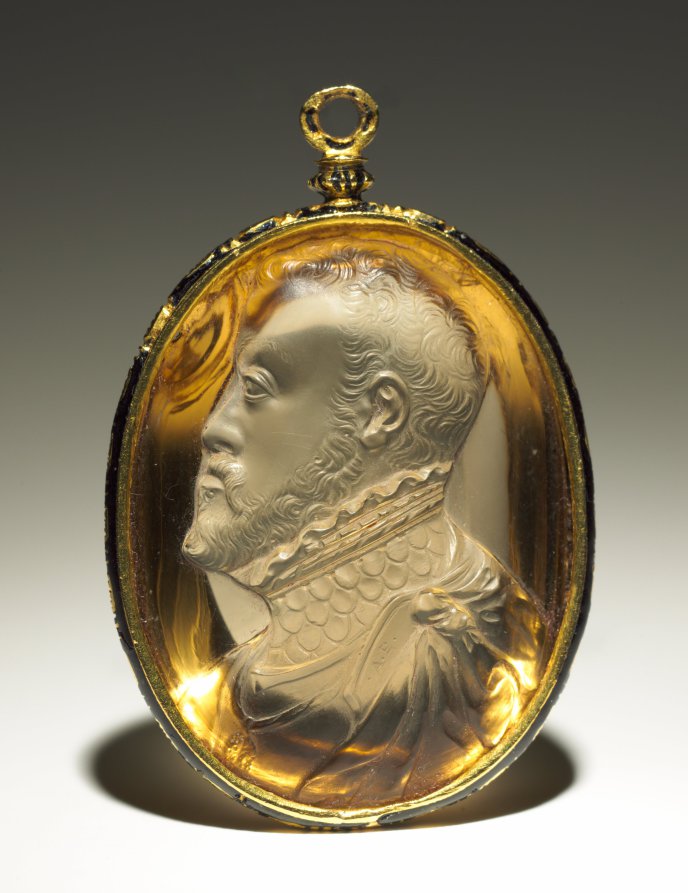
Urban Silhouette Research: The Philip II Portrait as Structural Protocol
I. Geometric Integrity: The Sovereign Grid
The portrait of Philip II presents a closed geometric system of remarkable severity. The composition is governed by a vertical axis—the body’s central column—intersected by the horizontal register of the collar and the diagonal fall of the mantle. This is not a soft, organic arrangement; it is an architecture of restraint. The rigid gorget and the high, unyielding collar function as a cervical bracket, framing the head as a discrete volume above a monolithic torso. The arms, held close and largely occluded, deny gesture. The result is a silhouette that reads as a single, uninterrupted mass—a columnar form with a controlled apex.
For the 2026 executive silhouette, this geometry translates into a closed-shoulder protocol. The shoulder line is not extended but contained, dropping vertically from the acromion without padding or projection. The torso is treated as a rectangular prism, its width determined by the ribcage rather than by fabric volume. The waist is suppressed—not cinched, but ignored—so that the garment reads as a continuous plane from clavicle to hem. This is the antithesis of the fluid, oversized silhouette; it is a minimalist armature in which the body is neither revealed nor concealed but structured.
II. Structural Poetics: The Collar as Load-Bearing Element
The portrait’s most consequential detail is the collar—a stiff, upward-rising plane that encircles the neck and terminates in a clean, horizontal edge. This is not ornament; it is load-bearing geometry. The collar establishes a visual plinth for the head, separating the cranial volume from the shoulder mass with a deliberate interval of negative space. In tailoring terms, this is the architectural stand collar: a single-piece construction, fused and interfaced to maintain a vertical stance, with no roll or fold. The collar’s edge is the silhouette’s primary horizon line—the point at which the garment’s structural logic becomes legible.
The mantle, falling in heavy, unbroken folds from the shoulders, introduces a secondary structural system: the vertical pleat as load path. Each fold is a channel through which the fabric’s weight is directed downward, reinforcing the columnar read. In the 2026 executive wardrobe, this translates into knife-pleated back panels and unpressed front plackets—surfaces that hold their line without relying on darts or seams. The poetics here are cold and deliberate: the garment does not drape; it stands.
III. Urban Materiality: Onyx and the Weight of Surface
The portrait’s palette is a study in tonal compression: black, near-black, and the dull sheen of metal. This is the logic of Onyx—not a color but a material condition. The fabric must carry weight without gloss, absorbing light rather than reflecting it. For 2026, this suggests dense wool-silk blends, bonded cottons, and matte technical gabardines—surfaces that read as monolithic at a distance and reveal subtle grain only on approach. The metal accents of the portrait—the gorget’s edge, the chain—are translated into hardware as structural punctuation: a single, flush-set clasp at the throat; a concealed zip with a flat, brushed pull. No decorative excess.
The urban context demands materiality that performs under compression. The silhouette must survive the commute, the elevator, the boardroom—without wrinkling, without softening. This is the Onyx protocol: fabric as armor, cut as architecture, finished as restraint. The portrait’s surface is not luxurious in the conventional sense; it is resolute. That resolution is the 2026 executive’s most valuable aesthetic asset.
IV. Conclusion: The Closed Silhouette as Executive Protocol
The Philip II portrait offers a definitive rebuttal to the prevailing fluidity of contemporary tailoring. Its geometry is closed, its poetics are load-bearing, and its materiality is uncompromising. For Addison Fashion’s 2026 executive silhouette, the protocol is clear: suppress the waist, contain the shoulder, elevate the collar, and weight the surface. The result is a garment that does not follow the body but frames it—a minimalist armature for the urban operator who understands that authority is a matter of structural integrity, not sartorial volume. The silhouette is Onyx: dense, matte, and absolute.