Urban Form: The Fall of the Angels
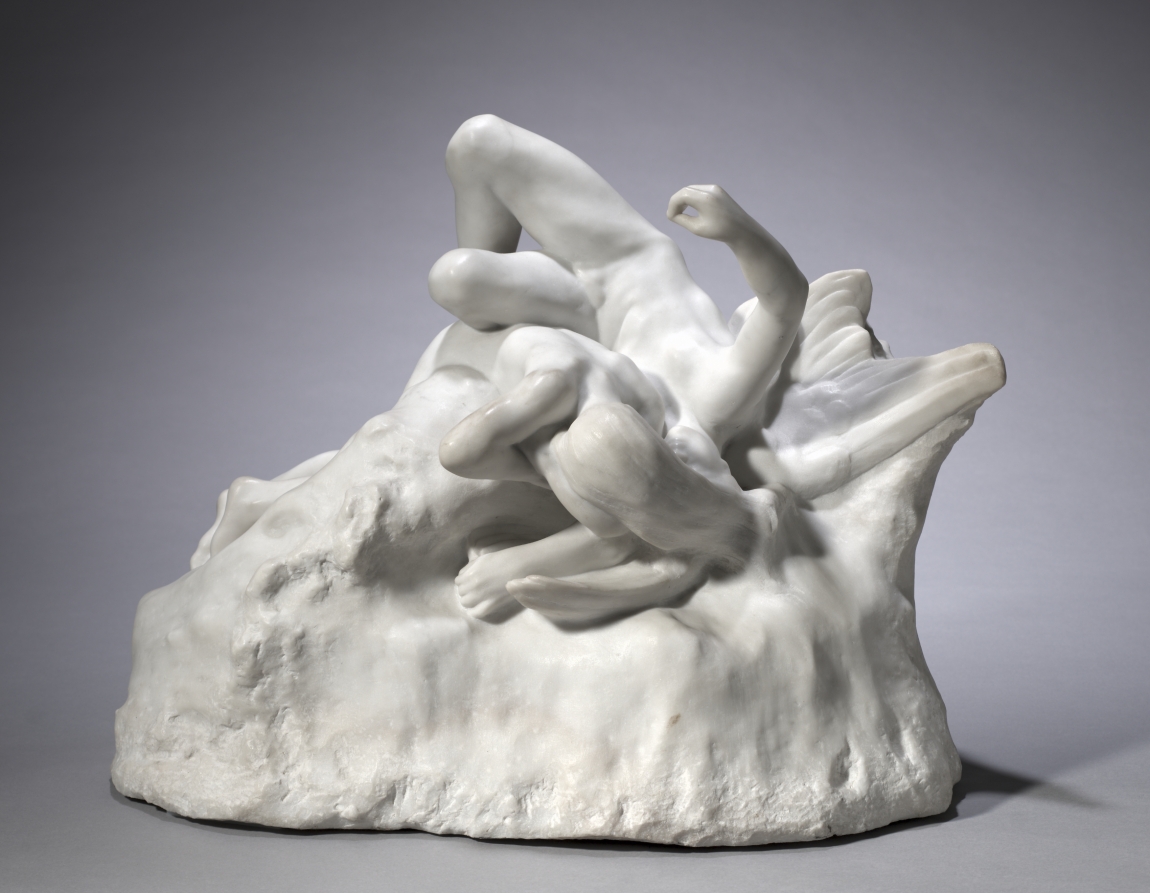
Urban Silhouette Research: The Fall of the Angels — Form as Container, Color as Void
I. Thesis: The Garment as Vessel
The DNA source presents a binary that is, at first inspection, a false one: the painted event versus the fired object. David's Death of Socrates operates through narrative saturation—dramatic chiaroscuro, gestural legibility, the conversion of mortality into a hero's tableau. The Greek Jar operates through structural reticence—a self-contained volume whose meaning resides not in depiction but in the negative space it encloses. For Addison Fashion's Fall of the Angels research, we reject the temptation to dramatize. The 2026 executive wardrobe must function as the Jar, not the canvas: a vessel that holds the body, holds time, and holds silence without narrating either.
This is the governing principle of the collection's form language. Where the painted figure seeks to tame death through composition, the vessel coexists with it through containment. Translated to tailoring: the garment does not perform authority; it encloses it. The silhouette is therefore subtractive, not additive—an architecture of omission.
II. Form Deconstruction: The Contained Volume
The Jar's formal logic is defined by three properties: a continuous wall, a controlled aperture, and an interior that is functionally empty. Each maps directly onto our structural decisions.
Continuous wall → the unbroken shoulder line. We eliminate the set-in sleeve's narrative break. The Fall of the Angels tailoring employs a raglan-derived yoke in bonded wool-silk, producing a shoulder that reads as a single fired surface—no seam interruption, no epaulette drama. The wall of the garment is monolithic, its authority derived from continuity rather than construction detail.
Controlled aperture → the neckline as rim. The Jar's mouth is its most disciplined feature: narrow enough to govern access, wide enough to admit use. Our collar stands at 4.5 cm, engineered in double-faced cashmere with a raw-cut edge, functioning as a rim rather than a frame. It does not open the garment to the gaze; it regulates it. This is the anti-heroic neckline—no plunge, no drama, only aperture.
Interior emptiness → the negative-space drape. The critical insight of the source—“当其无,有器之用”—is that value resides in the void. Our mid-layer employs a bias-cut column in 19.5-micron merino that hangs from the yoke without waist suppression, generating a deliberate air gap of 3–4 cm between body and cloth. The garment's utility is its emptiness: it moves, it breathes, it holds. The executive body is not cinched into narrative; it is housed within a volume.
III. Color Logic: Slate as Fired Surface
The palette resolves to Slate—not as a neutral default, but as the chromatic equivalent of fired clay. Slate occupies the precise interval between the mineral and the atmospheric: it is neither the warm earth of the Jar's terracotta nor the cold spotlight of David's canvas, but the residue of both. It is the color of time deposited on a surface.
Technically, Slate is deployed in a three-value gradient across the collection: Slate 18-4005 (the structural outer—coat, blazer), Slate 17-4014 (the mid-layer column), and a near-Slate graphite at the seam binding, creating a tonal depth that reads as patina rather than decoration. The result is a monochrome that is not flat but weathered—color as the trace of duration, consistent with the vessel's surface logic.
Critically, we forbid contrast. The Fall of the Angels wardrobe admits no accent color, no hardware glint, no logo. Where David's painting uses light to dramatize, we use tonal proximity to withdraw. The executive figure in Slate is legible by silhouette alone—a form that does not announce, but persists.
IV. Application: The 2026 Executive Wardrobe
The translation into a wearable system follows three rules.
Rule one: silhouette over surface. The blazer is a single-breasted, unvented volume in bonded Slate wool, cut 6 cm from the body at the waist and 4 cm at the hem—an unbroken wall. It carries no darts that narrate the figure; it contains it.
Rule two: the garment must age. Fabrics are selected for patina behavior: undyed-edge cashmere, pigment-dyed cotton twill, and a Slate silk-wool that develops a subtle surface bloom after twenty wears. The wardrobe is designed to accumulate time, not resist it—the Jar's lesson against the painting's frozen instant.
Rule three: the void is the luxury. The collection's signature piece is the Vessel Coat: a floor-adjacent, collarless outer in Slate 18-4005, with a 12 cm interior air gap and a single concealed closure. It is, functionally, an empty container worn over the body—the most literal and most disciplined expression of the source DNA. It does not depict the fall of the angels. It holds the space where they fell.
V. Conclusion
The Fall of the Angels is not a narrative collection. It is a containment collection. David's Socrates teaches the executive how to die heroically; the Jar teaches the executive how to persist—empty, continuous, fired, and silent. In Slate, in an unbroken wall of cloth, the 2026 Addison wardrobe offers the only authority that survives the褪色 of hero narrative: the elegance of the vessel that remains.