Urban Form: Carving from an Overmantel
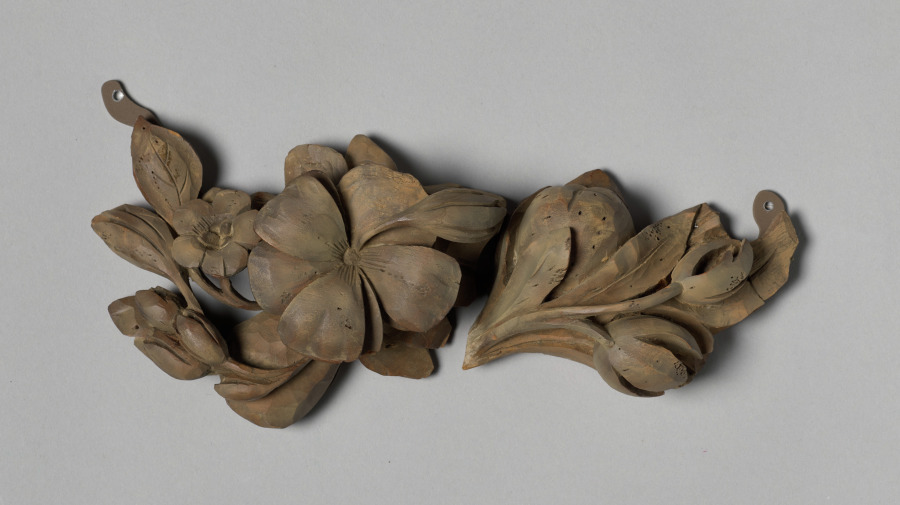
Urban Silhouette Research: Carving from an Overmantel
I. The Artifact as Structural Proposition
The object under examination—a carved overmantel fragment—operates less as ornament than as an architectural thesis. Its geometry is not decorative but load-bearing: a sequence of receding planes, chamfered edges, and negative voids that articulate mass without recourse to figuration. For Addison Fashion, this is the primary text. The 2026 executive silhouette must be read the way a mason reads stone: as a negotiation between compression and release, between the weight of material and the discipline of the cut.
The fragment’s internal logic is one of nested rectangles—a frame within a frame, each plane stepping back by a calibrated increment. This is not ornamentation; it is spatial hierarchy made visible. Translated to the body, it prescribes a tailoring philosophy in which each panel—lapel, yoke, placket—exists as a discrete architectural event, offset from its neighbor by a precise, almost surgical depth. The silhouette that emerges is Minimalist not by subtraction but by structural clarity: every seam is a load path, every edge a decision.
II. Geometric Integrity: The Chamfer as Executive Grammar
The defining gesture of the carving is the chamfer—the 45-degree bevel that softens a corner without dissolving it. This is the precise operation Addison Fashion executes for 2026. The executive shoulder is not rounded; it is chamfered, planed at the deltoid to suggest mass in transition rather than mass at rest. The result is a shoulder line that reads as carved, not constructed—a single continuous plane that resolves the tension between the horizontal of the clavicle and the vertical of the arm.
Below the waist, the fragment’s lower register introduces a stepped hem: a horizontal band that terminates the composition with deliberate abruptness. This informs the 2026 architectural hem—a trouser or skirt that ends in a clean, weighted line, neither tapered nor flared, but cut. The geometry is uncompromising: the hem is a datum, not a suggestion. In Onyx, this reads as a void against the urban field—a black plane that absorbs light and returns nothing, asserting presence through absence.
III. Materiality: The Poetics of the Carved Surface
The overmantel’s surface is its argument. Tool marks remain visible—not as flaw but as evidence of force. The stone was not polished into anonymity; it was interrogated. For Addison Fashion, this translates to a materiality that refuses the frictionless. The 2026 executive wardrobe employs dry-handed wool, bonded cotton, and resin-finished silk—textiles that hold a crease like stone holds a chisel line. The surface is matte, light-absorbing, Onyx in its deepest register: a black that is not flat but stratified, revealing depth only at close range.
This is urban materiality as tactical camouflage. The executive moving through the city at dusk is a figure carved from the same quarry as the architecture: granite, basalt, poured concrete. The garment does not decorate the body; it sites it. The overmantel was designed to anchor a room—to give the eye a fixed point in a field of movement. The 2026 silhouette performs the same function on the body: it is a fixed point in the flux of the urban corridor.
IV. The Negative Void: Silhouette as Interval
Critically, the carving’s geometry is defined as much by what it removes as by what it retains. The negative voids—the recessed panels, the shadowed reveals—are not empty; they are active intervals. In tailoring, this corresponds to the deliberate gap: the stand-away collar, the floating placket, the sleeve set slightly off the shoulder seam. These are not errors of fit; they are engineered voids that allow the silhouette to breathe, to register air as a material.
The 2026 executive silhouette is therefore porous—not in the sense of looseness, but in the sense of controlled permeability. The garment admits the city: wind, light, the glance of the passerby. It is a Minimalist architecture that refuses the hermetic. The overmantel, after all, was never a sealed object; it was a threshold, a frame for the fire beneath. The executive who wears this silhouette is similarly framed: carved from the overmantel, set against the city, and lit from within.
V. Conclusion: The Carved Executive
The overmantel fragment teaches a single, cold lesson: form is the residue of force. The 2026 Addison Fashion silhouette is not designed; it is quarried. Its geometry is the geometry of the chamfer, the step, the void. Its color is Onyx—the black of cut stone at midnight. Its category is Minimalist—not because it lacks, but because it refuses the extraneous with the precision of a chisel. The executive who wears it does not enter the room; they occupy it, as the overmantel occupies the wall: structurally, silently, and without apology.