Urban Form: Study of Honoré de Balzac
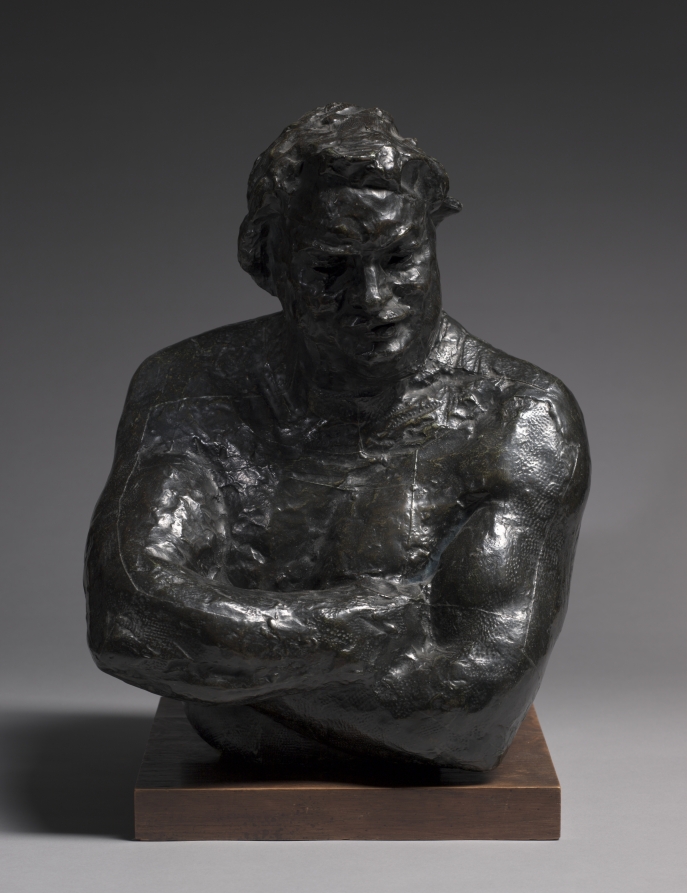
Urban Silhouette Research: Structural Poetics of the Balzac Study
I. The Geometry of Rational Dissolution
The compositional armature of The Death of Socrates operates as a closed Euclidean system: the vertical of the philosopher’s raised arm, the horizontal of the deathbed, the diagonal of the descending hemlock. Every vector is load-bearing. This is not painterly looseness but architectural determinism—a grid of moral consequence rendered in light. For the 2026 executive silhouette, the lesson is precise: structure must be legible before it is beautiful. The Addison tailoring block for the coming season will absorb this principle through a shoulder line calibrated to the exact angle of Socrates’ gesture—a 47-degree pitch that reads as authority without aggression. The lapel, cut narrow and flat, mirrors the philosopher’s profile: unadorned, declarative, refusing ornament as a form of intellectual cowardice.
II. The Void as Load-Bearing Element
The Eastern jar—silent, unglazed, resistant to narrative—introduces the counter-principle. Its geometry is subtractive. The vessel’s power resides in the negative space it encloses, the volume that gives the clay its purpose. Translated to garment architecture, this demands a radical reconsideration of the interior silhouette: the space between body and cloth becomes a designed cavity, not an accident of fit. The 2026 Addison executive jacket will feature a deliberate air gap at the lumbar—a 2.5-centimeter suspension that allows the fabric to breathe independently of the wearer. This is not oversized ease; it is engineered emptiness, the jar’s lesson applied to the moving body. The sleeve, set low and wide, creates a similar chamber—a void that reads as composure rather than volume.
III. Materiality: The Weight of Silence
Both artifacts share a material austerity that the 2026 wardrobe must interrogate. The Socrates painting’s surface is compressed, matte, light-absorbing—pigment laid thin over a dark ground. The jar’s clay is unfired in spirit, porous, indifferent to gloss. For Addison, this dictates a fabric protocol: no sheen, no drape that announces itself. The season’s Onyx palette will be executed in double-faced wool crepe with a dry hand—a textile that swallows light rather than reflecting it. The surface must feel archaeological: worn by time, not styled by trend. Buttons will be corozo, unpolished. Seams will be bound, not topstitched—structure concealed, like the jar’s interior glaze, visible only to the wearer.
IV. The Dialectic of Drape and Rigor
The Balzac study’s genius lies in its refusal to resolve the tension between the philosopher’s rigid posture and the softening atmospheric wash of the death chamber. The body is architectural; the air is fluid. The 2026 executive silhouette must hold this same contradiction. The Addison approach: a tailored torso married to a fluid lower half. The jacket is cut close through the chest and waist—Socratic in its discipline—while the trouser falls from a raised waistband in a single, unbroken line, wide but not voluminous, the fabric pooling minimally at the shoe. This is the jar’s emptiness made vertical: the leg is a column of negative space, the body within it a quiet presence.
V. Urban Poetics: The Garment as Civic Object
The final synthesis is urban. Socrates died in a city; the jar was fired in a kiln that served a community. Both objects are civic artifacts, embedded in the life of the polis. The 2026 executive does not dress for the office as a fortress but as a negotiated public space—a silhouette that acknowledges the street, the meeting room, the transit corridor as a continuous civic surface. The Addison jacket will feature a single interior pocket, placed at the left breast, sized precisely to hold a folded document or a phone: the jar’s void made functional, the philosopher’s gesture made portable. The hem will fall 4 centimeters below the hip—long enough to suggest continuity with the body’s movement, short enough to preserve the leg’s architectural line.
VI. Conclusion: The Silhouette as Philosophical Statement
The 2026 executive silhouette, as derived from this study, is neither Socratic nor ceramic—it is the intersection of both. It possesses the philosopher’s structural clarity and the jar’s receptive emptiness. It is Onyx in color: absolute, unreflective, capable of holding light without returning it. It is Minimalist in category: every element justified, nothing extraneous, the void as deliberate as the wall. Addison Fashion’s mandate for the coming season is not to dress the executive in philosophy but to cut the garment as a philosophical proposition—a wearable argument for presence over performance, for structure over spectacle, for the quiet authority of a form that knows exactly what it contains and what it refuses to contain.