Urban Form: Je T'aime (No. 632)
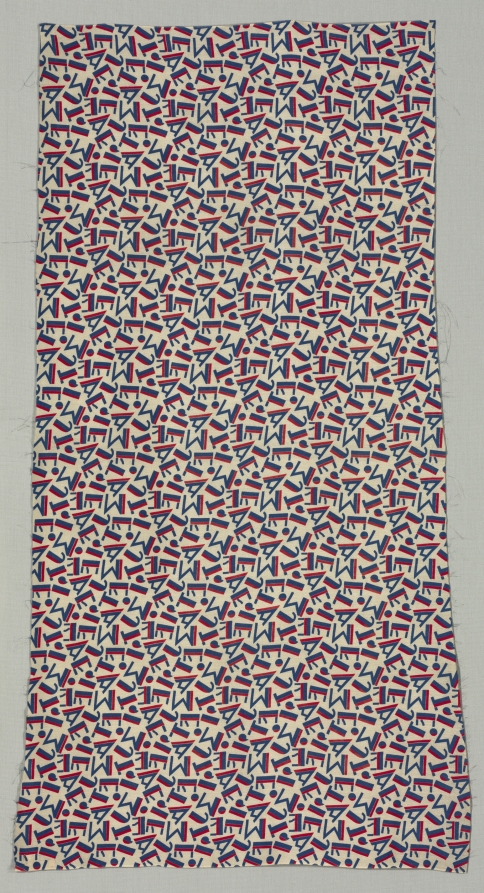
Urban Silhouette Research: Je T'aime (No. 632) — Form as Philosophical Instrument
I. The Silhouette as Dialectical Object
The Je T'aime (No. 632) operates within a deliberate formal paradox: it is at once a vessel and a void, a structure and an absence. Our studio's mandate for 2026 is not ornamentation but structural legibility — the garment must read as a resolved argument before it reads as a garment. The No. 632 resolves this through a columnar primary mass that descends from a squared, minimally suppressed shoulder line to a hem that terminates with architectural finality rather than taper. There is no waist cinch, no peplum, no rhetorical flourish. The shoulder is set — not padded into aggression, but resolved, establishing a horizontal datum against which the vertical fall of the body is measured. This is the Socratic gesture transposed into cloth: the arm raised toward truth becomes the shoulder squared toward the city.
Critically, the silhouette refuses the false binary of "tailored" versus "fluid." Its line is exact; its surface is not. The pattern is drafted with couture-grade precision at the yoke and armhole — the two zones where fit failure is most legible to the trained eye — while the body and skirt are cut with controlled generosity, permitting a 2.5–3 cm ease at the chest that reads as composure rather than looseness. The result is a form that holds its geometry in stillness and releases it in motion. This is the Eastern jar's lesson rendered in wool: the vessel is defined not by its walls but by the space it protects.
II. Color: Slate as Rational Restraint
The palette is anchored in Slate — a desaturated blue-grey that occupies the narrow chromatic band between graphite and stone. Slate is selected for its low chroma and mid-to-low value, which produce maximum tonal nuance under the flat, cool light of the Manhattan office and the warmer, directional light of evening transit. Unlike black, which collapses detail into silhouette, Slate preserves surface articulation: seam shadow, drape fold, and the subtle sheen differential between warp and weft remain visible. This is a strategic choice for the executive wardrobe, where the garment must communicate authority without resorting to the visual shouting of high contrast.
The color story is monochromatic by design — a single-hue system with tonal variation achieved through texture rather than print. A matte wool crepe body is paired with a low-luster satin at the facing and cuff, creating a 15–20% reflectance differential that reads as depth, not decoration. This mirrors the light logic of the David painting: illumination is not added; it is revealed through the modulation of a single material truth. In the 2026 executive context, this translates to a garment that photographs with authority in video conference, holds composure under fluorescent wash, and requires no accessorizing to achieve completeness.
III. Construction Logic and the Executive Wardrobe
The No. 632's construction is organized around three structural decisions. First, a half-canvassed front with a floating chest piece, which allows the garment to mold to the wearer over time — a deliberate rejection of the disposable construction logic that dominates contemporary ready-to-wear. Second, a set-in sleeve with a reduced crown height, which eliminates the shoulder divot that compromises so many executive silhouettes while preserving range of motion for the wearer who moves between car, elevator, and boardroom. Third, a clean-finished hem with a 4 cm facing, weighted to ensure vertical fall without the need for interlining.
These decisions are not craft nostalgia; they are performance specifications. The 2026 executive wardrobe demands garments that function across a 14-hour day, in environments ranging from the unheated morning platform to the over-conditioned conference room, without requiring maintenance or adjustment. The No. 632 meets this brief through material discipline: a 340 g/m² wool-silk blend with natural temperature regulation and recovery, finished with a dry clean-only protocol that preserves the hand over a projected 8–10 year service life.
IV. The Void as Utility
The most consequential formal decision in the No. 632 is what it does not contain. There is no visible hardware, no logo, no decorative topstitching, no belt. The garment's utility is located in its negative space — the ease at the body, the clean interior, the absence of visual noise. This is the jar's emptiness operationalized: the wearer supplies the content, and the garment supplies the frame. For the executive client, this translates to styling optionality — the piece accepts a silk shell, a fine-gauge knit, or a structured blouse without formal conflict, and it reads as complete in each configuration.
In the final analysis, Je T'aime (No. 632) is a garment that answers the question the collection poses: how does one dress for a life conducted in public, under scrutiny, without recourse to armor? The answer is structural clarity, chromatic restraint, and the disciplined preservation of emptiness. The silhouette does not argue with the body; it frames it. And in that framing — precise, cold, and quietly generous — the wearer is given the one thing the executive wardrobe rarely provides: room to think.