Urban Form: Carving from an Overmantel
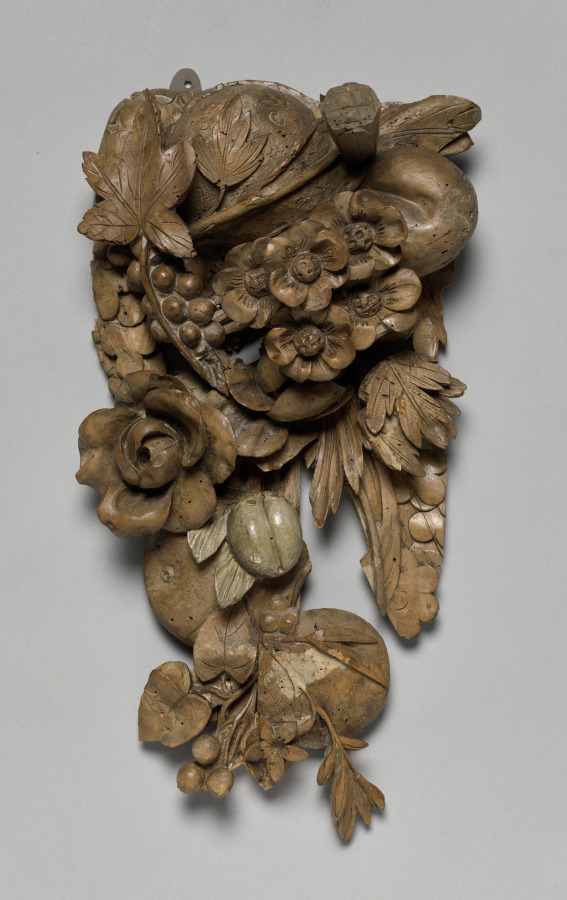
Urban Silhouette Research: Carving from an Overmantel — Form, Color, and the 2026 Executive Wardrobe
I. Thesis: The Dialectic of Absence and Density
The source DNA presents two artifacts in productive opposition: the Udumbara Flowers wooden plaque, a Japanese temple overmantel whose relief carving operates through subtraction and negative space, and the Mirror with Deities, Chariot, and the White Tiger, a Han-dynasty bronze whose reverse face is saturated with a cosmological horror vacui. For Addison Fashion NYC, these are not decorative references but structural propositions. The plaque encodes a wardrobe logic of restraint—form generated by what is withheld. The mirror encodes a logic of circulation—form generated by continuous, rotational energy. The 2026 executive silhouette must reconcile both: a garment that reads as quiet at three meters and as engineered at thirty centimeters. This is the commercial mandate. Minimalism without internal complexity is merely blankness; density without legibility is noise. The collection resolves the tension through slate-toned material hierarchy and a disciplined grammar of carved seams.
II. Form: The Plaque as Pattern-Cutting Discipline
The overmantel's carving technique is instructive at the level of the pattern block. The artisan does not model the flower additively; he removes material along the grain, allowing the wood's natural respiration to remain visible. Translated to tailoring, this is the subtractive seam: darts and princess lines are eliminated in favor of single, continuous panel cuts where the fabric's own weight and bias perform the shaping. The result is a shoulder line that appears unconstructed yet holds a precise 12-degree pitch—achieved through internal canvas and a bias-cut yoke rather than a padded, built-up crown. The plaque's "留白" (reserved emptiness) becomes the negative-space lapel: a narrow, unlined notch whose raw edge is bonded rather than folded, preserving a two-millimeter shadow gap against the chest. This gap is the garment's breathing room—the visual equivalent of the wood grain's exposed field. Critically, the subtraction must be legible. Each removed element leaves a trace: a topstitched ghost seam, a tonal bartack, a slightly recessed panel. The executive wearer requires evidence of intention, not the appearance of absence for its own sake.
III. Form: The Mirror as Rotational Construction
The bronze mirror supplies the opposing structural principle. Its many-work layout—four deities, celestial chariot, white tiger in full stride—organizes ornament along concentric bands that rotate around a central boss. The tiger's tail coils like flame; musculature is rendered as cast rhythm, not anatomy. For Addison, this becomes the rotational panel system: a coat or jacket whose seams spiral from the shoulder point through the waist to the hem, distributing volume and allowing the garment to move as a single continuous surface. The white tiger's kinetic tension is abstracted into directional topstitching—double-needle channels that follow the spiral at a 4mm pitch, catching light on the slate wool and reading as a low-frequency graphic at close range. The mirror's central boss becomes the anchored closure: a single concealed magnetic placket at the sternum, from which all rotational lines radiate. This is not ornament for ornament's sake; it is load-path engineering. The spiral seams carry stress away from the armhole, permitting a closer fit through the torso without restricting the reach required of a client-facing executive.
IV. Color: Slate as the Mediating Field
Color selection follows the artifacts' material truth. The plaque's aged keyaki wood and the mirror's verdigris bronze share a desaturated, cool-neutral register—neither warm nor black, but a slate that absorbs and re-emits light with low chroma. Slate functions here as the collection's unifying field because it performs the same task as the museum's vitrine lighting: it permits fine surface detail to register without competing with it. The palette is built in three tonal strata: a base slate at 18% reflectance for suiting; a mid-slate at 32% for knitwear and shirting; and a pale slate-grey at 55% for linings and binding, visible only at the cuff and vent. Against this field, the plaque's "素木" (plain wood) translates to undyed ivory accents—a single silk-cotton shirt, a pocket square—used sparingly, as the plaque uses bare ground. The mirror's bronze warmth is admitted only as hardware: brushed silver-tone buttons and zipper pulls, cold and precise, never gold. The discipline is absolute: no more than three values in any single look, and no chromatic accent above 8% saturation.
V. Synthesis: The 2026 Executive Wardrobe
The commercial translation is a nine-piece capsule built on two silhouettes. The first is the Overmantel coat: a single-breasted, unlined slate wool-cashmere at 380gsm, cut with subtractive seams, a negative-space lapel, and a hem that falls 4cm below the knee—quiet, architectural, and entirely dependent on internal construction for its shape. The second is the Mirror jacket: a rotational-seam blazer in a slate wool-silk blend, with spiral topstitching and a concealed magnetic placket, designed to be worn open over the ivory shirt or closed as a standalone. Both silhouettes share a common shoulder pitch and armhole depth, ensuring interchangeability—a system, not a collection. The wardrobe's aesthetic argument is that restraint and complexity are not opposites; they are the same discipline viewed at different distances. The plaque teaches the executive to dress for the room; the mirror teaches her to dress for the conversation. Addison Fashion NYC positions the 2026 line at that intersection: cold in palette, exacting in form, and quietly, deliberately rare.