Urban Form: Estérel Village
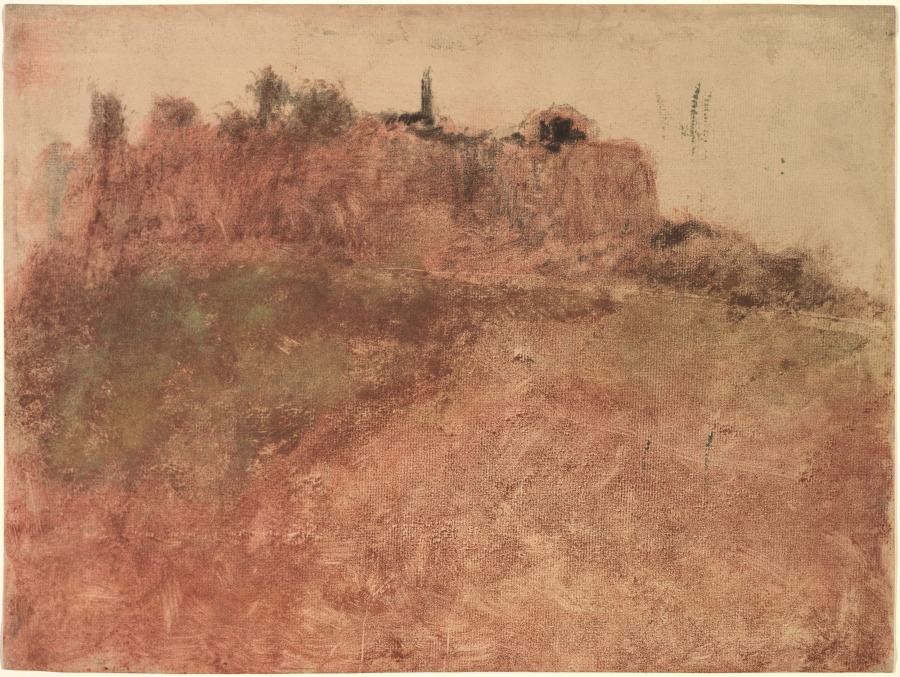
Executive Summary: The Dialectic of Containment and Release
This Urban Silhouette Research for Addison Fashion NYC deconstructs the Estérel Village collection through the lens of two opposing yet complementary Chinese aesthetic archetypes: the Song Dynasty scholar’s rock (Rock in the form of a fantastic mountain) and the Qing Dynasty palace door ring holder (Monster Face: Pushou). The former embodies a philosophy of generative chaos—an invitation to wander through form; the latter enforces a paradigm of ordered dominion—a declaration of boundary and power. For the 2026 NYC executive wardrobe, the critical synthesis lies not in choosing one over the other, but in calibrating their tension. The collection’s DNA source material provides a rigorous framework for translating these ancient logics into a modern, urban, and coldly sophisticated aesthetic. We will analyze how the Onyx colorway—a deep, absorptive black with undertones of charcoal and obsidian—serves as the neutral ground upon which this dialectic is staged, and how the Minimalist category becomes the operative language for its expression.
I. Form: The Architecture of the Void vs. The Geometry of the Gaze
A. The Scholar’s Rock: The Silhouette of Negative Space
The scholar’s rock is not a solid mass; it is a sculpture of voids. Its form is defined by the principles of shou (leanness), tou (penetration), lou (leakage), and zhou (wrinkles). In garment terms, this translates directly into a silhouette that rejects the monolithic. The Estérel Village collection must incorporate asymmetrical draping, strategic cutouts, and layered, non-linear seams that create internal “caves” and “passages” within the garment. A jacket, for instance, should not be a closed shell but a topography of folds and apertures. The shoulder line might be deconstructed, one side sharp and architectural, the other softened into a cascade of fabric that mimics the rock’s weathered “wrinkles.” The hem is not a straight line but a jagged, organic edge that invites the eye to travel, never resting. This is the Minimalist category’s radical move: not the absence of detail, but the presence of controlled complexity. The form breathes. It is a silhouette of invitation, not declaration.
B. The Pushou: The Silhouette of the Shield
In stark opposition, the Pushou is a closed, centripetal form. Its composition is radially symmetrical, with a single, unassailable focal point—the beast’s face. The silhouette is that of a shield: broad, grounded, and impenetrable. For the executive wardrobe, this manifests as the structured, architectural piece. A double-breasted blazer with a pronounced, sharp lapel that acts as the “nose” of the beast. The shoulders are not padded but sculpted, creating a clear, unbroken line from neck to arm. The waist is cinched, not for softness, but to create a rigid hourglass that mimics the beast’s taut, coiled power. The back of the garment is a single, uninterrupted panel—a “door” that cannot be breached. This is the silhouette of authority and closure. It does not invite; it commands. The Onyx color here becomes a surface of absolute absorption, a void that swallows light, reinforcing the garment’s role as a visual barrier.
C. Synthesis: The Dialectical Garment
The 2026 executive does not wear one or the other; she wears the tension between them. The Estérel Village collection proposes a layered dialectic. A foundational piece—a high-neck, long-sleeve top in matte Onyx—acts as the Pushou base: a solid, unyielding second skin. Over this, a deconstructed vest or a poncho-like outer layer, cut with the scholar’s rock logic of asymmetry and void, is draped. The outer layer is the “mountain” with its caves and paths; the inner layer is the “door” that guards the core. The form is thus a narrative of protection and exploration. The garment’s silhouette is not static; it is a dynamic system where the eye moves from the rigid, closed interior to the porous, open exterior, and back again. This is the ultimate expression of urban poetics: a wardrobe that is both a fortress and a landscape.
II. Color: The Monochromatic Field as a Stage for Light and Shadow
A. The Onyx Field: Beyond Black
The selection of Onyx is not a choice of mere darkness. It is a strategic deployment of a color that is both an absence and a presence. Unlike a flat black, Onyx possesses a deep, vitreous quality—a hint of obsidian’s reflective depth. In the context of the scholar’s rock, this color becomes the ink-wash ground upon which the “wrinkles” and “caves” of the form are rendered visible. It is the silent, absorptive field that allows the play of light and shadow to become the primary visual event. In the context of the Pushou, Onyx is the color of absolute authority—the black of the magistrate’s robe, the void of the beast’s pupil. It is a color that does not negotiate. It is the final word.
B. Chromatic Strategy: The Gradient of Power
The collection’s color palette must be a monochromatic gradient within the Onyx family. We are not using color; we are using value. The palette includes: - Matte Onyx: For the Pushou-inspired structured pieces. It absorbs light, creating a flat, impenetrable surface. - Glossy Onyx: For accents—a collar, a cuff, a single panel. It catches light, creating a sharp, reflective edge that mimics the Pushou’s gilded highlights. - Charcoal Onyx: A slightly lighter, warmer black for the scholar’s rock-inspired draping. It allows the eye to perceive the depth of the folds and the negative spaces. - Onyx with Silver Thread: A subtle, almost invisible metallic thread woven into the fabric of the “mountain” pieces. This is the equivalent of the scholar’s rock’s “veins” of quartz—a secret, internal luminosity that only reveals itself upon close inspection.
This is a color philosophy of subtraction. By stripping away all chromatic noise, the form becomes the only message. The Onyx field is the silence that makes the gesture of the silhouette deafening. It is the ultimate expression of Minimalist luxury: not the accumulation of color, but the mastery of a single, profound tone.
III. Technical Application: The 2026 Executive Wardrobe
A. The Power Suit: A Study in Contradiction
The core of the collection is a two-piece suit. The jacket is a Pushou construction: a sharp, single-breasted silhouette with a high, notched lapel and a defined waist. It is cut from a heavy, matte Onyx wool. The fabric is dense, almost armor-like. The trousers, however, are a scholar’s rock construction. They are wide-legged, with a single, deep pleat that runs from the hip to the hem, creating a “cave” of fabric. The hem is raw, slightly frayed, and asymmetrical—one leg falls to the ankle, the other to the floor. The suit is a dialogue between containment and release. The jacket is the door; the trousers are the mountain.
B. The Evening Piece: The Void as Ornament
For evening, a single gown. It is a column of glossy Onyx silk charmeuse. The front is a simple, clean line—a Pushou shield. The back is entirely open, a deep V that plunges to the lower back, revealing a lattice of thin, matte Onyx straps. This is the scholar’s rock’s “leakage” and “penetration” made literal. The gown is a study in negative space as ornament. The color is a single, unbroken field, but the form creates the drama. The light hits the glossy front and is swallowed by the matte straps on the back. The garment is a performance of absence.
C. The Outerwear: The Urban Landscape
A long, oversized coat in a double-faced Onyx wool. One side is matte, the other is a subtle, brushed charcoal. The coat is cut with a single, off-center seam that runs from the shoulder to the hem, creating a “wrinkle” that mimics the scholar’s rock’s topography. The collar is a massive, sculpted piece that can be worn up, forming a Pushou-like shield around the face, or folded down to reveal the charcoal interior. The coat is a mobile architecture, a piece of the urban landscape that the executive inhabits. It is both a shelter and a statement.
IV. Conclusion: The New Executive Vernacular
The Estérel Village collection for Addison Fashion NYC does not offer a nostalgic return to tradition. It offers a rigorous, intellectual translation of two opposing aesthetic systems into a single, coherent wardrobe. The Onyx colorway provides the necessary neutrality for the Minimalist form to speak with maximum clarity. The silhouette is a dialectic of the void and the shield, the invitation and the command. For the 2026 executive, this is not just clothing. It is a strategic tool for navigating the complexities of power, presence, and perception in the urban landscape. It is a wardrobe that understands that true