Urban Form: Head of Proserpina
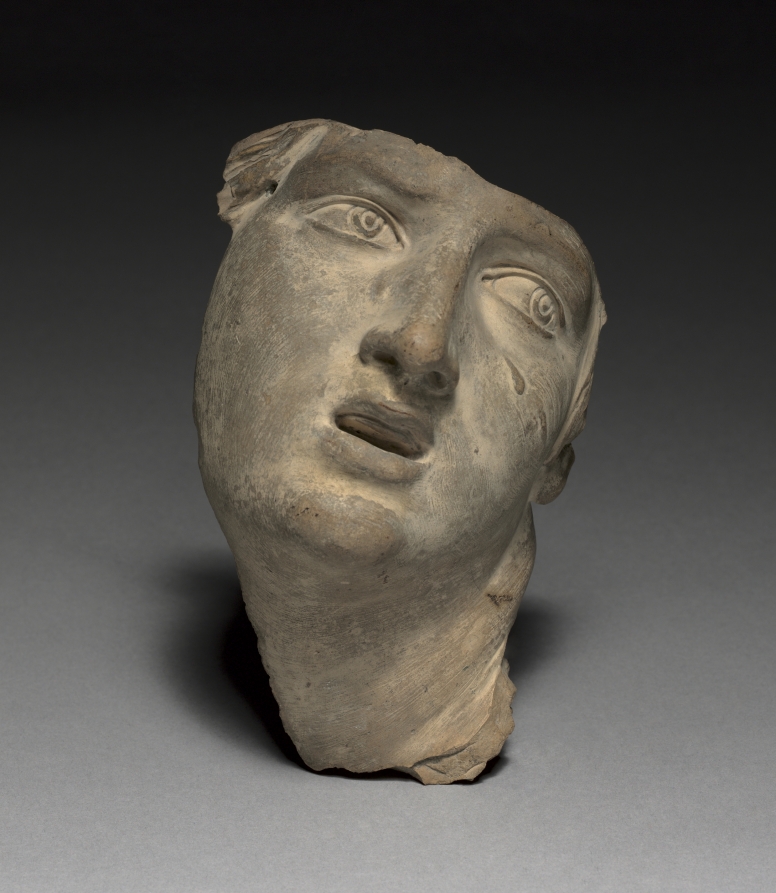
Urban Silhouette Research: The Head of Proserpina — Structural Poetics of Absence and Impact
I. Geometric Integrity: The Axis of Penetration and the Radius of Bloom
The artwork operates on a single, uncompromising geometric proposition: the intersection of a linear vector — the arrow — with an organic volume — the deer’s head — resolved against the negative field of the flower’s radial expansion. This is not a composition of balance but of controlled asymmetry. The arrow establishes a hard diagonal, a trajectory of intent that cuts the picture plane with the precision of a tailored seam. The deer’s skull, in turn, presents a tapered ovoid, its mass concentrated at the crown and narrowing toward the muzzle — a silhouette that mirrors the elongated shoulder line and suppressed waist of the 2026 executive form.
The flower, rendered as a void-bloom, introduces a centrifugal geometry: petals radiating from an absent center. This is the critical structural tension. The arrow’s vector is centripetal — it drives inward, toward the skull’s core. The flower’s geometry is centrifugal — it disperses outward, toward nothing. The 2026 silhouette must hold both forces simultaneously: the disciplined convergence of the arrow and the expansive restraint of the bloom. The result is a garment that appears to be pierced by its own structure — seams that cut like arrow shafts, volumes that open like petals around a hollow core.
II. The Executive Silhouette: Tailored Minimalism as Critical Mass
The Head of Proserpina demands a silhouette that refuses ornament. The 2026 executive form, as derived from this artwork, is defined by three structural imperatives:
First, the arrow-line shoulder. The shoulder is not rounded but vectored — a clean, forward-set line that suggests trajectory rather than mass. This is achieved through a suppressed shoulder pad and a raglan-to-set-in hybrid construction that allows the seam to travel diagonally across the deltoid, echoing the arrow’s entry point. The shoulder becomes a site of controlled penetration: the seam does not sit on the body but cuts through it.
Second, the hollow-core torso. The flower’s absent center translates into a torso that is structurally evacuated — a minimalist column with no darts at the bust, no waist suppression, no peplum. The volume is held by the fabric’s own weight, not by tailoring intervention. This is the void-bloom principle: the garment’s shape emerges from what is removed, not what is added. In practice, this means a single-piece front panel with a concealed placket, cut on the bias to allow a subtle radial drape at the hem — petals in negative.
Third, the tapered skull-hem. The deer’s head narrows toward the jaw; the 2026 executive hem must narrow toward the knee. This is a reverse A-line — a silhouette that begins wide at the shoulder and tapers to a point of controlled compression at the lower leg. The effect is one of contained velocity: the body appears to be moving forward even in stillness, the hem acting as the arrow’s fletching, stabilizing the trajectory.
III. Urban Materiality: Slate as the Surface of Absence
The color directive — Slate — is not a chromatic choice but a material argument. Slate is the color of the 乌昙花寺匾 (Udumbara plaque): weathered, gray-brown, near-speechless. It is the color of stone that has absorbed centuries of incense and waiting. In the 2026 executive wardrobe, Slate manifests as a matte, dense textile — a bonded wool-cashmere with a dry hand and a faintly granular surface, reminiscent of the plaque’s eroded grain.
The material must perform two contradictory functions. It must hold the arrow-line — meaning it requires sufficient body to maintain a sharp shoulder and a clean diagonal seam. Simultaneously, it must dissolve at the hem — meaning it requires enough fluidity to allow the radial drape of the void-bloom torso. The solution is a double-faced construction: the outer face is a compact worsted with a slate pigment that shifts between graphite and ash under different light; the inner face is a softer, brushed wool that allows the garment to collapse gently at the interior seams. The result is a fabric that is hard at the edges and soft at the core — the arrow and the flower in a single textile.
IV. Structural Poetics: The Garment as Critical Object
The Head of Proserpina is not a decorative reference. It is a thesis on the executive body as a site of tension. The 2026 silhouette derived from it refuses the false choice between the hunt’s violence and the plaque’s emptiness. Instead, it proposes a garment that is both pierced and blooming — a tailored structure that carries its own absence as a design feature. The arrow-line shoulder is the mark of intent; the hollow-core torso is the mark of restraint; the tapered hem is the mark of velocity contained.
This is the Addison Fashion position for 2026: minimalism as critical mass. The silhouette does not decorate the body; it interrogates it. The slate surface does not flatter the skin; it records it. And the geometry — arrow, skull, bloom — does not resolve into harmony. It holds. It waits. It cuts.