Urban Form: Candlesticks
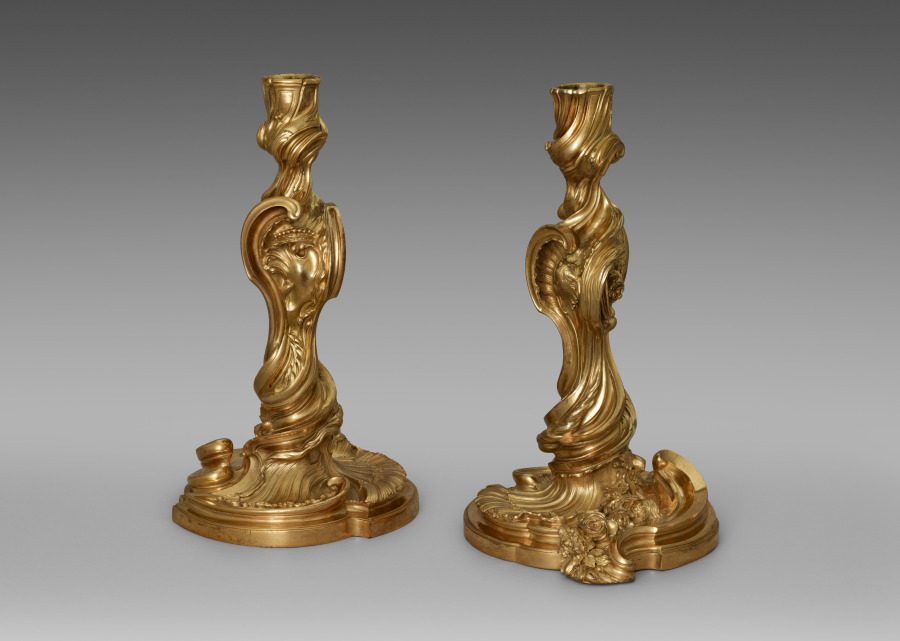
Urban Silhouette Research: Candlestick Morphology as Structural Doctrine
I. Premise: The Vessel as Silhouette
The candlestick is not a decorative object. It is a vertical load-bearing proposition—a column that negotiates between a weighted base and a luminous terminus. For Addison Fashion's 2026 executive wardrobe, the candlestick functions as a primary morphological reference: a silhouette defined by tapered continuity, sectional rhythm, and a deliberate ratio between mass and void. Our research deconstructs the candlestick into three operative zones—foot, shaft, and cup—and transposes each into garment architecture. The objective is not ornament but structural legibility: a wardrobe that reads as engineered, not embellished.
II. The Foot: Grounding and Gravitas
The candlestick's base is its ethical center. It distributes weight, arrests motion, and establishes the object's claim to permanence. In tailoring, this translates to the shoulder-to-hem gravitational axis—the hem weight, the interfacing density, the deliberate drop of a jacket's balance point below the hip. For 2026, we specify Slate-toned wool crepe at 340gsm for base garments, cut with a widened hem allowance that visually anchors the figure. The foot of the candlestick is rarely ornate; it is geometrically resolved. So too must the executive trouser be: a clean, unbroken line from waistband to floor, with no pleat, no cuff, no distraction. The base earns authority through restraint.
III. The Shaft: Taper as Executive Grammar
The shaft is where the candlestick achieves its signature—a controlled diminution of diameter across vertical distance. This is the most transferable principle in our research. The 2026 executive silhouette adopts a continuous taper from shoulder to wrist and from hip to ankle, eliminating the boxy interruptions that have dominated womenswear tailoring for a decade. Technically, this requires princess-seam construction in the bodice and a single-panel sleeve drafted with a 4-degree inward rotation at the elbow. The result is a garment that reads as a single gesture rather than an assembly of parts. Color discipline reinforces the taper: a monochrome Slate palette across jacket, shell, and trouser collapses visual segmentation and amplifies the vertical read. The shaft does not decorate the candlestick; it is the candlestick. The garment must achieve the same ontological clarity.
IV. The Cup: Terminal Restraint
The cup—the uppermost zone—is the candlestick's point of contact with light. It is small, precise, and functionally indispensable. In wardrobe terms, the cup corresponds to the collar, the cuff, and the neckline: the terminal interfaces where the garment meets the body's most expressive surfaces. Our 2026 specification calls for a standing collar of 3.5cm height, cut on the bias to maintain curvature without interfacing, and a cuff depth of 4cm with a concealed placket. These are not decorative choices; they are calibrated apertures that frame the face and hands—the executive's primary communicative instruments. The cup of a candlestick never overwhelms the shaft. Neither should the collar overwhelm the shoulder line.
V. Color: Slate as Structural Chromatic
Slate is selected not for its neutrality but for its optical density. It absorbs light at the surface while reflecting a cool undertone at the fold—a behavior that renders seam lines and taper angles legible without contrast stitching or topstitching. In a monochrome Slate wardrobe, form is the only variable. This is the candlestick principle applied to color: the object's silhouette must be readable in a single glance, without chromatic assistance. We specify Slate across three values—Slate 18 (deep), Slate 22 (mid), and Slate 26 (light)—to create tonal depth without breaking the monochrome contract. The result is a wardrobe that functions as a single chromatic field with internal structural variation, exactly as a candlestick functions as a single vertical field with internal sectional variation.
VI. Synthesis: The 2026 Executive Silhouette
The candlestick teaches the executive wardrobe three non-negotiable rules. First: weight must be resolved at the base. A garment that does not ground itself cannot project authority. Second: taper is grammar, not style. The continuous diminution from shoulder to wrist is the syntax of executive presence. Third: the terminal zone must remain subordinate to the shaft. Collar, cuff, and hem are apertures, not arguments. Applied to the 2026 collection, these rules yield a wardrobe of Slate-toned, seam-driven, monochrome garments whose authority derives from structural logic rather than surface treatment. The candlestick does not ask to be admired. It asks to be read. So too should the executive who wears it.