Urban Form: The Cathedral
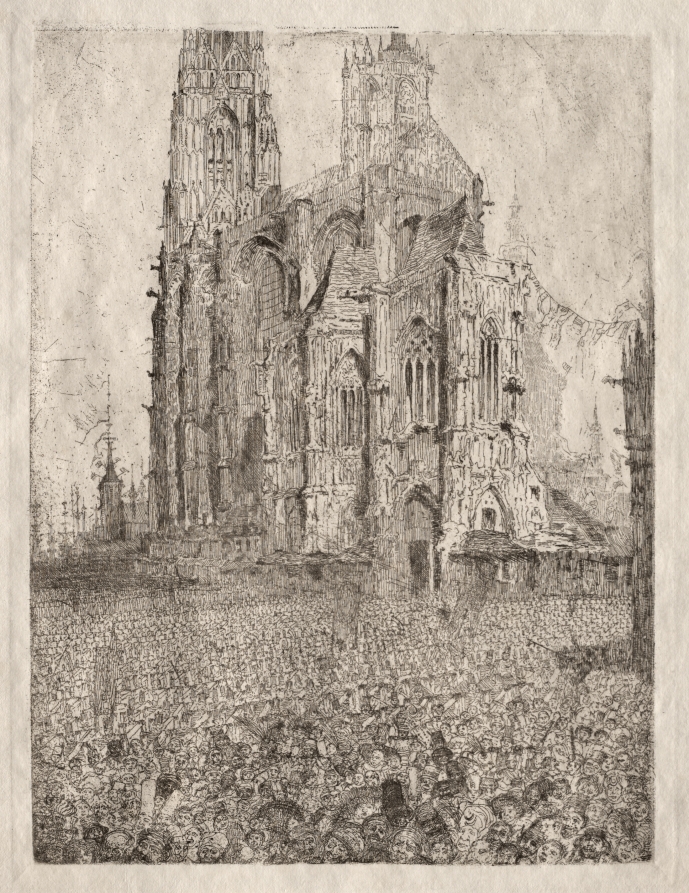
Urban Silhouette Research: The Cathedral — Structural Poetics of the Mediating Vessel
The 2026 executive silhouette is not built upon accumulation but upon subtraction. It is an architecture of the interval—the deliberate void between shoulder and hem, between seam and skin. The two artifacts under examination, the Nara-period Udonge temple plaque and the Han-dynasty bronze mirror bearing the White Tiger, the Celestial Chariot, and the Deities, operate precisely within this logic of the interval. They are not objects of representation but instruments of transmission. For Addison Fashion, they constitute the definitive research corpus for a silhouette that must function as a threshold rather than a statement.
Geometric Integrity: The Plaque as Planar Discipline
The Udonge plaque presents a geometry of contained horizontality. Its rectangular field is uncompromised—a strict perimeter that refuses ornamental deviation. Within this boundary, the three characters are distributed with a spatial rhythm that is architectural in its precision: the brushstroke's entry, dwell, and release correspond to the structural load-bearing points of a tailored garment. The ink is "moist without stagnation, luminous within darkness"—a material condition that translates directly to the 2026 fabric directive. We are speaking of onyx-weighted silks and matte-bonded wools that absorb light rather than reflect it, surfaces that hold depth without gloss.
The plaque's geometry is negative-first. It does not fill its field; it calibrates emptiness. The calligraphic line is a load path—each stroke a structural member in tension with the void it circumscribes. This is the governing principle for the 2026 shoulder: not a padded assertion but a suspended plane, a line drawn across the clavicle that implies mass without constructing it. The executive jacket must read as a single continuous gesture—collar, lapel, and shoulder resolved in one breath—precisely as the plaque's characters resolve in a single, unbroken meditative sequence.
The Mirror: Radial Geometry and the Mediating Surface
The Han mirror introduces radial symmetry as cosmological order. Its circular field is divided by concentric registers: the central boss, the chariot procession, the White Tiger in the western quadrant, the cloud-scrolls that bind figure to ground. The tiger is not depicted as fauna but as vector—a directional force, its long tail coiling into the wheel and vapor, its body a compressed spring of kinetic potential. The geometry is centrifugal: energy radiates from the center outward, yet the circumference contains it absolutely.
This is the structural poetics of the 2026 outerwear architecture. The coat must function as a circular register system: a defined core (the torso), a transitional band (the drape), and a containing circumference (the hem). The White Tiger's line—muscular, continuous, terminating in a spiral—is the template for the sleeve. Not a tube, but a tapered vector, narrowing at the wrist into a controlled terminus. The mirror's bronze surface, which "illuminates and is illuminated," dictates the materiality: brushed silver-toned hardware, oxidized onyx leathers, and metal-thread jacquards that shift under light without announcing themselves.
Materiality as Mediation: The Threshold Condition
Both artifacts occupy what the research designates the mediating state—the plaque as marker toward nirvana, the mirror as conduit between the living and the dead. Neither seeks sensory gratification; both redirect the gaze toward the invisible. This is the essential brief for the 2026 executive wardrobe. The garment must not decorate the body but frame the transition between interior intention and urban exterior. The fabric is the medium, not the message.
Consequently, Addison Fashion's material research prioritizes surfaces that withhold: bonded onyx crepe with a dry, non-reflective hand; double-faced wool in slate and sand where the seam is the only ornament; silver-grey silk faille whose luster is intermittent, activated only by movement. The plaque's ink "contains light"—so must the cloth. The mirror's bronze "renders images eternal"—so must the construction. Every seam is a load path; every dart a register boundary; every hem a circumference that closes the system.
Conclusion: The Silhouette as Sacred Vessel
The 2026 executive silhouette, derived from this research, is a Cathedral—not in the ecclesiastical sense but in the structural one: a volume organized around a central axis, defined by its thresholds, and dignified by the precision of its joinery. It does not imitate the flower; it becomes the flower's essence through the discipline of the stroke. It does not depict the tiger; it channels the tiger's force through the geometry of the register. The garment, like the plaque and the mirror, must be believed in—the wearer's conviction that the form is a vessel, not a costume. Where form dissolves, presence remains. This is the Addison Fashion position for 2026: minimalist in surface, maximalist in structural intent, and absolute in its refusal of the merely visible.